

Sexual Abuse and Assault Injury Lawyers


Arizona Youth Residential Treatment Facility Sexual Abuse Lawsuits
Compensation for Survivors of Sexual Abuse at Chicago Schools
Survivors of Arizona youth residential treatment facility sexual abuse deserve justice, accountability, and strong legal representation.
At Injury Lawyer Team, we help families hold youth residential treatment centers, behavioral health facilities, and their staff accountable when children entrusted to their care experience sexual assault, physical abuse, or emotional abuse.
Our attorneys know how to investigate allegations of abuse, gather medical documents and witness reports, and pursue both civil and criminal lawsuits to protect vulnerable youth.
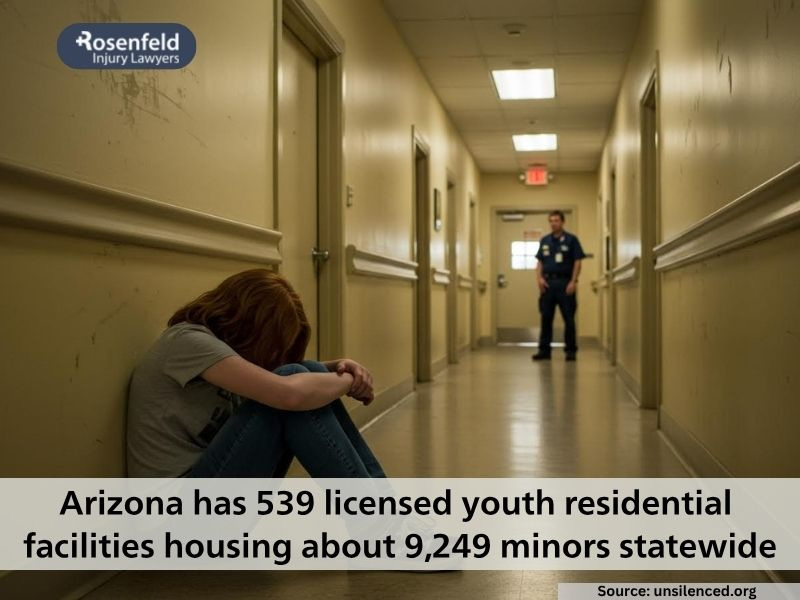
Sexual Abuse at Juvenile Residential Treatment Centers in Arizona
A 2024 U.S. Senate investigation, dubbed the “Warehouses of Neglect” report, exposed widespread systemic abuse in youth residential treatment centers across the nation. The Senate Finance Committee found that these centers, including some operating in Arizona, often function more like detention environments than therapeutic havens.
They cited alarming practices such as unqualified staffing, neglect of health, and rampant sexual abuse, all exacerbated by profit-driven operational models that prioritize revenue over safety and welfare.
This federal inquiry echoes mounting concerns about sexual misconduct, alleging that survivors, too often sexually abused under institutional care, have suffered trauma due to unsafe conditions, inadequate oversight, and facility administrators who ignored or concealed complaints.
In Arizona, survivors at centers like Casa Grande Academy and Sonora Behavioral Health Hospital have begun speaking out and filing lawsuits. These allegations frequently center on abusive language, emotional abuse, and physical neglect occurring under the watch of staff and corporate operators.
By bringing juvenile residential treatment center sexual abuse lawsuits against these facilities, survivors seek financial compensation but also aim to hold facilities and their operators accountable for harming vulnerable youth in their care. The Senate’s findings provide crucial context and a compelling foundation for these legal actions.
In Arizona, multiple youth residential treatment centers have been linked to serious allegations of abuse, with survivors stepping forward to file lawsuits against the institutions listed below.
Casa Grande Academy
Casa Grande Academy, operated by Mingus Mountain Estate Residential Center, Inc., has been named in a lawsuit involving a 15-year-old boy who was court-ordered into treatment in 2022.
The complaint alleges that a male staff member, Daisa Sigarroba, engaged in sexual misconduct with the resident and later removed him from a Phoenix group home after his January 2023 discharge, continuing sexual contact in a Tucson hotel.
Plaintiffs accuse Casa Grande Academy and its operator of failing to supervise staff and to report abuse under Arizona’s mandatory reporting law. Filed in Pima County Superior Court, the case highlights how youth residential treatment center sexual abuse lawsuits can expose institutional negligence.
Devereux Advanced Behavioral Health
Devereux Advanced Behavioral Health in Phoenix, part of the national Devereux Foundation, came under scrutiny when behavioral health worker Rodrigo Omar Flores was arrested in May 2019. Flores was accused of sexually abusing three teenage girls at the residential treatment program between October 2018 and March 2019, with alleged assaults occurring in patient rooms and common areas.
Phoenix police charged him with sexual abuse, sexual conduct with a minor, and aggravated assault. Plaintiffs in related civil claims argue that the facility and its operator failed to protect residents by allowing unqualified staff to have unsupervised access to vulnerable patients.
Mingus Mountain Academy
Mingus Mountain Academy in Prescott Valley, operated by Vivant Behavioral Healthcare, is facing multiple lawsuits over alleged abuse spanning more than a decade.
In February 2025, survivors filed a 55-page complaint naming 13 alleged victims of staff sexual abuse from 2011–2022. By August 2025, a second lawsuit had increased the total number of plaintiffs to 25 former residents, alleging ongoing sexual abuse through 2023.
Survivors claim that Mingus Mountain Academy and the facility’s operator ignored repeated warnings and allowed abuse to continue unchecked. These juvenile treatment center sexual abuse lawsuits seek compensation and punitive damages for gross negligence.
Oasis Behavioral Health Hospital
Oasis Behavioral Health Hospital in Chandler, owned and operated by Acadia Healthcare, has been repeatedly investigated by the Arizona Department of Health Services (ADHS). Between 2014 and 2018, ADHS compiled 373 pages of investigative reports documenting complaints of sexual abuse, staffing shortages, runaways, and other dangerous conditions.
Although the precise number of victims of alleged abuse has not been disclosed, these findings indicate serious lapses in oversight at Oasis. Plaintiffs in Arizona sexual abuse lawsuits often point to Oasis Hospital’s long history of regulatory violations and to the facility’s operator, Acadia Healthcare, as evidence of systemic corporate failure to protect youth in treatment centers.
Sonora Behavioral Health Hospital
Sonora Behavioral Health Hospital in Tucson, also owned by Acadia Healthcare, has faced extensive state investigations and civil litigation tied to patient safety. Sonora received 82 citations, more than any other psychiatric facility in Arizona at the time, and was placed in “immediate jeopardy” by regulators for unsafe practices.
Whistleblowers and lawsuits have documented unsafe environments, inadequate staffing, and instances of excessive force or neglect leading to patient deaths. While not all cases have centered on confirmed sexual abuse, the troubled history of Sonora Behavioral Health Hospital and its operator makes them frequent targets in lawsuits alleging systemic negligence in youth treatment facilities.
What Laws Govern Arizona Youth Residential Treatment Centers?
Child Abuse Reporting Law, A.R.S. § 13-3620: Anyone who suspects child sexual abuse, physical abuse, or emotional abuse in a facility must immediately report it to authorities. Staff members, counselors, and administrators are legally obligated to act. Failure to report can result in criminal charges.
Arizona Administrative Code – Behavioral Health Residential Facilities (A.A.C. R9-10-701 et seq.): These rules govern how residential treatment centers operate, including safety protocols, staffing, treatment planning, and resident rights. They require oversight by administrators, proper documentation of health records, and protection from unsafe environments or excessive force.
Together, these laws ensure that juvenile treatment centers provide safe, regulated environments and are held accountable when systemic errors occur.
What Damages Can Child Sexual Abuse Victims Recover When Filing Civil Lawsuits?
When survivors of childhood sexual abuse at Arizona youth residential treatment centers bring lawsuits, the law recognizes that abuse causes both financial and emotional harm. Damages typically fall into three categories:
Economic Damages
These cover the measurable financial costs caused by sexual abuse, physical or emotional. Survivors may recover:
- Medical expenses for hospital visits, medications, and ongoing treatment
- Behavioral health and mental health services, including counseling, therapy, and rehabilitation
- Lost income or reduced earning capacity, if trauma interferes with education, work, or career opportunities
Non-Economic Damages
Non-economic damages address the deeply personal harms that cannot be calculated with receipts. They include:
- Pain and suffering, including lifelong trauma and psychological distress
- Loss of enjoyment of life, such as the inability to form healthy relationships or pursue education
- Emotional trauma, including PTSD, depression, and anxiety linked to the abuse
Punitive Damages
In cases involving systemic sexual abuse, reckless neglect, or misconduct by administrators and corporate operators, courts may award punitive damages. These are designed to punish wrongdoers and hold facilities accountable for failing to protect vulnerable young people.
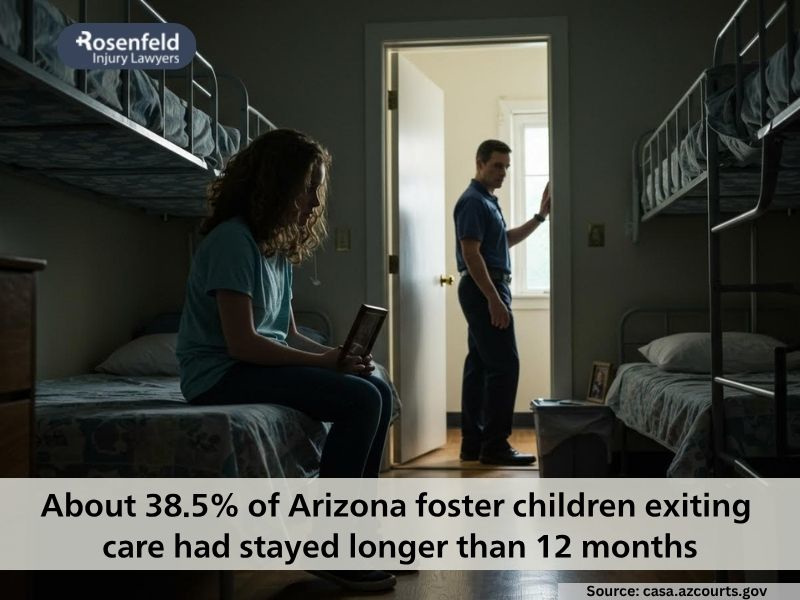
How Long Do Victims Have to Take Legal Action in Arizona?
Arizona law gives survivors of sexual abuse important opportunities to find justice through both the criminal and civil courts.
- Pressing criminal charges – A.R.S. § 13-107(A): There is no statute of limitations for class 2 felony sexual offenses against minors, including child molestation and sexual assault. Prosecutors may bring charges at any time if a child was abused.
- Filing civil lawsuits – A.R.S. § 12-514: Survivors of childhood sexual abuse can file lawsuits until their 30th birthday, or within 12 years of discovering the abuse and its impact, whichever comes later. This discovery rule ensures that victims who recall or connect their trauma later in life still have access to the courts.
- Filing claims against public facilities – A.R.S. § 12-821.01: When abuse occurs at publicly run residential treatment centers, survivors must also comply with Arizona’s notice of claim statute, which requires written notice to the state or county within 180 days of the incident.
Understanding these deadlines is crucial. Filing timely helps survivors preserve their rights, pursue compensation, and hold institutions accountable for the harm caused.
What Evidence Is Needed to Report Abuse and Support a Sexual Abuse Lawsuit?
To succeed in a lawsuit, survivors and their attorneys gather evidence showing both the abuse and the facility’s negligence.
Key examples include:
- Medical records documenting injuries or mental health treatment
- Witness statements from other residents or staff
- Facility records, such as incident reports or internal communications
- Law enforcement investigations, e.g., by the Yavapai County Sheriff’s Office
- Expert testimony on the impact of childhood sexual abuse
- Patterns of misconduct uncovered in prior lawsuits or investigations
Together, this evidence helps hold residential treatment centers and their staff accountable while giving survivors a stronger chance to seek justice through lawsuits.
Who Can Be Held Liable in Sexual Abuse Cases Against Arizona Youth Residential Treatment Centers?
In such lawsuits, liability may extend to:
- Staff members who commit sexual misconduct or cause physical or emotional harm
- Administrators who ignore reports, allow unsafe conditions, or fail to supervise properly
- Corporate operators like Universal Health Services or Vivant Behavioral Healthcare, which run facilities such as Oasis Hospital and Mingus Mountain Academy
- State or county agencies, when the facility is publicly operated, subject to Arizona’s notice of claim statute
Holding these parties accountable helps protect vulnerable youth and improve safety in residential treatment centers.
How Injury Lawyer Team Can Help
At Injury Lawyer Team, we are committed to helping survivors of sexual abuse pursue justice. Our attorneys understand the challenges of taking on residential treatment centers, behavioral health facilities, and large corporations that put profits ahead of child safety.
We provide:
- Thorough investigations into abuse, including health records and witness testimony
- Legal action against staff, administrators, and corporate operators for systemic negligence
- Guidance through complex laws, including Arizona’s lawsuit deadlines and notice of claim requirements
- Support services that put survivors’ well-being first
Book a Free Consultation
If you or a loved one experienced sexual abuse in an Arizona youth residential treatment center, our team is here to help. We offer free consultations to review your case, explain your legal rights, and discuss options for filing sex abuse lawsuits.
You pay nothing upfront. We work on a contingency fee basis, meaning we only get paid if we recover compensation for you. Book a free consultation today and take the first step toward justice.
All content undergoes thorough legal review by experienced attorneys, including Jonathan Rosenfeld. With 25 years of experience in personal injury law and over 100 years of combined legal expertise within our team, we ensure that every article is legally accurate, compliant, and reflects current legal standards.