

Sexual Abuse and Assault Injury Lawyers


Steps to Take If Your Child Is a Survivor of Abuse at School
Not knowing the right steps to take if your child is a survivor of abuse at school can feel overwhelming, frightening, and deeply personal. When a child tells a parent about the abuse or neglect they’re enduring, or when parents begin to suspect abuse based on warning signs, it can shake a family’s sense of safety and trust.
At Injury Lawyer Team, we stand with families facing these moments. Our Chicago-based practice works with parents and caregivers seeking to protect their child, prevent future misconduct, and understand their legal options after harm occurs in a school setting.
Abuse in schools can take various forms and affect many children, often quietly and without immediate physical proof. Whether the harm involves neglect, or physical, emotional, or sexual abuse by an adult or another student, families deserve clear guidance, compassionate support, and accurate information.
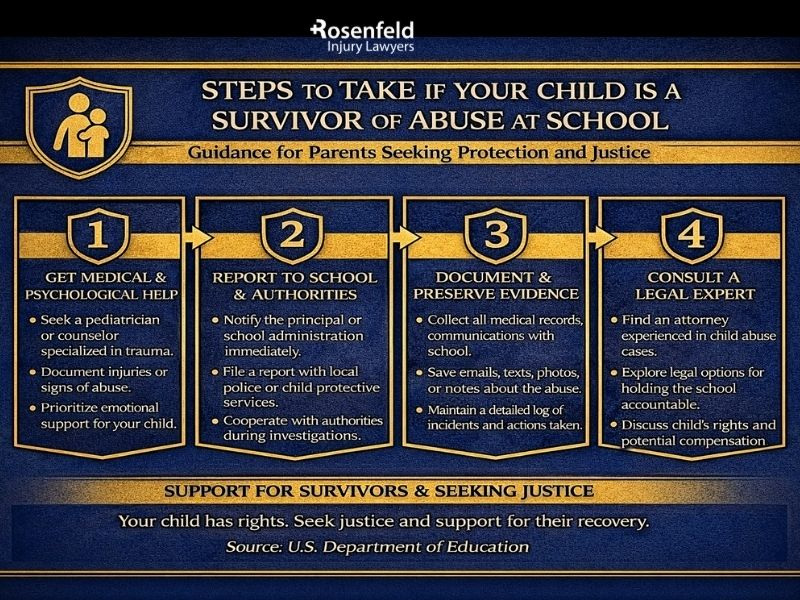
Below, we outline what parents can do to help their child feel safe, access medical treatment and counseling, and pursue legal action when appropriate.

What Types of Child Abuse Can Occur at Schools?
Schools are meant to be safe environments, but child abuse can occur in many forms within educational settings. Abuse may involve school employees, volunteers, contractors, or even other children. Understanding the different forms of abuse helps parents recognize risks and respond effectively.
Physical Abuse
Physical abuse at school may include hitting, slapping, shaking, pushing, excessive restraint, or improper corporal punishment. Some injuries are immediately visible, while others may be concealed by clothing or explained away as accidents.
Visible injuries such as bruises, burns, or marks that do not match a child’s explanation can be a clear sign of abuse. Even when injuries are minor, repeated incidents may point to a pattern that puts other children at risk.
Emotional Abuse
Emotional abuse is often harder to detect but can be just as damaging. This may involve verbal humiliation, intimidation, threats, isolation, or persistent shaming by teachers, staff, or peers.
Emotional harm can erode a child’s confidence and contribute to self-blame, anxiety, and long-term psychological struggles. Many parents first notice emotional indicators rather than physical ones, such as sudden withdrawal, fear of school, or behavioral changes.
Sexual Abuse
Sexual abuse in schools may involve inappropriate touching, exposure, grooming, exploitation, or other forms of misconduct. This abuse can be committed by adults in positions of authority or by other kids. When families suspect sexual misconduct, speaking with a school sexual abuse lawyer can help clarify legal rights and reporting obligations while prioritizing the child’s safety and well-being.
What Are the Physical and Emotional Signs of Child Abuse?
Recognizing abuse often begins with noticing changes in a child’s behavior or health. Parents frequently ask us about signs of sexual abuse in children, and it is important to understand that abuse can produce a wide range of physical and emotional indicators.
Physical signs may include unexplained bruises, cuts, or burns, or frequent pain complaints. Recurrent urinary tract infections, difficulty walking or sitting, or other genital-related medical issues may also be indicators of sexual harm and should prompt immediate medical evaluation. Sudden changes in appetite or sleep can also signal distress.
Emotional changes may include fear, depression, irritability, regression to earlier behaviors, nightmares, or avoidance of certain people or places. Some children display sexual behaviors that are not age-appropriate, while others become unusually quiet or withdrawn.
Many kids do not disclose abuse immediately, especially when the abuser is a supposedly trusted adult. These signs of possible abuse often appear gradually, making parental intuition and attentiveness critical.
What Should You Do First if You Suspect Child Abuse at School?
When parents suspect their child may be abused, emotions can run high. However, the first steps you take can significantly affect your child’s sense of safety and the strength of any future legal claim.
Start by listening calmly when a child confides something troubling to you. Let your child speak in their own words, without interruption or disbelief. Avoid leading questions or pressing for details, as this can unintentionally influence a child’s account and complicate investigations. Reassure your child that they are not in trouble and that they did the right thing by speaking up.
Do not confront the alleged abuser or immediately contact the principal without first prioritizing your child’s safety. Removing the child from immediate danger is more important than certainty. If necessary, ensure your child is not returned to an environment where abuse may continue.
Seek Medical Attention for Any Visible Injuries
If your child has apparent injuries or physical symptoms, seek medical treatment as soon as possible. Prompt treatment not only protects your child’s health but also helps document injuries that may be important later. Healthcare providers can assess physical harm, test for infections, and recommend appropriate treatment.
Medical professionals are also trained to recognize signs of abuse and may be required to report suspected abuse to authorities. This process can feel intimidating for parents, but it often plays a critical role in protecting other kids by preventing future abuse from happening.
Seek Medical Care From Mental Health Services
Even when physical injuries are not present, abuse can deeply affect a child’s mental well-being. Early access to counseling and therapy can help children process trauma, reduce anxiety, and rebuild trust. Therapy can also help address emotional distress, feelings of guilt, and fear.
Regular sessions with trauma-informed counselors or psychologists allow children to express feelings safely and develop coping tools. Many families find that psychological support benefits not only the child but also parents and siblings as they navigate uncertainty together.
Seeking counseling and therapy services is not an admission of wrongdoing; it is a proactive step toward healing and long-term well-being.
Report the Incident
Reporting abuse is often one of the hardest steps for parents. However, reporting can be essential to protecting your child and others from ongoing harm. Depending on the situation, reports may be made to child protective services, law enforcement, or school administrators.
If appropriate, notifying the school principal may be necessary, especially when abuse involves school staff or occurs on school grounds. Parents should document all communications and avoid informal resolutions that bypass proper reporting channels. Some families also choose to inform other parents when credible risks exist, particularly if abuse may involve multiple children.
Reporting abuse does not mean surrendering control of the situation. Families still have a voice and legal rights throughout the process.
How Our Law Firm Can Help You Take Legal Action
At Injury Lawyer Team, we help families understand their options after discovering child abuse at school. When appropriate, we assist parents in pursuing a sex abuse lawsuit aimed at accountability and prevention.
Our services include investigating how abuse occurred, identifying responsible parties, and determining whether schools failed in their duty to protect students. Legal proceedings may involve claims against individual abusers, school districts, or institutions that ignored warning signs or failed to act on prior complaints.
We understand that families are not just seeking compensation. Many parents want answers, accountability, and assurances that abuse will not continue. Legal action can be a tool to address systemic failures and protect other kids from harm.
We handle child abuse cases on a contingency-fee basis, meaning families pay nothing up front. We also offer a free, confidential consultation so parents can speak with us safely and privately about their concerns. If you are unsure whether abuse occurred or if you only have suspicions, we can help you evaluate next steps without pressure.
Supporting Your Child and Your Family Moving Forward
Child abuse can affect families long after the initial discovery. Parents often struggle with guilt, anger, and fear, while children may need time and support to regain a sense of safety. Encouraging your child to speak with a responsible adult, maintaining routines where possible, and reinforcing that your child is believed can make a meaningful difference.
Every child deserves to feel safe at school. By taking thoughtful, informed steps, families can protect their child, seek appropriate treatment and psychological support, and hold institutions accountable when they fail. At Injury Lawyer Team, we stand with families during these difficult moments. You’re not alone, and we believe in your case.
If you have questions about abuse at school or want to understand your legal options, we are here to help.
All content undergoes thorough legal review by experienced attorneys, including Jonathan Rosenfeld. With 25 years of experience in personal injury law and over 100 years of combined legal expertise within our team, we ensure that every article is legally accurate, compliant, and reflects current legal standards.