

Sexual Abuse and Assault Injury Lawyers


Can You Sue a School for Sexual Abuse?
When considering the question, “Can you sue a school for sexual abuse?” parents may feel overwhelmed by the amount of information available. The quick answer is that, in most cases, parents can file a lawsuit if the abuse occurred on school grounds or the defendant’s employment was a contributing factor.
Our child abuse attorneys are here to guide you through taking legal action to hold institutions accountable for failure to prevent harm. We provide free, confidential case reviews to parents and adult survivors of child sexual abuse.
When Is a School Liable for Sexual Assault and Abuse?
School districts are legally responsible for the children under their care, which means protecting students from unwanted sexual touching or sexual assault.
Title IX Violations
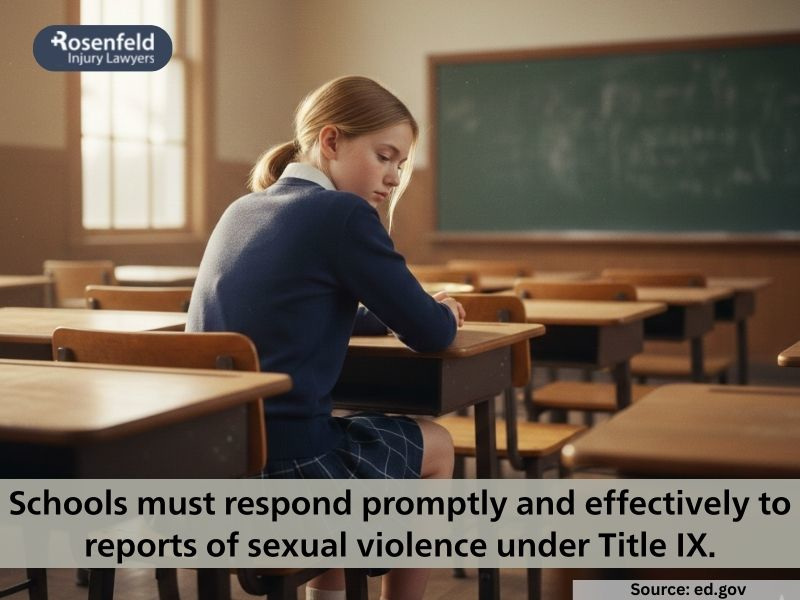
Title IX is the primary legal protection against sex-based discrimination, which includes sexual abuse. This federal law mandates that any school receiving federal funding must implement anti-discrimination and harassment policies, including training, background screening, and reporting (20 U.S. Code § 1681).
They are required to protect children from any potential abuse or sexual harassment, whether that is from a staff member or other students.
While private schools may argue they are not subject to Title IX, they may still be required to comply if they receive any federal funding, such as under the Every Student Succeeds Act (Public Law No. 114-95).
Negligent Hiring
The National Child Protection Act of 1993 is a federal law that requires criminal background checks for any individual who works with children, including educators and school staff (Public Law No. 103-209). If there are any prior complaints of an applicant abusing children, regardless of whether it happened within the education system, the applicant should be barred from working with students.
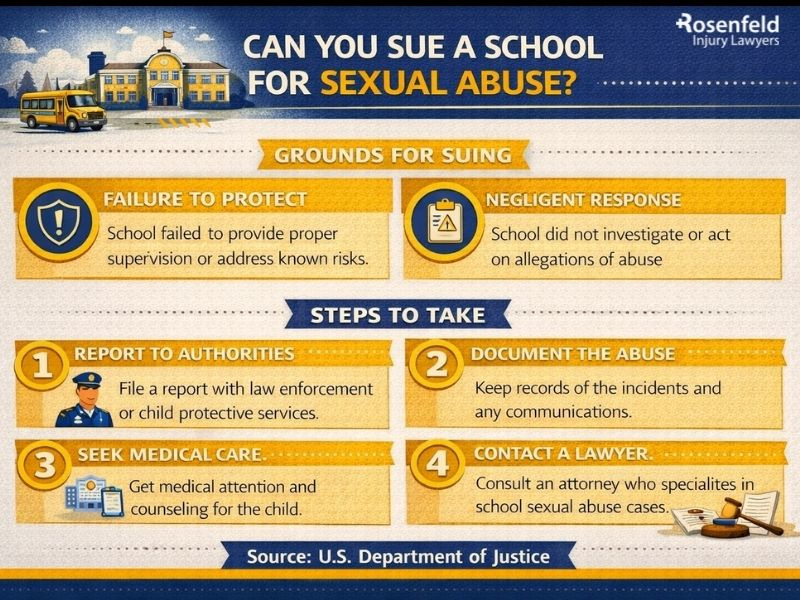
However, negligent hiring is only one part of the story. If even one student complains and the school fails to investigate or take action, then you may be able to sue the school for sexual abuse because there was a history of concerning behavior.
What to Do If Your Child Was Sexually Abused at School
Child sexual abuse can cause severe emotional trauma for an entire family system, but help is available. Taking these steps can help build a strong sexual abuse lawsuit while also assuring your child’s safety.
File a Police Report
A police report provides clear and official documentation that your child was sexually abused, and it can also be used for criminal proceedings if you choose to press charges. Police departments have specially trained officers who can complete forensic interviews with child abuse victims, reducing stress while gathering important details.
Seek Medical Attention
Prompt medical treatment can collect forensic evidence while ensuring there are no physical injuries. Visit the closest emergency room and request a rape kit. The federal Violence Against Women Act requires states to pay for these kits and does not allow them to charge victims.
You can request an exam even if you do not want to pursue a criminal case, and the evidence collected can be used to support a civil claim.
Believing and supporting children who report sexual abuse is crucial. Early intervention and strong social support can help children heal, preventing future negative effects like post-traumatic stress disorder and physical pain. The National Sexual Assault Hotline can direct you to local resources.
Consult a School Sexual Abuse Lawyer
A school sexual abuse lawyer is here to help you review your options, support your family, and protect your child’s privacy. We will review your claim and coordinate all communications with third parties, such as the district’s insurance company and the defendant, so that you can focus on supporting your child through this difficult experience.
We provide confidential, no-obligation consultations, and our trauma-informed attorneys are familiar with the needs of child victims.
How We Can Help You Make Sure All Negligent Parties Are Held Liable
Our role is to collect evidence to hold the district liable for sexual abuse. This can include information such as:
- Police reports
- Forensic exams
- Medical records
- Background checks
- Employment records
- Witness statements
- Report cards
- Private communications
Through our network of trusted professionals, we can secure expert testimony discussing the impact of abuse on a child’s development and future life needs. This provides a strong bargaining position for settlement negotiations, where we seek damages that will cover your child’s care.
We provide comprehensive case management, such as third-party communications, negotiations, and trial representation. Through our services, we will protect your child from unwanted contact with negligent parties, preserve their privacy, and enable you to focus on healing as a family unit.
FAQs
How long after the abuse happened do survivors have to start the legal process?
The statute of limitations on child abuse differs by state. However, many states have extended or eliminated the statute of limitations for child sexual abuse, making it possible to file a lawsuit years or even decades after the incident.
Sometimes, these statutes of limitations may be retroactive. The US Supreme Court case Stoner v. California held that retroactive prosecution of criminal cases violates the due process guaranteed by the 14th Amendment, but this does not apply to civil lawsuits. In 2026, some states have active look-back windows, allowing survivors to file previously time-barred claims.
Regardless of how much time has passed, schools and staff members could still be held legally responsible. Contact us for a free consultation to determine which statute of limitations applies.
What types of damages can victims recover in school sexual abuse cases?
Damages that may be recovered in a school sexual abuse lawsuit can include:
- Medical bills
- Future lost wages
- Counseling
- Educational support, like tutors
- School transfer expenses if necessary
- Physical pain and suffering
- Emotional distress
- Loss of normal life
In some cases, courts will award punitive damages. These are not secured through settlements and may not apply to every case. They are also treated differently from compensatory damages. Our attorneys can discuss whether these are likely to be awarded and what implications they may have on your compensation.
Do victims need to file criminal charges before filing a civil lawsuit?
No, you do not need to pursue criminal charges or file a police report to hold a school liable for sexual abuse in a civil court.
Civil lawsuits and criminal cases are separate legal processes. A criminal case prioritizes punishing the perpetrator, while a civil case focuses on gaining compensation for the victim’s current and future needs.
While pressing charges can be helpful evidence for a civil case, we understand that not every victim is comfortable pursuing that avenue. We will build a robust case regardless of the outcome of any criminal case.
Book a Confidential Consultation to Explore Your Legal Options
Our caring sexual abuse attorneys are Distinguished Justice Advocates, committed to assisting survivors and their families in holding negligent institutions liable. Through our trauma-informed approach to legal advocacy, we empower victims while preserving their privacy and dignity.
We will handle each aspect of your case, including evidence collection, paperwork management, negotiation, and trial representation. Our goal is to relieve your family’s stress while assuring fair treatment by the legal system.
Injury Lawyer Team works on a contingency fee basis: no legal fees unless we win. To schedule your confidential and no-obligation consultation, call us at 866-757-6452 or use our online contact form.
All content undergoes thorough legal review by experienced attorneys, including Jonathan Rosenfeld. With 25 years of experience in personal injury law and over 100 years of combined legal expertise within our team, we ensure that every article is legally accurate, compliant, and reflects current legal standards.