

Sexual Abuse and Assault Injury Lawyers


Streamwood Behavioral Healthcare System Sexual Abuse Lawsuits
Compensation for Victims Sexually Abused at Streamwood Behavioral Healthcare System in Cook County
Injury Lawyer Team is helping survivors file Streamwood Behavioral Healthcare System sexual abuse lawsuits for the systemic failures of Universal Health Services, which allowed institutional abuse to flourish.
Our compassionate attorneys can help you file psychiatric hospital sexual abuse lawsuits to secure compensation for the complex mental health conditions that can result from institutional neglect. Contact us today for a free, confidential consultation about your legal rights.
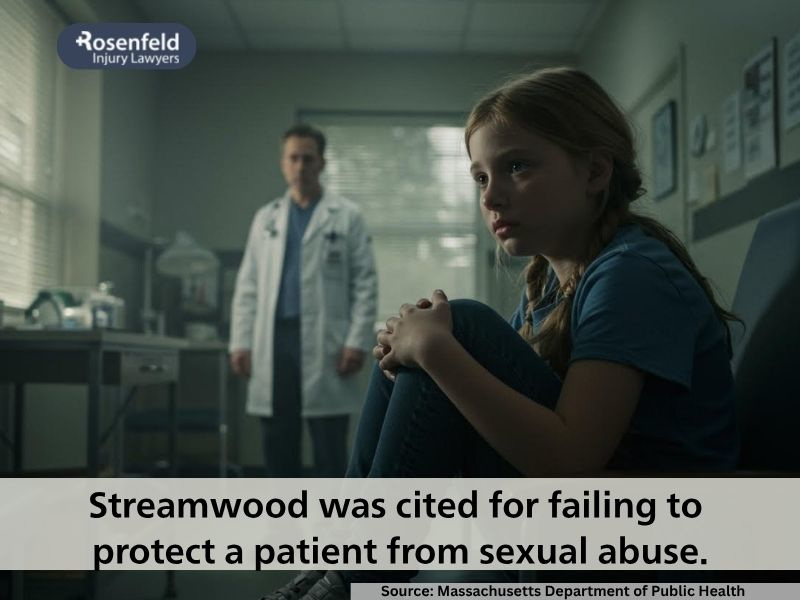
Disturbing Pattern of Misconduct, Sexual, and Physical Abuse at Streamwood Behavioral Healthcare System
Dozens of Illinois sex abuse lawsuits have been filed against Streamwood Behavioral Health Hospital and Universal Health Services facilities. Universal Health Services (UHS) is one of the largest behavioral health providers in Illinois, but it has consistently failed to report abuse allegations or protect patients from predators.
Inadequate Supervision and Failing to Protect Patients From Harm
In May 2017, Joseph Majko, a former behavioral health technician in the Streamwood Behavioral Healthcare system, was charged with sexually assaulting a 12-year-old psychiatric patient. This girl had autism and other developmental disorders that made it impossible for her to fight back.
According to prosecutors, Majko would wake the girl in the middle of the night and rape her in her bedroom or the adjoining bathroom. These serious allegations are a sign of systemic neglect, as Majko should have been properly supervised and removed from the psychiatric facility.
In 2011, the North Suburban Regional Human Rights Authority released a report. One of the complaints was that “Chronic understaffing resulted in a chaotic environment; recipients abused other recipients, and staff members did not intervene.”
The report noted complaints that patients were punished for sleeping too much, even though excessive sedation, often done for staff convenience, caused their excessive tiredness. Patients were locked in their rooms and could not use the bathroom.
Worse still, it is alleged that the facilities made retaliatory DCFS complaints against families who were concerned about the care their children were receiving. While not all the allegations were substantiated, it shows a concerning trend of inadequate supervision, harassment, and neglect.
Violation of the Civil Monetary Penalties Law by Employing Individuals Excluded from Illinois Medicaid
In May 2016, the U.S. Department of Health and Human Services Office of Inspector General ordered Streamwood Behavioral Health System to pay $285,683.03 for violating the Civil Monetary Penalties Law by employing an excluded individual.
By federal law, excluded individuals cannot be hired by facilities that take Medicaid payments. Common reasons for an individual to be excluded include Medicaid fraud, sexual assault, abuse of patients, or dispensing illegal substances.
However, Streamwood Behavioral Healthcare System again violated the act in July 2023, this time hiring two excluded individuals. This time, the facility was forced to pay $180,001.71.
Other UHS Facilities Facing Sexual Abuse Allegations
Other UHS-owned facilities have faced legal scrutiny, with lawsuits alleging that vulnerable minors were subjected to peer-on-peer abuse or sexual violence at the hands of staff members. Multiple lawsuits have been filed for physical abuse, emotional abuse, and a negligent corporate culture that discouraged disclosure of serious concerns to the appropriate authorities.
Hartgrove Behavioral Health System and Hartgrove Hospital
Hartgrove Behavioral Health System was included in a massive lawsuit with over 100 plaintiffs alleging various forms of abuse. These patients alleged that staff forced them to perform sexual acts with other minors and would punish them if they reported the incidents. Some of the victims were as young as 8 years old.
The Illinois Human Rights Authority investigated Hartgrove for neglect and mistreatment of a 7-year-old child. The child was in mental health treatment when he shared abuse allegations, threatened self-harm, and reported hallucinations.
The 7-year-old was prescribed 5 mg of Olanzapine. The Food and Drug Administration has not approved its use in children under 13 due to patient safety concerns, and 5 mg is a starting dose for an adult patient, not a child.
Pavilion Behavioral Health System
Universal Health Services (UHS) was forced to pay $535 million for poor supervision after a minor experienced sexual abuse by another underage patient. According to the lawsuit, the individual was only 13 years old when she was placed at Pavilion Behavioral Health System for mood issues.
Even though her mother was told that males and females were housed separately, she was placed in a room next to a 16-year-old boy with a history of sexual aggression. With the help of another boy, he obscured cameras, distracted staff members, and then sexually abused the 13-year-old girl. Due to corporate negligence, the incident was never reported to the police.
Riveredge Hospital
In 2013, the Chicago Region Human Rights Authority received substantiated complaints that staff physically abused vulnerable patients, including those with developmental disorders. Children would be locked in their rooms due to other patients having problems, and they would be subjected to further trauma when staff hit or insulted them.
The issues at Riveredge date back to at least 2009, when multiple children experienced abuse at the hands of other residents. Due to these concerns, DCFS temporarily suspended placing children there and released an 84-page report, produced in partnership with the University of Illinois-Chicago, that detailed the serious institutional failures that result in unspeakable harm.
Tragically, one 12-year-old child was raped three times by a 15-year-old boy in 2006. Staff did not take the 12-year-old boy seriously, and instead wrote in his chart that his claim of abuse “appears inconsistent with the passive behaviors he describes for these incidents.”
However, many sexual abuse victims, particularly children, will show a freeze response during an assault, called tonic immobility. Claiming that he was not a victim because he did not fight back is a form of victim-blaming that is inconsistent with neuroscience.
Rock River Academy
Massive institutional failures at Rock River Academy resulted in sex trafficking, child molestation, and physical fights amongst teenagers. This Rockford, Illinois, psychiatric facility offered residential treatment for girls with emotional or developmental issues. After a flood of complaints about abuse at the facility, it was permanently closed in 2016.
Rock River Academy was supposed to be a place of healing for girls who had difficult home lives, psychiatric conditions, or developmental disabilities. However, these vulnerable patients were subjected to extreme violence by other residents and staff on a regular basis.
One girl stated that there would be at least 15 fights a day and that the staff did nothing to intervene. Rockford Police received 350 calls in four years from the facility, with several allegations of rape and fondling by staff.
In 2012, Ellis Simmons, a former member of staff at the treatment center, was convicted of molestation. Simmons also worked as an officer at the Winnebago County Juvenile Detention Center, where he also preyed upon vulnerable girls.
What Damages Can Victims Recover in Sexual Abuse Lawsuits?
Our attorneys will fight hard for maximum compensation in residential treatment facility sexual abuse lawsuit. We will evaluate your hard financial losses and consult with professionals to develop a life care plan, which will include what future needs you may have a result of the abuse.
Damages commonly awarded in these lawsuits include:
- Medical bills
- Behavioral health treatment
- Loss of future wages
- Physical pain and suffering
- Emotional distress
- Loss of normal life
In cases of gross negligence that go to trial, a jury may award punitive damages. These are treated differently from compensatory damages, such as potentially being taxed (735 ILCS 5/2-1115.05). Additionally, they are not awarded in every case.
What Factors Influence Compensation Amounts?
Civil lawsuits have a wide range of payouts depending on specific factors of the case. Some of these include the following.
Type of Abuse: Sexual abuse and physical assaults often receive more compensation than emotional abuse or harassment.
Frequency and Duration of Abuse: Incidents that occur over weeks, months, or years are considered more severe than incidents that occur only once.
Severity of Abuse: Violent assaults that result in serious physical harm or involve restraint – including locking the victim in a room or keeping them from escaping – will typically receive higher compensation.
Impact on the Victim’s Life: Using your personal testimony and that of healthcare professionals, we will demonstrate how this incident has changed the course of your life.
Overall Damages: Both your economic and non-economic damages will be considered in your settlement. For example, if you required inpatient psychiatric treatment as a result of the harm that occurred, this will be included. Professionals can also explain what future care you may need.
Available Evidence: Documentation like medical records, witness statements, facility inspections, and prior complaints by other patients can bolster your claim and improve your chances of receiving compensation.
Liability: The strength of liability also determines how much you receive. To consider a defendant liable, you must prove that they had a duty to protect you and failed to do so, resulting in your injuries and damages. This can be demonstrated through the available evidence.
Defendants and Insurance Policies: The Illinois Joint Tortfeasor Contribution Act allows plaintiffs to seek damages from more than one party (740 ILCS 100/2). The amount of contributory negligence by each party determines how much they will have to pay of the overall damages (735 ILCS 5/2-1107.1). If the Streamwood Behavioral Healthcare System is considered primarily liable, then their insurance policy will have to pay more.
How Long Do Victims Have to Take Legal Action Against Mental Health Facilities in Illinois?
Illinois has empowered sexual abuse survivors to file, even if it has been decades since their injuries. The criminal statute of limitations has been eliminated for felony sexual offenses against children, meaning that prosecution can begin at any time if the victim was under 18 (720 ILCS 5/3-6).
Civil lawsuits for sexual abuse against children also do not have a statute of limitations (735 ILCS 5/13-202.2). According to the Illinois Supreme Court case Hobert v. Covenant Children’s Home, this extended statute of limitations also applies to vicariously liable parties, such as institutions, that failed to protect those under their care.
The Illinois Tort Immunity Act is typically used to shield public entities, such as DCFS, from lawsuits by imposing strict filing deadlines. However, this does not apply to sexual abuse lawsuits for victims under the age of 18 (745 ILCS 10/).
Who Can Be Held Liable for Sexual Abuse Due to Inadequate Patient Safety at Behavioral Health Facilities?
Our team will thoroughly investigate your claim to identify all potentially liable parties, who will each be assigned a portion of the blame. These can include the following.
Individual Perpetrators: You can sue the individual offender for the grievous harm that their actions have caused.
Parents of Minor Offenders: Some sexual abuse in behavioral health facilities involves minor offenders. Under the Illinois Parental Responsibility Law, parents can be held liable for the willful and malicious acts of individuals under the age of majority (740 ILCS 115/).
Streamwood Behavioral Healthcare System: The facility can be held accountable for negligent hiring, training, or supervision of its employees, or for understaffing that led to harm.
Universal Health Services: As multiple UHS facilities in Cook County and beyond have been charged with allegations of negligence, our attorneys can pursue UHS as a whole for failing to implement necessary changes or update their policies.
Government Agencies: Any healthcare facility must be subject to government oversight. Additionally, DCFS and the Department of Health and Human Services are supposed to ensure patient safety through investigations.
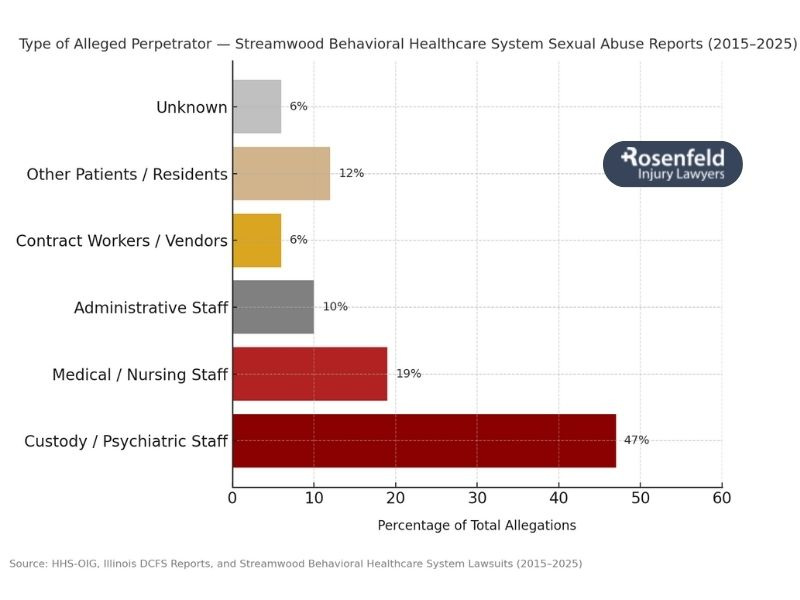
How Injury Lawyer Team Can Help
Our Super Lawyers®-rated attorneys are passionate about victims’ rights and ensuring that negligent organizations are held accountable. We will thoroughly investigate your case to identify any systemic issues that may have contributed to the harm.
For example, we can review medical records, employment records, complaints, facility inspections, and other records that demonstrate the institutional failures of Streamwood and its parent company. We will also interview eyewitnesses, such as other residents or staff, to gain their perspective.
One of our strengths is acquiring expert witnesses who can attest to the tremendous psychological damage that occurs to vulnerable patients when they are mistreated in a psychiatric facility. With this evidence in hand, we will aggressively negotiate for maximum compensation. As a member of the Million Dollar Advocates Forum, we have secured over $450 million in settlements and positive verdicts for 5,000 clients nationwide.
Injury Lawyer Team works on a contingency fee basis, meaning that our legal fees are deducted from your settlement. You do not have to pay anything out of pocket for our services. Take the first step toward healing by calling us to schedule your free, confidential consultation with a caring attorney.
All content undergoes thorough legal review by experienced attorneys, including Jonathan Rosenfeld. With 25 years of experience in personal injury law and over 100 years of combined legal expertise within our team, we ensure that every article is legally accurate, compliant, and reflects current legal standards.