

Sexual Abuse and Assault Injury Lawyers


Why Survivors Are Taking Legal Action Against the Mormon Church
At Injury Lawyer Team, we stand with people who are ready to explore why survivors are taking legal action against the Mormon Church and what this moment means for anyone who suffered sexual abuse within the Church of Jesus Christ of Latter-day Saints.
These cases are not simply about looking backward, but about accountability, healing, truth, and protection moving forward. Survivors are no longer willing to carry the silence that was imposed on them in the name of faith, obedience, or the preservation of an institution.
As Mormon Church sexual abuse attorneys, we believe in your case, and we are here to guide you through a civil lawsuit that honors your voice and your courage.
For decades, church members who experienced childhood sexual abuse or other forms of misconduct connected to religious institutions such as the LDS Church were told to remain quiet, pray, forgive, and trust leadership. Many did. Others tried to speak and were ignored. Now, survivors across the country are choosing to pursue legal action and justice. You are not alone, and we will stand with you.
Why Survivors of Abuse in the LDS Church Are Speaking Out Now
We see a powerful shift in our clients, one fueled by voices rising together. Mormon Church sexual abuse lawsuits have created momentum, visibility, and community where silence once dominated. Survivors who were isolated for years are now finding strength in shared truth.
The emotional and cultural reasons for decades of silence are deeply personal and complex:
- Fear of community backlash: Many survivors were afraid they would be shunned by other church members, family, or neighbors in tight-knit church communities.
- Obedience to church leadership: Members were taught to honor authority, trust bishops, and view dissent as disobedience to the Mormon Church.
- Shame, guilt, or internalized blame: Survivors were often made to feel responsible for abuse that was done to them.
- Prior disclosures dismissed or minimized by leaders: Multiple clients tell us their early reports were downplayed, buried, or reframed as misunderstandings rather than serious abuse allegations.
Recent media coverage, survivor advocacy networks, and major lawsuits involving the Mormon Church have helped break the illusion that survivors stand alone. National investigations, reporting by major news outlets, and testimony from other adult survivors have given our clients something powerful: permission to speak.
We see every day how this validation changes the path forward. Speaking out no longer feels like a betrayal of the Mormon values; it feels like truth.
The Church’s Institutional Failures and Their Role in Litigation Decisions
Our clients often tell us they wanted to trust the system until the system failed them.
Across multiple states, survivors point to recurring patterns that influenced their decision to pursue a civil lawsuit:
- Bishops and stake presidents minimizing reports
- Leaders prioritizing protection of the institution instead of the child
- Lack of transparency about prior abuse allegations
- Church legal and administrative systems directing leaders away from police involvement
Many were encouraged to “handle it internally,” keep matters “within the Church,” or were simply told there was nothing that could be done. For people who experienced sexual abuse, these responses created a second wave of trauma, one rooted in betrayal by a spiritual system tied to the Mormon Church and lifelong trust.
For many survivors, legal action is a direct response to that betrayal. They are responding to the harm caused by institutional silence, reputation management, and deliberate inaction by powerful religious organizations.
A civil lawsuit becomes the only place where truth is finally heard.
Why Filing Civil Claims Offers Survivors Something Criminal Systems Do Not
One of the most heartbreaking facts we tell our clients is this: many abusers were never charged with criminal offenses. Not because the abuse didn’t happen, but because the legal system failed to act in time or was never given the chance.
Common barriers include:
- Abusers shielded by closed systems of authority
- Lack of police involvement
- Statutes of limitations blocking criminal charges
- Victims being too young, afraid, or unsupported to report
A civil lawsuit creates a separate and powerful path. Survivors can hold both the individual abuser and the LDS Church accountable, even when the criminal system no longer can.
Civil lawsuits allow for:
- Institutional discovery
- Depositions of church leaders
- Internal document production
- Examination of past complaints and handling
- Exposure of patterns of abuse
Survivors often tell us this process is about much more than seeking compensation. It is about acknowledgement. It is about putting truth into the public record. It is about knowing that someone, finally, believes them.
At the same time, a civil case does allow survivors to seek financial compensation for:
- Therapy and counseling
- Medical expenses
- Lost income
- Long-term psychological impact
- Emotional distress
These costs are real, and survivors deserve access to support and stability after years of suffering.
The Power of Civil Discovery in LDS Abuse Cases
One of the single most important factors behind this national movement is what makes LDS Church lawsuits legally unique: the extraordinary power of discovery in civil litigation.
When we file civil lawsuits on behalf of people who experienced sexual abuse, the legal process allows us to request information from the Mormon Church that was previously inaccessible to survivors, families, or even law enforcement.
During discovery:
- Internal church communications may be revealed
- Manuals, training protocols, and internal reports can be obtained
- Hidden patterns of repeated abuse can be identified
- Leaders may be forced to testify under oath
- Past complaints can be examined in detail
Depositions place leaders on the record. Written evidence must be produced. Silence, once protected behind closed doors, is replaced by facts.
For survivors who were ignored for years, discovery represents a rare form of justice: the truth cannot be buried. Records become visible. History is documented. Responsibility is confronted.
This is one of the biggest reasons survivors are now willing to pursue legal action. They finally see a path to the truth.
State Revival Laws and Reopened Opportunities to File Lawsuits
Another major turning point is the emergence of state revival laws in LDS Church sexual abuse cases. These laws have given many survivors who once believed they were permanently time-barred a new opportunity to find justice.
Across several states, lawmakers have enacted:
- Revival windows
- Extended statute of limitations
- Survivor-focused legislation
- Temporary periods for legal action regardless of age
This matters because abuse that happened decades ago can now be addressed within the legal system, even if no criminal charges were brought against the abuser.
For many clients, this realization is overwhelming. They believed their window closed long ago. Now, they are discovering that they still have the legal right to file lawsuits, hold the Mormon Church accountable, and seek compensation for the abuse they sustained.
However, these windows are often temporary.
That is why we emphasize urgency. Some revival periods last only one or two years. Others close quickly depending on the state. Survivors feel the weight of time, and we walk beside them as they explore their legal avenues before the doors close again.
You are not too late in trying to reclaim your life, but please keep in mind that the time to pursue legal action may be limited.
Why Filing Sexual Assault Lawsuits Against the Mormon Church Matters
When our clients make the decision to file civil lawsuits against the Mormon Church, it is rarely a choice made lightly. These cases are not driven by money alone, but also by meaning, truth, and a deeply human need to be seen after years, and in many cases decades, of silence.
For many survivors, the abuse they endured was woven into their spiritual life, family identity, and sense of belonging within the Mormon faith and the broader church community. Speaking out can feel terrifying. Filing legal action can feel like breaking a sacred bond. And yet, survivors still step forward, not out of anger alone, but out of courage, clarity, and a desire for change.
We hear the same motivations again and again:
- Seeking acknowledgment after years of silence
- Preventing harm to future children
- Exposing systems that enabled abuse
- Correcting false narratives that blamed survivors
- Accessing therapy, healing, and long-term recovery services
- Finding community with others who are filing together
- Reclaiming personal power
Many who move forward with legal action tell us it is the first time in their lives that they have felt truly heard, respected, and believed by a legal system that is finally willing to listen. Prosecutors may have looked away. Church leaders may have minimized the truth. But in a civil case, their voice becomes evidence, and their story becomes part of the public record.
By pursuing legal action, survivors move from isolation to solidarity. From secrecy to truth. From shame to empowerment. They are no longer just victims of what happened, but agents of change. And this is exactly how systems change.
The Role of High-Profile LDS Investigations and News Coverage
National attention has played a major role in this shift. The LDS Church Help Line scandal is one of the most significant developments influencing survivor confidence in recent years.
As reported by the Associated Press and other major outlets, the Help Line has been linked to serious failures in reporting and survivor protection. It has raised questions about how abuse reports were handled and whether institutional interests were prioritized over child safety.
Survivors see their own stories reflected in these reports. They see that what happened to them wasn’t isolated, but patterned, systemic, and preventable.
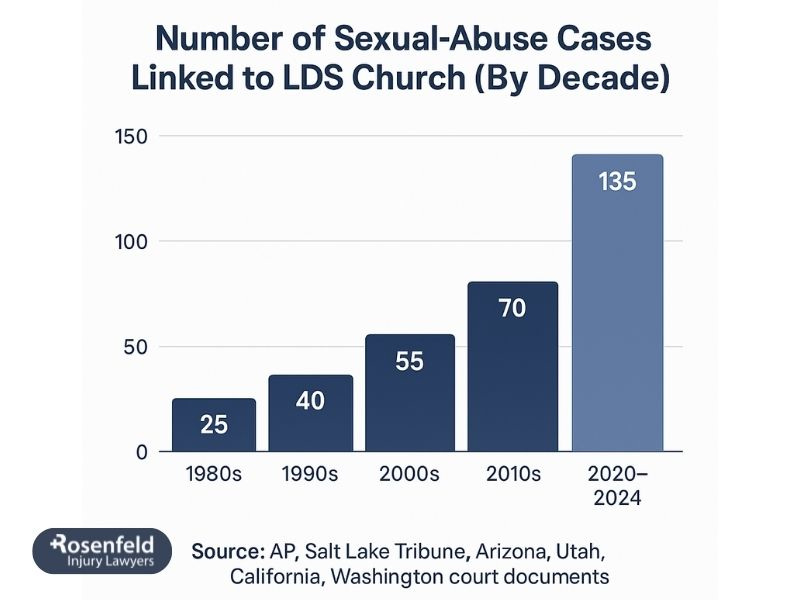
The visibility of lawsuits in Arizona, California, Utah, and other states further reinforces that survivors everywhere are rising. Each article, investigation, and public record creates more courage, more validation, and more voices. And with every new story, more people choose to seek justice.
How Our Law Firm Can Help with a Trauma-Informed, Survivor-Focused Approach
At Injury Lawyer Team, we understand that bringing a childhood sexual abuse case involving the Church of Jesus Christ of Latter-day Saints or religious organizations is emotionally complex, often tied to faith, family, identity, and fear.
Our approach includes:
- Confidential consultations
- Deep understanding of LDS hierarchy and internal systems
- Experience handling multi-state cases
- Knowledge of revival laws and time-sensitive filing options
- Trauma-informed communication throughout the legal process
- Respect for each survivor’s pace, boundaries, and healing
We are not here to pressure you, we’re here to inform you. To listen, support you, and stand with you. You bring your story. We bring clarity, knowledge, and strength.
Explore Your Legal Options
If you are wondering how to file a sexual abuse lawsuit against the LDS Church, we are here to explain every step. We will help you understand your rights, your timeline, and the options available to you under current laws.
Your consultation with our sexual abuse law firm is free, confidential, and handled on a contingency fee basis. That means you do not pay upfront costs, and you owe no legal fees unless we recover financial compensation for you. You deserve answers, support, and a chance to be heard.
Contact us today to explore your legal options and take the first step toward healing, truth, and accountability.
All content undergoes thorough legal review by experienced attorneys, including Jonathan Rosenfeld. With 25 years of experience in personal injury law and over 100 years of combined legal expertise within our team, we ensure that every article is legally accurate, compliant, and reflects current legal standards.