

Sexual Abuse and Assault Injury Lawyers


Lakeside Academy Sexual Abuse Lawsuits
Compensation for the Lasting Impact of Abuse at Lakeside Academy
At Injury Lawyer Team, we stand with survivors of Lakeside Academy sexual abuse and other institutional abuse cases across Michigan.
Families placed their trust in this residential treatment facility, hoping their children would feel safe and that it would provide structure and rehabilitation for vulnerable youth struggling with behavioral issues and substance abuse. Instead, disturbing allegations reveal that staff members committed misconduct, used improper restraints, and in some cases sexually abused residents.
Our attorneys represent survivors in Michigan residential treatment sexual abuse lawsuits, holding for-profit companies accountable when they prioritize making money over the well-being of young people. Survivors deserve experienced attorneys, well-equipped to provide justice, resources, strong evidence to support their claims, and financial compensation to help rebuild their lives after such trauma.
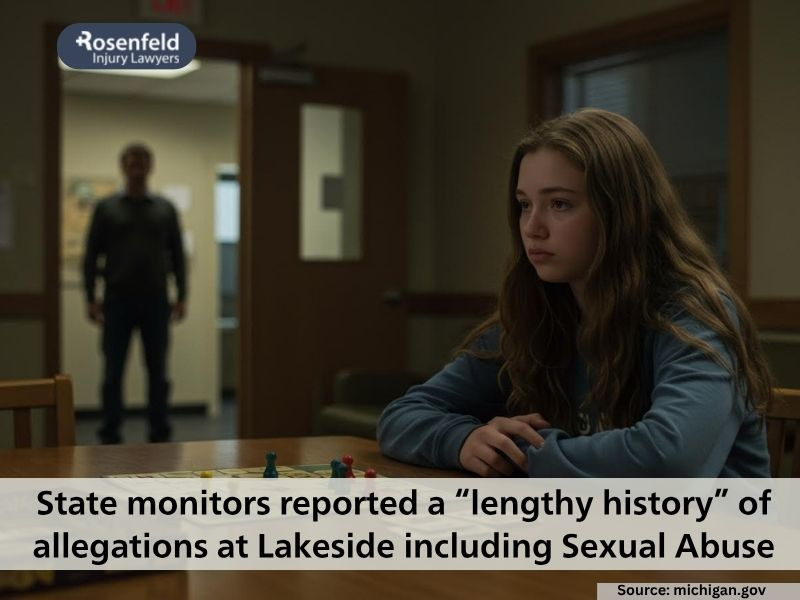
Sexual Abuse at Lakeside Academy
About the Facility
Lakeside Academy was a residential treatment program in Kalamazoo, Michigan, designed to serve troubled teenagers and vulnerable children between the ages of 12 and 18. The program was operated by Sequel Youth and Family Services, a for-profit company with a national network of residential treatment facilities and youth programs.
Lakeside Academy housed hundreds of young people referred by Michigan courts, schools, and the Department of Health, often for behavioral problems, substance abuse treatment, or other interventions.
While marketed as a therapeutic environment, Lakeside Academy developed a troubling history of allegations. Reports from residents, families, and oversight agencies describe a facility culture plagued by staff wrongdoing, improper restraints, and a failure to protect children from abuse and even self-harm.
Notable Cases
The most publicized incident at Lakeside occurred in May 2020, when 16-year-old Cornelius Frederick died after staff members improperly restrained him. Witnesses reported he cried out, “I can’t breathe,” as multiple staff restrained him following a minor behavioral incident in the cafeteria.
The tragedy drew national attention, shining a light on the systemic failures not only at Lakeside Academy, but across residential treatment centers run by the same company.
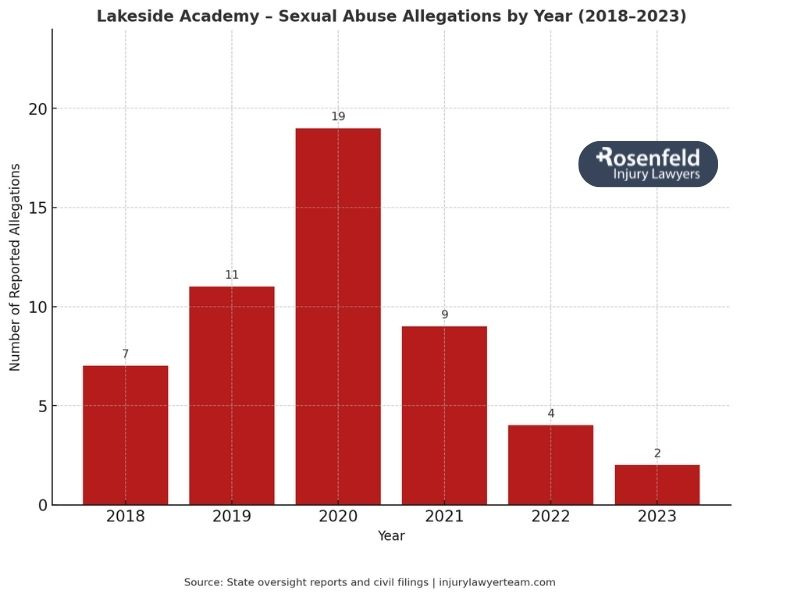
Alongside the death of Cornelius Frederick, other allegations surfaced of sexual and physical abuse at Lakeside Academy. Survivors reported that some staff members engaged in inappropriate conduct with residents, while others turned a blind eye to it. Investigations revealed strong evidence and a pattern of alleged abuse, including sexual abuse and exploitation, which led to multiple lawsuits.
Closure of the Facility
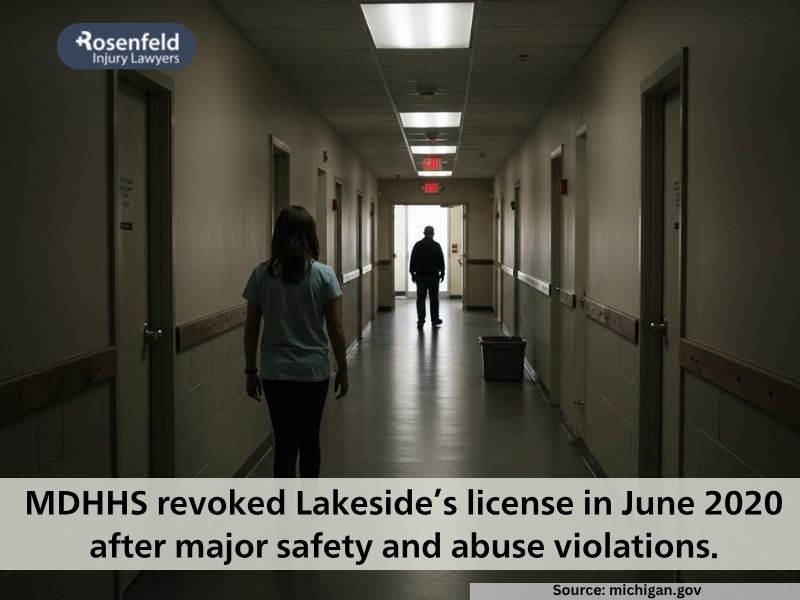
Following Frederick’s death, mounting evidence of mistreatment of other residents, and impending abuse lawsuits, the Michigan Department of Health and Human Services revoked its license and closed Lakeside Academy.
In June 2020, the state officially shut down the facility, citing a history of violations and a failure to protect the well-being of residents. The closure was seen as a necessary step to prevent further harm, but for survivors who were sexually abused, neglected, or otherwise mistreated at Lakeside, the trauma had already been committed.
What Causes Sexual Abuse at For-Profit Companies Like Sequel Youth and Family Services?
Abuse in facilities like Lakeside Academy is often linked to the for-profit model. These companies have been accused of putting profits ahead of resident safety—which lead to poor staff training, neglect, and unsafe environments for vulnerable youth. When cost-cutting comes before care, staff mistreatment, sexual abuse, and even death are more likely to occur.
In recent years, multiple Sequel Youth and Family Services sexual abuse lawsuits have been filed across the country. These cases expose systemic failures, including weak oversight and a culture of cover-ups, that put troubled youth at risk instead of offering protection.
What Laws Govern Sexual Abuse Lawsuits Against Residential Treatment Programs in Michigan?
Victims of Lakeside Academy abuse and other wrongdoing in Michigan residential treatment facilities have important legal protections. Both state and federal laws create avenues for criminal prosecution and civil lawsuits to hold staff, private companies, and government agencies accountable.
Michigan Criminal Sexual Conduct Statutes
Michigan law defines sexual abuse crimes under MCL § 750.520b – 750.520e, which outline the degrees of criminal sexual conduct (CSC).
These categories determine how sexual abuse is prosecuted, ranging from first-degree CSC (involving penetration and force or coercion) to lesser degrees still considered serious felonies. Even without a criminal conviction, Michigan statutes provide the foundation for attorneys to file civil lawsuits based on sexual abuse claims.
Constitutional Protections
- Eighth Amendment: Prohibits cruel and unusual punishment. In custodial or treatment settings, courts have interpreted it to protect residents from sexual abuse, particularly when institutions show deliberate indifference to mistreatment.
- Fourteenth Amendment – Due Process Clause: Protects individuals held in state custody, including residents of youth treatment centers like Lakeside Academy, from abuse that violates basic liberty and bodily integrity.
Section 1983 Civil Rights Act
Under 42 U.S.C. § 1983, survivors may file a civil lawsuit in federal court against state officials or agencies for violations of constitutional rights. This statute has been central to abuse lawsuits involving juvenile detention centers.
Prison Rape Elimination Act (PREA)
The Prison Rape Elimination Act of 2003 (34 U.S.C. § 30301 et seq.) sets national standards to prevent, detect, and respond to sexual abuse in confinement settings. While PREA does not create a private right to file an abuse lawsuit, it establishes protocols that facilities like Lakeside Academy must follow.
Michigan Governmental Tort Liability Act
Finally, the Michigan Governmental Tort Liability Act (MCL § 691.1407) provides some immunity for state employees and agencies.
However, this immunity does not extend to sexual abuse lawsuits involving gross negligence or intentional mistreatment. This statute is often central in determining whether survivors can pursue claims against government bodies or staff in state-supervised facilities such as Lakeside Academy.
What Is the Michigan Statute of Limitations for Sexual Abuse?
Victims of sexual abuse in Michigan must be aware of the state’s sexual abuse civil statute of limitations, which determines how long they have to file an abuse lawsuit.
Current Statutes
- MCL § 600.5805(6): Provides a 10-year statute of limitations for civil lawsuits based on criminal sexual conduct. This deadline applies even if the perpetrator was never criminally convicted.
- MCL § 600.5851b: Establishes a discovery rule for victims who may not immediately connect their injuries to past abuse. It allows victims to file abuse lawsuits until the age of 28, or within three years of discovering the harm and its connection to the abuse—whichever period is later.
Pending Legislation: Justice for Survivors Act
In May 2025, the Michigan Senate passed the Justice for Survivors Act (SB 257–SB 261), which would expand the rights of survivors by extending the filing deadlines and opening the door for more victims of sexual abuse at a young age to seek justice. If enacted, this legislation could allow survivors more time to pursue financial compensation through civil lawsuits.
Who Can Be Held Liable in Lawsuits for Sex Abuse at Lakeside Academy?
Survivors of sexual abuse at Lakeside Academy may bring a civil lawsuit against several parties:
- Staff Members – Employees who committed sexual abuse, neglect, or mistreatment can be held directly liable.
- Facility Administration – Supervisors and counselors who ignored complaints or failed to protect residents share responsibility.
- Parent Company – The for-profit company that operated Lakeside can be sued for putting profits over the safety of vulnerable youth.
- Michigan Department of Health and Human Services – The state agency that licensed and oversaw the facility may also face claims if it failed to act on repeated reports of abuse.
What Damages Can Sexually Abused Victims Recover?
Survivors of sexual assault often face lifelong consequences. Through successful residential treatment facility sexual abuse lawsuits, courts may award both economic and non-economic damages, providing meaningful financial compensation for the person who endured harm.
Common Recoverable Damages:
- Medical expenses – Costs of hospital visits, ongoing medical care, and treatment for injuries caused by staff mistreatment or neglect.
- Therapy and counseling – Long-term support for trauma, depression, PTSD, and other mental health challenges.
- Pain and suffering – Compensation for the emotional, physical, and psychological harm caused by abuse.
- Loss of future earnings – If abuse lead to the survivor’s inability to continue school, work, or career development.
- Punitive damages – In some severe cases, courts may award damages designed to punish gross negligence or deliberate indifference by staff or administrators.
Sexual Assault Settlements & Verdicts Recovered by Our Law Firm
Injury Lawyer Team has secured major settlements for survivors of sexual assault, institutional neglect, and mistreatment in residential treatment and youth facilities.
- $1.16M – Youth Facility Assault: Teen abused by staff member in a juvenile detention center; records showed prior mistreatment.
- $6.5M – Cruise Ship Rape: Teen assaulted by crew member; company failed to address safety complaints.
- $1M – After-School Program Abuse: Man recovered compensation after being sexually abused as a child in an after-school program with inadequate supervision.
How Injury Lawyer Team Can Help
Pursuing justice after Lakeside Academy sexual abuse or other institutional misconduct is never easy. These cases often involve powerful institutions, missing records, and survivors reintegrated into society while still carrying lasting trauma.
At Injury Lawyer Team, our experienced sexual assault attorneys know how to gather convincing evidence, challenge corporate cover-ups, and fight for the rights of survivors in residential treatment facility sexual abuse lawsuits.
We handle every case on a contingency fee basis, meaning you pay nothing unless we win. If you or a loved one has been harmed in a treatment center, youth facility, or other institution, speak to our attorneys today for free and schedule a confidential consultation.
All content undergoes thorough legal review by experienced attorneys, including Jonathan Rosenfeld. With 25 years of experience in personal injury law and over 100 years of combined legal expertise within our team, we ensure that every article is legally accurate, compliant, and reflects current legal standards.