

Sexual Abuse and Assault Injury Lawyers


Foster Children’s Legal Rights
At Injury Lawyer Team, we believe that every child in foster care deserves safety, dignity, and the chance to grow up in a nurturing environment. Understanding foster children’s legal rights is an essential first step in protecting those who are most vulnerable: youth who have already faced separation, trauma, or instability.
Our firm has represented survivors and families in foster care sexual abuse lawsuits, standing up against agencies, foster parents, and institutions that failed in their duty to protect children. We know that the foster care system can feel overwhelming and that reporting mistreatment may seem impossible, especially for a child without consistent support.
You’re not alone. We stand with foster youth and their families, helping them navigate complex laws, hold negligent parties accountable, and ensure that every child’s voice is heard and their rights are respected in and beyond the courtroom.
What Is the Foster Youth Bill of Rights?
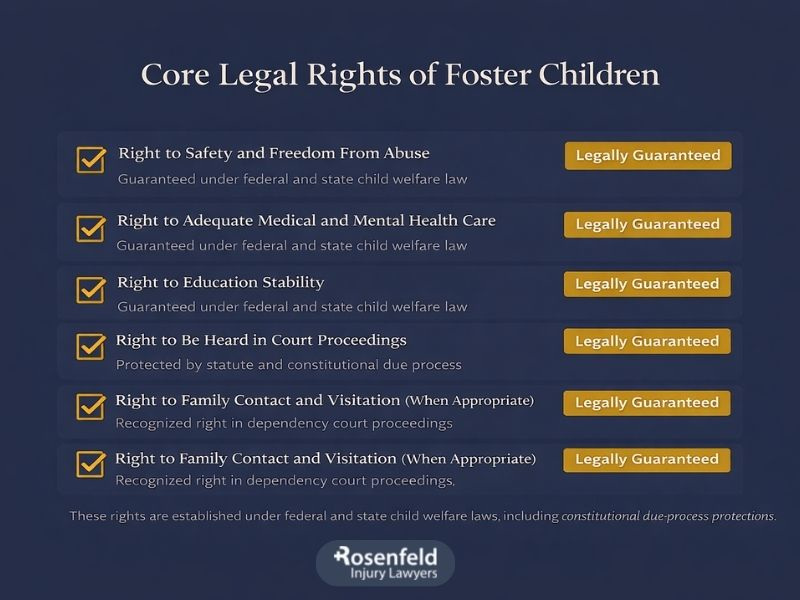
The Foster Care Bill of Rights is a collection of laws that outline how children, foster parents, and agencies must interact within the child welfare system. It includes two primary components: the Foster Children and the Foster Parent Bills of Rights, each defining essential protections and responsibilities designed to promote safety, dignity, and stability for foster youth.
Across the United States, the Foster Children Bill of Rights must often be displayed in foster homes and residential facilities so that children understand their protections and know how to report concerns.
The laws ensure that youth are informed about why they are in foster care, what their case plan involves, and how they can take part in decisions about their own lives. They also guarantee access to education, health and mental health care, recreational opportunities, and safe communication with siblings, relatives, and advocates.
The Foster Parent Bill of Rights complements these protections by ensuring that caregivers are treated as valued members of the child welfare team and that they apply a “reasonable and prudent parenting” standard, allowing children to participate in age-appropriate activities while maintaining safety and supervision.
On a federal level, the Preventing Sex Trafficking and Strengthening Families Act of 2014 (H.R. 4980) requires that all youth aged 14 and older are directly involved in developing or revising their case plans. Each plan must include a written statement of the child’s rights, addressing education, visitation, health care, court participation, safety, and protection from exploitation.
The following state examples illustrate how these protections are implemented and expanded across different jurisdictions in the United States.
Illinois
In Illinois, the Foster Children’s Bill of Rights Act (20 ILCS 521) establishes a comprehensive list of protections for children and adults under the care of the Department of Children and Family Services.
It guarantees the right to live in a safe, healthy, and respectful home; freedom from physical, sexual, emotional, or other abuse; access to food, clothing, and medical care; and the ability to contact family members, social workers, attorneys, and advocates. Children are entitled to attend school, take part in extracurricular activities, and participate in court hearings concerning their future.
The Act also prohibits discrimination based on race, religion, gender identity, sexual orientation, or disability and requires training for caregivers on cultural competency and inclusion. These statutory safeguards are crucial in preventing and addressing foster care sexual abuse in Illinois, where failure to enforce safety measures has led to serious violations of children’s rights.
California
California has one of the most comprehensive foster care rights frameworks in the country.
Under the California Welfare and Institutions Code (§§ 361.2(k), 362.05, and 16001.9), foster children must be placed in safe, family-like homes that meet their daily needs and support their development. The law requires caregivers to apply a reasonable and prudent parenting standard to allow youth to join in social, cultural, and educational activities that promote normal childhood experiences.
Foster youth are guaranteed protection from abuse, access to health and mental health services, confidentiality in communication, and freedom from discrimination based on factors such as sexual orientation, gender identity, or disability. Facilities must also post these rights and explain them to youth in an age-appropriate way.
These protections play a central role in legal actions involving foster care sexual abuse in California, ensuring agencies and caregivers are held accountable for violations of duty.
New York
The New York State Bill of Rights for Youth in Foster Care ensures that minors and young adults understand their legal entitlements while in care.
It provides the right to be safe, healthy, and treated fairly; to see and communicate with people they care about; and to remain in their current school unless a move is determined, with their input, to be in their best interest. Youth also have the right to confidential legal and immigration assistance and may remain in or reenter foster care until age 21.
In addition, former foster youth can continue to receive health insurance until age 26, helping them maintain essential support as they transition to independence. These principles promote transparency and empowerment and are critical to addressing and preventing foster care sexual abuse in New York, where systemic failures in monitoring have historically caused harm.
Pennsylvania
Pennsylvania’s Children in Foster Care Act (Pa. Stat. tit. 11, § 2633) defines extensive rights for foster children, caregivers, and biological parents.
It guarantees that children are treated with fairness and dignity, protected from corporal punishment, harassment, and all forms of abuse, and placed in the least restrictive, family-like setting that meets their needs. Children are entitled to nourishment, appropriate clothing, medical and mental health services, education, and the ability to visit family and siblings when consistent with court orders.
The law also gives children the right to attend court hearings, be heard by a judge, and file grievances if their rights are violated. These provisions are frequently invoked in cases involving foster care sexual abuse in Pennsylvania, where agencies have failed to uphold statutory obligations to protect youth from harm.
Michigan
Michigan emphasizes communication, documentation, and ongoing education for youth in care. The Rights and Responsibilities for Children and Youth in Foster Care (DHS-5307) must be reviewed and explained within 30 days of a child’s placement and revisited at least once a year and during any placement change.
The document outlines rights related to safety, education, health care, and participation in court, as well as procedures for reporting concerns through the agency or the MDHHS Office of Family Advocate.
Caseworkers are required to ensure that children, parents, and caregivers understand these rights and know how to file grievances. This consistent review process helps prevent violations and strengthens accountability across the system.
Such protections are particularly important in addressing foster care sexual abuse in Michigan, where communication and oversight play a vital role in safeguarding vulnerable youth.
Together, these examples show how the Foster Care Bill of Rights serves as both a legal framework and a moral commitment, ensuring that youth in state care are treated with respect, provided essential resources, and given the power to understand and defend their own rights.
What Are Common Violations of Foster Care Children’s Rights?
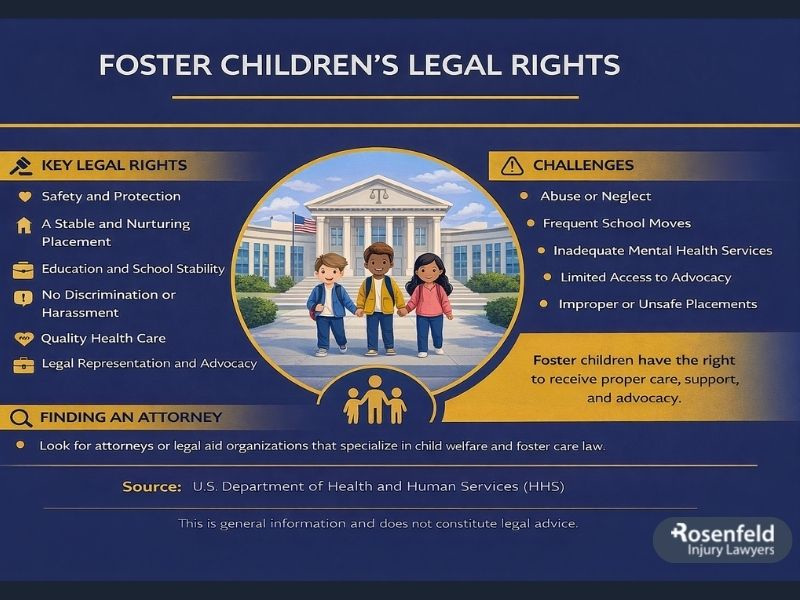
Despite legal protections, violations of the Foster Care Bill of Rights remain common nationwide. Many foster children still face mistreatment, neglect, and systemic failures caused by underfunded agencies, overworked caseworkers, or weak oversight.
When the state takes custody of a child, it assumes a duty to protect the child’s safety, education, and emotional well-being, but that duty is often broken. Children may be shuffled between placements, separated from siblings, denied medical or educational access, or even abused in the homes meant to keep them safe.
Some of the most common violations of foster children’s rights include:
- Unsafe or abusive placements: Many children are placed in homes that have not been properly screened or monitored, leading to incidents of physical, emotional, or sexual harm.
- Failure to provide adequate health care: Youth are often denied timely medical, dental, or mental health treatment, despite explicit legal requirements guaranteeing such care.
- Lack of educational stability: Frequent placement changes and poor communication between agencies and schools can disrupt education, leaving youth behind academically.
- Inadequate supervision by social workers: Missed home visits, falsified reports, or high caseloads may allow ongoing abuse or neglect to go unnoticed.
- Discrimination or harassment: Some children face unfair treatment based on race, religion, sexual orientation, or gender identity, violating both state and federal anti-discrimination protections.
- Suppression of complaints or retaliation: Youth who report abuse or rights violations may be threatened, silenced, or punished instead of being supported and protected.
These failures often lead to severe harm, including different types of abuse in foster care, such as physical violence, emotional manipulation, sexual exploitation, and neglect. Agencies, group homes, and foster parents have all been held liable for allowing these conditions to continue.
Systemic problems like poor training, weak oversight, and lack of trauma-informed care worsen the risk. Ignoring foster care rights can devastate a child’s health, development, and trust. Recognizing these violations is essential to holding the system accountable and ensuring these rights genuinely protect every child in care.
What Legal Options Do Victims of Child Welfare Violations Have?
When a child’s rights and well-being are violated in foster care, the law provides several ways to hold individuals and agencies accountable.
Under 42 U.S.C. § 1983, victims can sue state or local officials, such as caseworkers or supervisors, who violated their constitutional or federally protected rights. This includes situations where officials acted with deliberate indifference by ignoring reports or signs of abuse, neglect, or unsafe placements.
Victims may also pursue negligence lawsuits under state law against foster parents, private agencies, or government entities that failed to provide proper supervision, protection, or care. These claims often seek damages for physical injuries, emotional trauma, and long-term psychological harm caused by abuse or neglect.
In some cases, entire agencies or organizations can be held responsible through institutional or vicarious liability when systemic failures, poor training, or ignored complaints contribute to harm.
Through these legal actions, survivors can seek justice and compensation but also help expose systemic problems within the foster care system, ensuring stronger oversight, accountability, and enforcement of the Foster Care Bill of Rights.
How Injury Lawyer Team Can Help
At Injury Lawyer Team, we stand with survivors and families affected by abuse or neglect in the foster care system. Our attorneys have represented clients in complex cases involving violations of foster youth rights, helping children and other family members seek accountability when those entrusted with care fail to protect their well-being.
We handle cases involving abuse, neglect, and wrongful placement across state-run and private foster care services, ensuring that victims receive the justice and support they deserve. Our legal team works closely with families to understand each child’s individual needs, investigate agency misconduct, and pursue claims against negligent institutions or caregivers.
If you suspect a violation of your rights or the rights of other children in care, you can reach out to us confidentially. We offer a free consultation to discuss your concerns, explain your legal options, and guide you through the next steps.
Our sexual abuse law firm operates on a contingency fee basis, meaning you pay nothing unless we win your case. You can contact us anytime through our website or phone, knowing your calls will always be answered with compassion and urgency.
You’re not alone. We believe every child deserves safety, respect, and justice, and we’re here to help ensure those rights are never ignored again.
All content undergoes thorough legal review by experienced attorneys, including Jonathan Rosenfeld. With 25 years of experience in personal injury law and over 100 years of combined legal expertise within our team, we ensure that every article is legally accurate, compliant, and reflects current legal standards.