

Sexual Abuse and Assault Injury Lawyers


Can You Sue a Social Worker or Foster Care Agency?
When a child suffers harm in foster care, families are often left wondering can you sue a social worker or foster care agency for negligence or abuse? At Injury Lawyer Team, we’ve represented survivors and families in complex cases involving state and local child protective services, helping them seek justice after failures in child welfare systems.
Every child placed in a foster home deserves protection, supervision, and an environment that supports their well-being. When social workers, CPS agencies, or foster parents violate that trust through gross negligence, neglect, or deliberate indifference, the consequences can be devastating.
Our firm represents survivors in foster care sexual abuse lawsuits, and we help families hold accountable those who ignored warnings or failed to act in the child’s best interests.
We understand these cases are deeply personal and emotionally difficult. You’re not alone. We believe in your case, and we are here to guide you through each step of the legal process toward healing and justice.
What Legal Duties Do Child Protective Services Workers and Agencies Have?
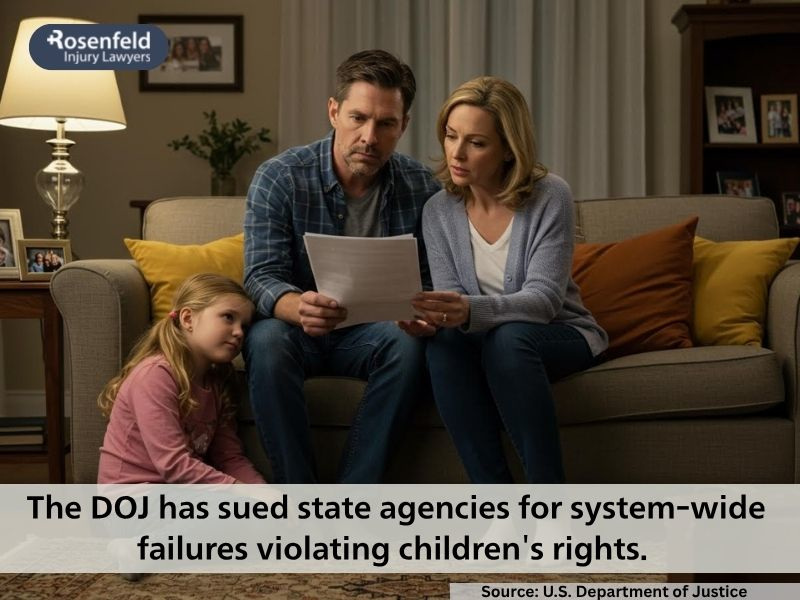
Child Protective Services (CPS) and foster care agencies are entrusted with one of the most critical responsibilities in our society: protecting vulnerable children from neglect, abuse, and unsafe placements. When they fail in that duty, the results can be catastrophic.
At our law firm, we help families hold these government agencies accountable when their negligence or misconduct causes harm to a child.
CPS employees and social services departments must follow strict state and federal child welfare laws that govern how investigations, placements, and supervision are conducted. Their duties include monitoring foster homes, ensuring appropriate placement, and responding quickly to any concerns of abuse or neglect of a child.
Foster Parent Vetting and Appropriate Placement
Before a child enters any foster home, CPS agencies are required to perform thorough background checks, home inspections, and reference verifications for all potential foster mothers and fathers. This process should confirm that the foster family is capable of providing a safe, stable, and nurturing environment.
Key elements of appropriate vetting include:
- Criminal and abuse history checks: Agencies must screen for prior incidents of abuse, domestic violence, or other disqualifying offenses.
- Home environment inspections: A safe physical environment, free from hazards and overcrowding, is essential for protecting a child’s well-being.
- Training and evaluation: Foster caregivers should complete state-mandated training on trauma-informed care, behavior management, and reporting obligations.
- Matching children with suitable homes: Agencies have a duty to ensure a placement that accounts for the child’s background, medical needs, and emotional state.
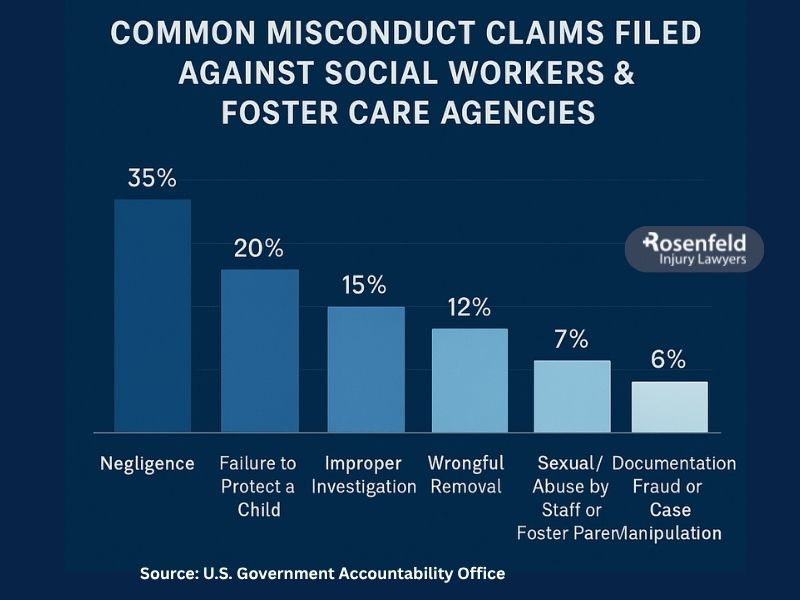
When agencies skip these steps, ignore red flags, or falsify safety checks, their failures can lead to devastating outcomes, ranging from emotional harm to sexual or physical abuse. In such cases, the agency or individual employee may be held legally responsible for negligence.
Foster Home Monitoring
Once a child is placed in a foster home, the supervising social worker is legally obligated to ensure that the placement remains safe and suitable.
This includes:
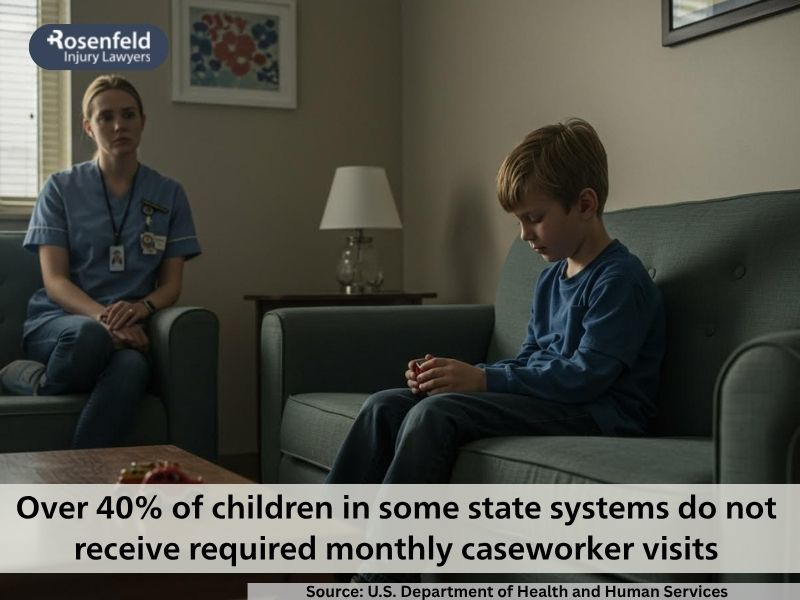
- Regular visits and supervision: CPS workers are required to be present and check in with the child at set intervals (often monthly) to evaluate the child’s safety, emotional health, and adjustment to the home.
- Prompt investigation of complaints: When a report of abuse, neglect, or unsafe conditions arises, agencies must initiate an investigation immediately and document their findings.
- Communication with foster families and schools: Ongoing dialogue helps workers identify red flags early, such as signs of trauma, truancy, or unexplained injuries.
- Follow-up and case review: Supervisors and family law professionals should review each case regularly to ensure compliance with the child’s care plan and legal standards.
Failing to properly monitor a foster home can constitute gross negligence, especially when workers ignore clear signs of harm or fail to act on documented concerns.
When Can a Case Be Filed in Federal Court?
Not all foster care or CPS cases stay within family court or state court. In some circumstances, survivors and families can bring a lawsuit before a judge in a federal courtroom when their civil rights or federal rights have been violated.
When a social worker or CPS agency acts in a way that violates a child’s constitutional protections, for example, by ignoring known abuse, falsifying records, or removing a child without due process, federal courts have jurisdiction to hear the case under federal laws.
These claims often arise when the conduct is so egregious that it transcends negligence and reflects deliberate indifference or a willful disregard for the child’s safety.
Examples of Cases That May Be Filed in Federal Court
Families may be able to pursue a federal lawsuit when:
- Social services workers knowingly place a child in a dangerous foster home despite documented abuse reports.
- Caseworkers or supervisors falsify safety evaluations or fail to act after multiple credible complaints.
- A child is removed from their home without following constitutional requirements.
- The agency’s systemic failure to investigate or monitor leads to ongoing abuse or sexual assault.
In these situations, families can assert claims under federal law, which allows individuals to sue state or local officials for violating federal rights.
Types of Foster Care Abuse
Children in foster placements can experience many forms of harm when agencies, social workers, or foster caregivers fail in their legal responsibilities.
Common types of foster care abuse include:
- Physical abuse — hitting, restraining, or physically punishing children beyond acceptable discipline.
- Sexual abuse — assault, molestation, or coercion by foster guardians, family members, or others with access to the child.
- Emotional abuse — intimidation, humiliation, or verbal degradation that causes lasting psychological trauma.
- Neglect — failure to provide adequate food, shelter, medical care, supervision, or education.
- Institutional abuse — mistreatment by staff in group homes, residential facilities, or state-run youth centers.
When these forms of abuse occur, victims have the right to pursue legal action in either federal or state court, depending on the circumstances. Federal claims typically focus on violations of constitutional protections, such as the right to safety, bodily integrity, and family association, while state claims may center on negligence or failure to follow statutory duties under child welfare and family law.
What Federal Rights Do Foster Care Child Abuse Victims Have?
Children placed in foster care are entitled to a range of legal rights protecting foster children, many of which are established under federal law. When a social worker or foster care agency violates these rights through neglect, misconduct, or deliberate indifference, victims may have grounds to pursue a federal lawsuit.
We help families understand these protections and assert their rights against agencies that fail to protect vulnerable children.
Civil Rights
Under 42 U.S.C. § 1983, individuals can sue state or local officials who violate their constitutional rights while acting under color of law. In the foster care context, this allows children and their families to file claims against social workers, CPS employees, or government agencies when their conduct results in serious harm.
These civil rights violations may include:
- Removing a child from their home without due process.
- Failing to act on credible abuse reports.
- Ignoring clear evidence that a foster home is unsafe.
- Falsifying reports or obstructing child welfare evaluations.
Federal laws recognize that children in foster care have a constitutional right to safety, bodily integrity, and freedom from harm inflicted by those acting under state authority. When those rights are violated, the court can hold officials personally liable for damages.
Child Welfare and Family Law
While foster placements, child custody, parental rights, and divorce proceedings are primarily governed by state family law, the foster care system itself operates under federal oversight.
Two major statutes shape this framework:
- The Adoption and Safe Families Act (ASFA, 42 U.S.C. § 671 et seq.) requires states to prioritize the child’s safety and permanent placement when providing foster care or reunification services.
- The Child Abuse Prevention and Treatment Act (CAPTA, 42 U.S.C. § 5101 et seq.) establishes minimum standards for identifying, investigating, and responding to child neglect and abuse.
These federal laws create accountability for state departments that receive federal funding for child welfare services. When agencies fail to comply with these standards by ignoring reports, failing to vet foster parents, or neglecting to monitor placements, they may face federal liability in addition to state claims.
Sovereign Immunity Shielding Social Services
One of the most complex barriers in these cases is sovereign immunity, which can shield social services departments and state agencies from certain lawsuits. Under the Eleventh Amendment, states and their departments generally cannot be sued for monetary damages in federal court unless:
- The state waives immunity; or
- Congress expressly abrogates it through legislation.
However, individual government employees can still be held liable in their personal capacities under 42 U.S.C. § 1983 when they violate clearly established federal rights.
Qualified Immunity
This doctrine protects officials from liability unless their actions violate “clearly established” law that a reasonable person should have known. For instance, a social worker who ignores repeated, documented reports of sexual misconduct or falsifies a safety check may lose the protection of qualified immunity.
Importantly, sovereign immunity does not extend to willful or wanton acts of gross negligence, especially those that result in constitutional harm to a child in foster care. Courts have held that when officials show deliberate indifference to a known risk, immunity cannot be used as a shield.
Gross Negligence
Gross negligence is more than simple carelessness; it’s a reckless disregard for the safety or rights of others. In the foster-care context, this can include:
- Ignoring known or repeated abuse reports.
- Falsifying safety evaluations to close cases quickly.
- Placing a child with foster caregivers previously accused of abuse.
- Failing to conduct required home visits or background checks.
When these failures cause serious harm, survivors and families may pursue claims for gross negligence alongside civil rights violations. While civil rights lawsuits require proof of deliberate indifference, claims of gross negligence can help plaintiffs overcome immunity defenses and expose systemic misconduct within child welfare agencies.
We believe every child deserves protection, dignity, and safety. Our attorneys have extensive experience navigating the intersection of family law and federal litigation, helping survivors of foster care abuse find a path toward accountability and healing.
What State Laws Govern Lawsuits Against CPS Agencies and Workers?
Every state has its own laws governing CPS agencies, social workers, and foster care responsibilities. Survivors of abuse may pursue claims under both state family and federal statutes, keeping in mind the statute of limitations on sexual assault in each state and available legal options for adult victims abused as foster children.
Illinois
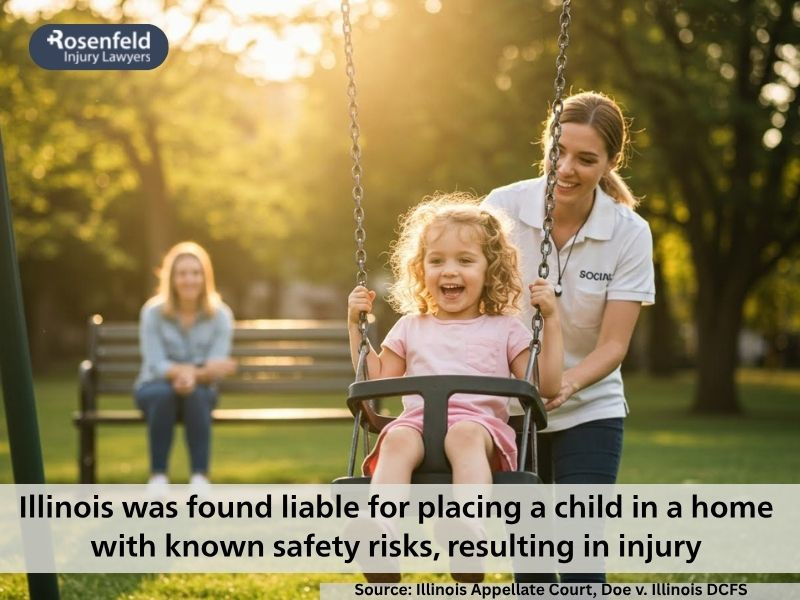
For Illinois foster care sexual abuse lawsuits, claims often rely on the Bill of Rights for Children (725 ILCS 115/), which guarantees compassionate treatment and trained forensic investigations in child neglect and abuse cases.
The Foster Parent Law (20 ILCS 520/1) and the Abused and Neglected Child Reporting Act (325 ILCS 5/) impose clear duties on foster parents and DCFS to report and prevent sexual abuse. These laws define how agencies must screen, train, and supervise caregivers to protect every child’s safety.
California
In California foster care sexual abuse lawsuits, the Child Abuse and Neglect Reporting Act (CANRA) requires all mandated reporters, including foster parents, to notify authorities of suspected abuse, while the California Welfare & Institutions Code (WIC) ensures that every foster child has a right to a safe, harassment-free home.
These statutes form the basis for holding state and county agencies accountable when social workers fail to protect children.
New York
For New York foster care sexual abuse lawsuits, claims against state agencies such as the OCFS must be filed under the Court of Claims Act, which includes strict notice and filing rules. Under SSL § 420(2), any mandated reporter, such as a foster parent or social worker, who willfully fails to report suspected abuse may be held civilly liable for resulting harm.
Pennsylvania
In Pennsylvania foster care sexual abuse lawsuits, laws such as 18 Pa.C.S. § 3123 and 18 Pa.C.S. § 3124.2 define sexual and institutional assault, while the Child Protective Services Law (23 Pa.C.S. §§6301–6386) mandates immediate reporting of suspected abuse to ChildLine. Additional regulations (55 Pa.C.S. § 3680 and 55 Pa.C.S. § 3800) require comprehensive background checks, staff training, and protection of foster children’s right to live free from abuse or retaliation.
Michigan
Finally, Michigan foster care sexual abuse lawsuits rely on the Michigan Child Protection Law (MCL § 722.621 et seq. and 722.622), which defines abuse and neglect and requires mandatory reporting by teachers, foster parents, and social workers.
Under this statute, any foster care worker or parent who knew, or reasonably should have known, about sexual misconduct but failed to act can be held legally responsible through a civil or criminal proceeding.
What Damages Can Be Recovered in a Lawsuit Against a Social Worker or Foster Care Agency?
When social workers, CPS agencies, or foster parents fail to protect a child, the harm can last a lifetime. Survivors of abuse and their families may pursue foster care sexual abuse compensation through civil lawsuits to address the emotional, physical, and psychological injuries they’ve endured.
Compensation in these cases often includes:
- Medical and psychological care — costs for emergency treatment, ongoing therapy, medication, and trauma recovery.
- Pain and suffering — recognition of the emotional distress and loss of childhood innocence resulting from abuse or neglect.
- Loss of future earnings — where trauma or injury affects education, employment, or long-term stability.
- Punitive damages — in cases of deliberate indifference, falsified reports, or systemic failures, courts may award damages meant to punish gross misconduct by CPS or agency officials.
- Lifetime support services — funds to cover specialized counseling, education, or rehabilitation programs for long-term recovery.
Every case is different. Our attorneys carefully assess the unique circumstances of each client to determine how best to demonstrate the harm caused and prove liability against the government body or social worker responsible.
How Injury Lawyer Team Can Help
At Injury Lawyer Team, we understand that sexual abuse lawsuits involving foster care and social services require both compassion and tenacity. Beyond simple negligence claims, they often involve years of concealed misconduct, ignored reports, and systemic failures across state and family law agencies.
Our firm assists survivors and families by:
- Investigating the agency’s conduct — uncovering internal records, inspection logs, and reports that reveal failures in monitoring or placement.
- Consulting with child welfare experts — evaluating whether social workers followed mandatory procedures and federal child-protection standards.
- Filing claims in state or federal court — including actions under 42 U.S.C. § 1983 when federal rights are violated.
- Negotiating or litigating settlements — to recover the full measure of compensation available under the law.
- Supporting survivors throughout the process — ensuring their voices are heard and their dignity respected at every stage of litigation.
While many attorneys avoid taking on cases involving state agencies because of their complexity, our firm is committed to representing families and survivors who were failed by the foster care system.
Need More Answers?
If you or someone you love suffered abuse or neglect while in foster care, you’re not alone. Our sexual abuse attorneys are ready to listen, explain your legal options, and help explain whether you can sue CPS, a social worker, or a foster care agency for the harm caused.
Unlike many law firms that bill hourly or have a sliding scale fee structure, we offer a free consultation to help you understand your rights, and we work on a contingency fee basis, meaning there are no upfront costs and you pay nothing unless we win your case.
Contact Injury Lawyer Team today to discuss all legal matters with an experienced local attorney who understands the complexities of child welfare cases. Together, we can help you seek justice, accountability, and lasting change for kids in need.
All content undergoes thorough legal review by experienced attorneys, including Jonathan Rosenfeld. With 25 years of experience in personal injury law and over 100 years of combined legal expertise within our team, we ensure that every article is legally accurate, compliant, and reflects current legal standards.