

Sexual Abuse and Assault Injury Lawyers


Dr Patrick Clyne Sexual Abuse Lawsuits
Seek Justice for Institutional Negligence Leading to Child Sexual Abuse
The Dr. Patrick Clyne sexual abuse allegations have raised serious questions about how a longtime California pediatrician was allowed access to vulnerable foster youth for decades.
At Injury Lawyer Team, we represent survivors of child sexual abuse and hold negligent institutions accountable for the harm they enabled. Our attorneys investigate what happened, support those who were abused in medical and child welfare settings, and pursue civil lawsuits to secure justice for every survivor who comes forward.
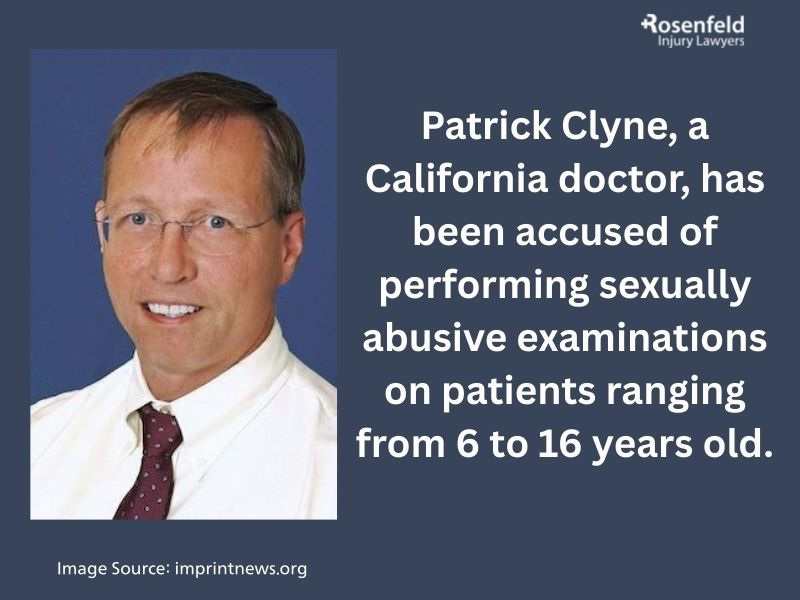
Who Is Dr Patrick Clyne?
Dr. Patrick Clyne is a longtime California pediatrician whose career spanned county hospitals, child welfare clinics, and community medical networks across Santa Clara County and surrounding areas. For decades, he served as a treating physician for foster youth, children in county custody, and medically fragile minors referred through local child welfare and social services agencies.
Clyne held clinical roles within the Santa Clara Valley Medical system and provided pediatric services at the Clara Valley Medical Center, two central hubs for children entering foster care or residential placement.
His work also connected him to multiple state-licensed care facilities, residential group homes, and county-operated shelters where new arrivals routinely underwent medical examinations.
Beyond his county and hospital assignments, Clyne maintained ties to several private organizations, including medical groups, medical practices, and medical corporations that contracted pediatricians to treat high-needs youth.
Records also link him to a broader regional pediatric medical group, expanding his access to children receiving public services.
Throughout his career, Clyne practiced with the authority and trust typically granted to a senior pediatric provider. That position allowed him to evaluate children without a parent or legal guardian present and to interact closely with foster parents, licensed foster parents, juvenile probation officers, and other professionals responsible for vulnerable minors.
His widespread involvement across public and private entities is now central to understanding how allegations of misconduct went undetected, and why multiple institutions are facing scrutiny today.
What Is the Timeline of the Alleged Abuse by Dr Patrick Clyne?
The allegations against Dr. Patrick Clyne span decades and involve multiple public agencies, hospitals, and youth-serving programs.
Early Career in the Santa Clara Valley Medical Center and the Foster Care System (1980s–1990s)
Dr. Patrick Clyne began his career as a chief pediatrician in Santa Clara County, working inside medical facilities connected to the Santa Clara Valley Medical Center (SCVMC) system.
He routinely evaluated abused and neglected children entering county custody and performed medical assessments for vulnerable children placed through the local child welfare agency, the Santa Clara County Department of Family and Children’s Services (DFCS).
He also had regular contact with social workers, juvenile probation programs, and state-licensed care facilities overseen by the California Department of Social Services (CDSS).
This era established the conditions that later allowed him decades of unsupervised access to system-involved minors.
Expansion of Duties: Foster Youth, Group Homes, and Juvenile Programs (1990s–2000s)
By the early 2000s, Clyne had become one of the primary pediatric evaluators for children entering foster care. He examined:
- foster youth placed in a local county shelter,
- minors entering Short-Term Residential Therapeutic Programs (STRTPs) licensed by CDSS,
- youth placed in two residential group homes in rural Santa Cruz County, and
- children transferred through juvenile probation or emergency removals.
His affiliations with private medical organizations also expanded, including:
- Medical Group of Watsonville,
- a regional pediatric medical group, and
- various professional medical corporations that contracted him to treat foster children.
Survivor accounts later revealed allegations that multiple acts of misconduct occurred inside these settings, pointing to long-standing institutional failures to properly monitor his exams.
Clyne’s Role as a Licensed Foster Parent and Physician Foster Father (Approx. 2000s–2010s)
State filings confirm that Clyne was also a foster parent, while acting as a former chief physician and foster father to young boys placed directly in his home under DFCS and CDSS foster-care licensing units.
This dual role granted him unusually broad authority—parental, medical, and supervisory—over vulnerable children with little outside oversight.
Some survivors who later came forward allege they were sexually abused in this period, though not all disclosures specify whether the abuse occurred in the home or in a medical setting.
First Documented Allegations and Patterns of Misconduct Emerge (2000s–2010s)
As adults, multiple former patients accused Clyne of performing inappropriate genital examinations, asking them to walk naked, or subjecting them to sexually abusive exams that bore no medical justification at his private practice in San Jose, CA. Reporting and Medical Board filings document complaints from ten former patients, many of them young boys entering foster care.
According to the expert witness report, the exams violated pediatric standards, ignored required chaperone protocols, and were consistent with sexual assaults rather than legitimate medical procedures.
Survivors say these incidents occurred in:
- SCVMC-associated medical offices,
- county intake shelters,
- state-licensed care facilities,
- residential group homes, and
- private clinics tied to Clyne’s affiliated medical practices.
Some survivors described carrying trauma and shame into adulthood, delaying disclosure.
Internal Concerns and Missed Opportunities for Intervention (Various Years)
According to court documents, caregivers and staff at multiple agencies raised concerns, but their reports:
- were not escalated,
- fell between agencies with unclear oversight,
- and were never consolidated to identify a pattern.
This failure by SCVMC, DFCS, CDSS, and the local child welfare agency reflects a broader pattern of institutional negligence. Each entity had a responsibility to protect youth, yet none intervened decisively despite indicators of prior abuse.
Formal Complaints and Survivor Disclosures Begin (Pre-2020)
As survivors matured, they began disclosing the alleged abuse, enabling attorneys to identify:
- substantial evidence of a consistent pattern,
- multiple disclosures describing nearly identical exam procedures,
- signs that some boys were examined without a guardian present,
- and allegations that abuse took place across both public and private settings.
These disclosures increased the legal jeopardy Clyne faces, prompting regulatory authorities to act.
Civil Lawsuit Filed in Santa Cruz County Superior Court (2020)
In March 2020, a lawsuit was filed in Santa Cruz County Superior Court involving a boy identified in filings as “Kyle.” The complaint alleges that Kyle was sexually abused by Clyne beginning when he was 8 years old, describing multiple acts of ongoing child sexual abuse over a period of years.
According to the lawsuit, Kyle suffered profound emotional and psychological harm, including:
- post-traumatic stress disorder,
- significant shame and guilt,
- anxiety and depressive symptoms,
- nightmares, and
- hyper-vigilance associated with childhood trauma.
The lawsuit also names Santa Clara County as a co-defendant, alleging that county agencies failed to monitor Kyle’s placement and medical care despite their duty to protect children under their supervision.
California Medical Board Investigation (2023–2024)
The California State Medical Board, in coordination with the California Attorney General’s Office, launched a formal investigation. The expert witness report states that Clyne’s conduct violated ethical and medical standards and that the alleged acts were consistent with sexual abuse.
The state’s accusation stated that Clyne committed multiple crimes involving minors—carefully phrased allegations, not criminal convictions—and detailed multiple acts that the Board deemed egregious enough to justify revocation.
There are defense attorneys stating that the allegations were unproven, but the Board determined the evidence warranted decisive action.
Clyne Barred From Child-Welfare Programs (2024)
Following the findings, social services barred Clyne from further interaction with foster youth, removing him from:
- DFCS medical evaluations,
- emergency intake duties,
- county facility exams, and
- all contact with system-involved minors.
This is the first confirmed institutional action restricting his access.
Surrender of Medical License (2024–2025)
Rather than proceed with a full disciplinary hearing, Clyne surrendered his medical license, immediately ending his medical career. The Board’s decision confirmed that:
- all physician privileges were revoked,
- allegations were sufficient for disciplinary action,
- and the case could have proceeded to revocation had he not surrendered.
The surrender does not resolve or prevent ongoing civil lawsuits, nor does it eliminate potential review by the district attorney’s office or the state attorney general’s office.
What Legal Arguments Can Be Used in Lawsuits Involving Dr Patrick Clyne?
Survivors bringing civil claims against Dr. Patrick Clyne rely on several well-established legal theories. At their core, doctor sexual abuse lawsuits argue that perpetrators engaged in sexual abuse under the guise of medical treatment, and that multiple institutions failed to intervene despite warning signs.
Survivors may allege that Clyne’s conduct constituted sexual battery under California Civil Code § 1708.5, and that the exams amounted to offensive and harmful contact consistent with Penal Code §§ 240–242 (assault and battery), even if the case proceeds strictly in civil court.
Improper and Abusive Medical Examinations
Many claims assert that Clyne’s alleged conduct had no legitimate medical purpose and therefore constitutes battery, sexual misconduct, and a breach of the medical standard of care.
While these are not traditional medical malpractice cases, the same duty principles apply: Business and Professions Code § 2234 defines unprofessional conduct and authorizes license discipline for sexual misconduct, boundary violations, and examinations performed without medical necessity.
Negligent Supervision and Failure to Protect Children
Hospitals, county agencies, and medical groups can be sued for failing to properly monitor Clyne, especially when they continued assigning him to foster care despite repeated concerns. These arguments center on institutional negligence, systems that allowed him ongoing access to vulnerable minors.
Negligent Hiring, Credentialing, and Retention
Claims may allege that medical facilities and child-welfare agencies ignored red flags, failed to review complaints, or retained him after questionable exam practices. This strengthens arguments that the institutions themselves contributed to the harm.
Vicarious Liability for Acts Committed During Employment
If abuse occurred while Clyne was acting within his professional role—during exams, evaluations, or county-contracted work—employers and contracting agencies can be held liable under respondeat superior.
Emotional Damages and Delayed Disclosure
Survivors of medical misconduct often describe drawn-out legal proceedings, years of silence, and trauma-related barriers to reporting. Courts routinely accept that shame, fear, and psychological injury delay disclosure in childhood sexual abuse cases. This supports tolling of statutes of limitation.
What Damages Can Victims Recover in a Sexual Abuse Lawsuit?
Survivors of personal injury, specifically sexual assault, can recover compensation for the emotional, psychological, and financial harm caused by the misconduct.
Damages commonly include pain and suffering, the costs of therapy and long-term mental-health treatment, and compensation for trauma-related conditions such as post-traumatic stress disorder, anxiety, and significant shame that affects daily life.
Survivors may also recover for loss of quality of life, lost educational or career opportunities, and, in cases involving institutional negligence, additional damages tied to failures in supervision or reporting. When conduct shows conscious disregard for child safety, punitive damages may also be available under California Civil Code § 3294.
The average payout for sexual assault cases in Santa Clara County court is $776,250.
How Long Do Victims Have to Take Legal Action Against Dr Patrick Clyne?
Under California law, survivors of childhood sexual abuse have an extended time to file a lawsuit. Under CCP § 340.1, a survivor may sue until age 40 or within five years of discovering that their adult emotional or psychological injuries were caused by the abuse, whichever period is longer.
These rules reflect the reality that many survivors delay disclosure due to trauma, fear, or the effects of abuse by an authority figure.
Even though past investigations did not result in criminal charges, survivors can still pursue civil claims because the burden of proof is lower. If there is uncertainty about timing or how drawn-out legal proceedings affect a case, a California sexual abuse attorney can evaluate whether a claim is still within the allowable period.
How Injury Lawyer Team Can Help
At Injury Lawyer Team, we stand with survivors of childhood sexual abuse and pursue accountability from every individual and institution that failed to protect them. Our attorneys investigate medical records, licensing documents, mandatory-reporting failures, and the systemic breakdowns that allowed alleged misconduct to continue unchecked.
Our sexual abuse lawyers guide survivors through the civil process with compassion, help them navigate the emotional weight of coming forward, and work to secure the justice and compensation they deserve. All consultations are confidential, and survivors owe no legal fees unless we obtain a recovery on their behalf.
All content undergoes thorough legal review by experienced attorneys, including Jonathan Rosenfeld. With 25 years of experience in personal injury law and over 100 years of combined legal expertise within our team, we ensure that every article is legally accurate, compliant, and reflects current legal standards.