

Sexual Abuse and Assault Injury Lawyers


What Happens After Reporting Sexual Abuse in College
Unfortunately, some people’s experience of college is surrounded by memories of the sexual abuse they endured. Taking the step of reporting sexual abuse within an academic institution can lead to justice and safety for future students. However, it is important to know what happens after reporting sexual abuse in college.
Sexual assault, harassment, and other invasive behaviors can lead to economic and non-economic losses for the victim, including medical expenses and emotional distress.
At Injury Lawyer Team, we stand by survivors who want to hold their abusers accountable. Our attorneys are also committed to enforcing changes in institutions that allow abuse to occur. Together, we can fight for fair compensation for your losses while seeking accountability for the at-fault parties.
In this guide, we will address what typically follows a report of college campus sexual assault. Navigating this process can involve multiple pathways, especially when institutional issues allow the behavior to continue.
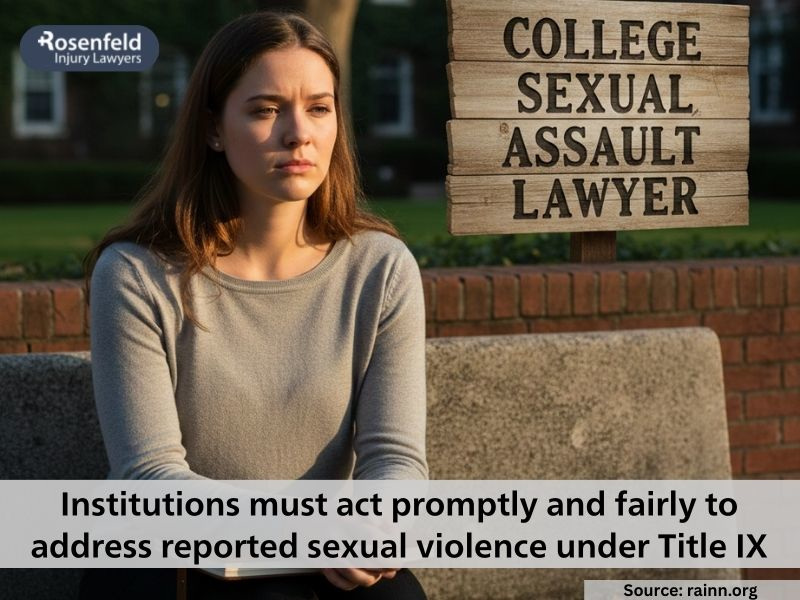
Where to Report Sexual Violence on College Campuses
Sexual violence can take many forms. It may involve ongoing sexual harassment by fellow students. A professor may inappropriately touch the student during a one-on-one meeting for office hours. A sexual assault in a frat house could be another example of domestic violence.
Although the thought of reporting sexual assault may be overwhelming, doing so can prevent further harm from befalling other students while holding the abuser responsible.
Local Law Enforcement
Sexual assault may be classified as a crime, so reporting the matter to the local law enforcement agency will initiate an investigation into the incident.
There are two options for reporting abuse to the authorities in college: campus security or the local police department. Both entities serve similar functions, but campus police will likely be more familiar with the policies at the school and the individuals you should speak to next.
When sexual abuse occurs outside of university campuses, such as in a bar or in student housing, connecting with the local police department may be more effective.
Title IX Coordinator
Title IX is a federal law that ensures people cannot be discriminated against on the basis of sex, gender, or sexual orientation in academic environments. Some of the statutes in this law do address sex discrimination and sexual assault in environments that receive federal funding.
If you have been sexually assaulted as a college student, you can connect with your school’s Title IX coordinator. Every school has a Title IX office with representatives who are trained to handle these specific scenarios. This office can also initiate an investigation into the sexual violence.
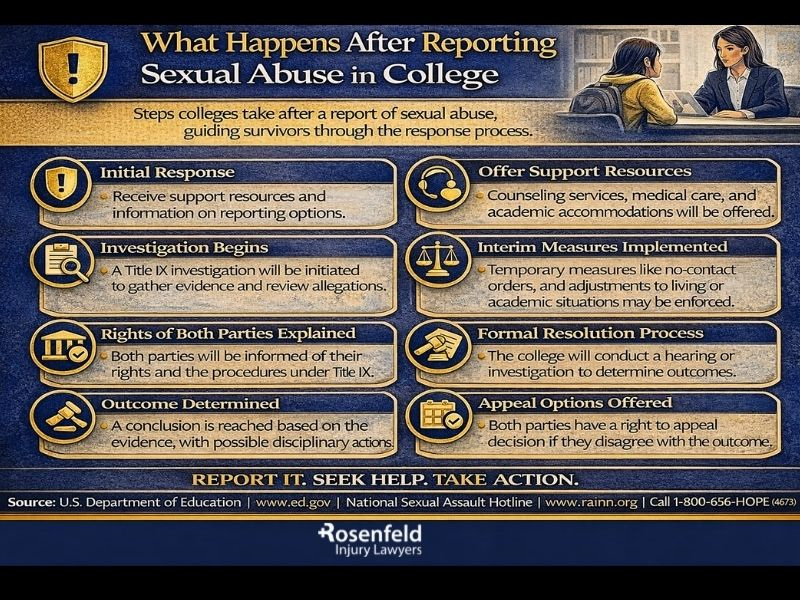
What Immediate Steps Does a College Typically Take After a Report?
Colleges and universities are required to take official actions if they receive reports of a sexual assault. Taking steps to address the issue ensures they abide by Title IX regulations and other laws regarding sexual abuse on campuses.
Here are some of the steps that may be involved in the proceedings once you report the issue to the campus community:
- Intake meeting: You will meet with an investigator or Title IX representative to discuss next steps. They will also address safety measures, such as switching rooms or doing remote classes, as well as your rights during this process.
- Investigation: The investigator will begin searching for data to support your sexual abuse claim, whether it is situational or physical evidence. This may include taking statements, speaking to witnesses, and reviewing medical records if the abuse was recent.
- Preventive measures: The school may order a no-contact agreement between you and the accused perpetrator to protect you from any retaliation or stalking.
- Hearing: An internal hearing may be conducted to determine the extent of the abuse and the validity of the allegations. If an investigator is part of the process, they will participate in the hearing and make a recommendation to the panel.
- Sanctions: If the accusation is deemed credible, the adjudicating entity will decide on the punishment for the abuser. This could include expulsion from the school.
Note that this process is a general outline for how many universities handle sexual misconduct allegations. The investigation would look much different if a local police department conducted it.
What Supportive Measures Are Offered to Students After Reporting?
Colleges are also required to provide supportive actions and resources to victims who have reported sex-based discrimination. These processes are designed to support the victim’s well-being while protecting their civil rights.
Academic accommodations can be made to ensure you feel safe after reporting, such as remote work. If your living situation is no longer safe due to the offender’s presence, you can request a housing change to improve security.
The school may institute a no-contact directive to keep the accused party away from you during the investigation. Lastly, employees at the school should refer you to counseling services to provide emotional support following dating violence, harassment, or rape.
Can a Student Pursue Legal Action After Reporting Sexual Assault in College?
The perpetrator may face consequences for their actions through campus disciplinary action or a criminal trial. However, there is a third option for victims to seek closure after they have experienced sexual assault. A civil lawsuit is a legal action in which a plaintiff seeks fair compensation for damages caused by the defendant’s actions. Legal damages that may qualify in a sexual violence claim include:
- Lost income from missed work due to injuries
- Medical expenses for the treatment of injuries
- Therapy and mental health service costs
- Future medical bills that are required for ongoing treatment
- Emotional distress, such as Post-Traumatic Stress Disorder, anxiety, or depression
- Pain and suffering from physical injuries
- Disability and disfigurement if the abuse permanently alters your appearance or abilities
- Loss of enjoyment of life due to the trauma
A civil case can be brought against the individual abuser or the institution. For example, if you made multiple complaints to the school community and no faculty member took action to address your reports, the college could be liable for your legal damages caused by ongoing suffering.
A criminal case is a separate legal process that prioritizes punishment if the offender is found guilty. A civil lawsuit seeks to obtain compensation for the victim and to make institutional failures public.
How Our Law Firm Can Help You Take Legal Action
Legal action can feel like an overwhelming process, especially if you have already had to relive the trauma during a campus investigation. However, additional closure can provide some peace of mind, and you can secure your financial future with fair compensation for legal damages. It also increases the chance of holding a negligent institution accountable.
At the Injury Lawyer Team, we believe in your case and will fight for every dollar you deserve for your suffering. Our compassionate attorneys can provide the following legal services for your college sexual assault lawsuit:
- Investigating the at-fault party for wrongdoing
- Gathering evidence of the misconduct, including witness statements, medical expert testimony, medical records, and campus surveillance footage
- Assessing all legal damages to maximize compensation
- Protecting your rights under campus, state, and federal laws
- Submitting subpoenas to acquire school documentation
- Negotiating with defendants and insurance companies for a fair settlement
- Litigating in civil court if necessary
Our expert attorneys understand the implications of Title IX and other types of sex discrimination laws for your claim. We also work on a contingency fee basis. This means you pay nothing unless we secure a favorable outcome.
Book a Free Consultation
If you are considering a sexual abuse lawsuit against the individual abuser or negligent academic institution, you can take advantage of a free consultation with the Injury Lawyer Team. Together, we can address your questions about the legal process, Title IX statutes, what constitutes interpersonal violence, and how to build a strong claim.
Contact us today at 866-757-6452 or complete the online form to schedule your free and confidential consultation with our experienced legal team. We are committed to seeking justice on your behalf and to making college campuses as safe as possible for education.
All content undergoes thorough legal review by experienced attorneys, including Jonathan Rosenfeld. With 25 years of experience in personal injury law and over 100 years of combined legal expertise within our team, we ensure that every article is legally accurate, compliant, and reflects current legal standards.