

Sexual Abuse and Assault Injury Lawyers


Can You Sue a University for Sexual Abuse?
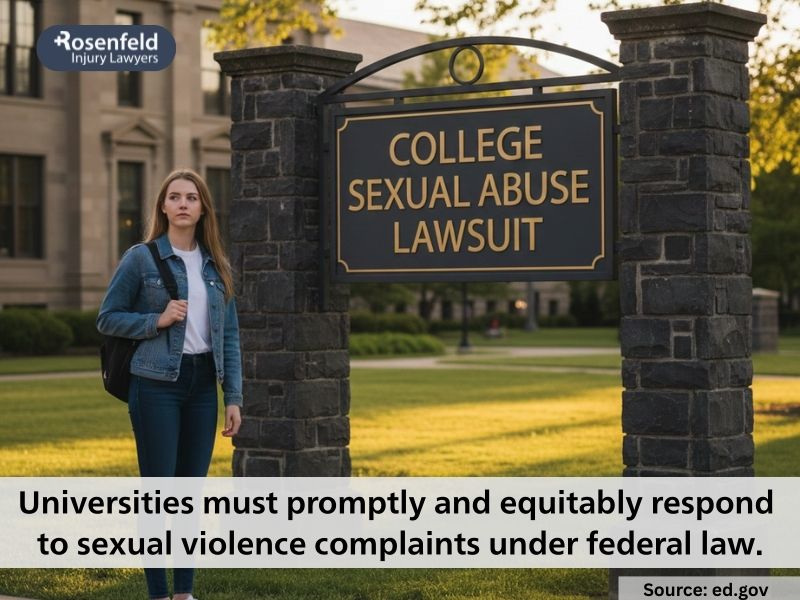
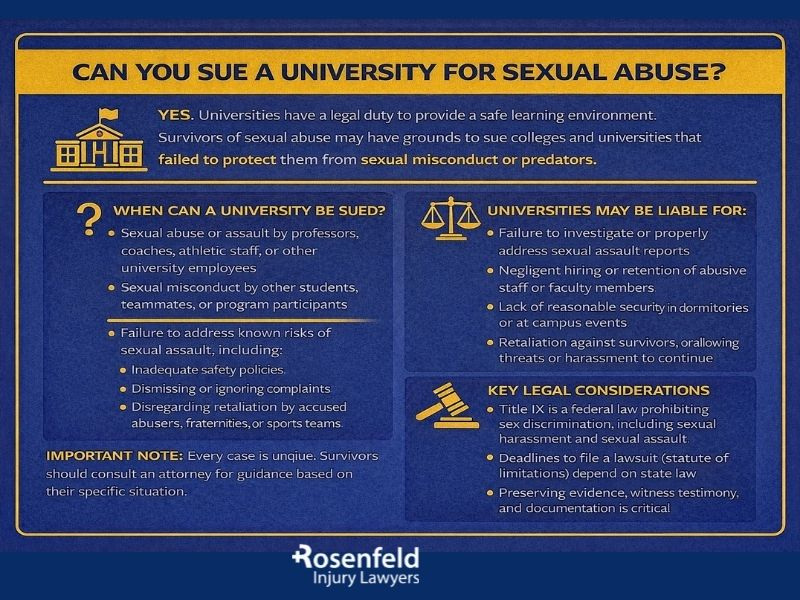
Many of our clients wonder: Can you sue a university for sexual abuse? In many cases, yes. When a student experiences sexual assault or other forms of sexual abuse on campus, the harm often extends far beyond the actions of a single individual.
Colleges and universities have legal duties to ensure student safety, respond appropriately to reports of abuse, and comply with federal regulations. When a university fails to meet those responsibilities, survivors may have the right to pursue a civil lawsuit and demand institutional accountability.
At Injury Lawyer Team, we focus on representing survivors of sexual abuse with compassion, discretion, and strength. We stand with you, and you’re not alone in this process. Our legal team believes survivors deserve to be heard, supported, and protected, not ignored or blamed.
How Common Is Campus Sexual Abuse?
Sexual abuse and sexual assault on college campuses are far more common than many people realize. According to data compiled by the Rape, Abuse & Incest National Network (RAINN):
- Across U.S. campuses, 13% of all students experience rape or sexual assault.
- Among undergraduate women, the rate rises to 26.4%, while 6.8% of undergraduate men experience rape or sexual assault involving force, violence, or incapacitation.
- For graduate and professional students, 9.7% of women and 2.5% of men report similar assaults.
These statistics only reflect reported incidents. Many victims never come forward due to fear of retaliation, lack of trust in schools, or concerns about their education and future. On campuses across the country, many institutions struggle to address sexual assault effectively, leaving students exposed to repeated harm.
Understanding how widespread sexual abuse on campus grounds is helps explain why civil litigation against schools has become such an important tool for students demanding accountability.
Who Can Be Held Legally Responsible for Sexual Assault on College Campuses?
When sexual violence occurs on college and university campuses, more than one party may be held legally liable. Determining who can be held liable depends on the facts, the school’s conduct, and what it knew or should have known.
Individual Perpetrators
The person who committed the sexual assault can be sued directly in a civil lawsuit for the harm they caused. These claims may seek recovery for emotional harm, psychological trauma, and other losses that resulted from the assault. Civil cases against individual perpetrators focus on accountability and recognizing the real and lasting impact of their actions.
Colleges and Universities
A college or university may be held responsible when it failed to safeguard students, failed to act on prior complaints, or maintained policies or practices that allowed abuse to continue. When schools that receive federal funding ignore warning signs, delay responses, or prioritize institutional interests over student safety, they may face liability for the resulting harm.
Staff Members and Employees
When college staff, professors, coaches, or administrators engage in abuse or ignore clear warning signs, the institution may be found liable for careless hiring, supervision, or retention. These cases often involve failures to conduct proper background checks, respond to prior reports, or monitor individuals placed in positions of authority over students.
Other Responsible Parties
In some cases, third parties, such as contractors, campus security providers, or affiliated organizations, may also be responsible if their actions or inaction contributed to unsafe conditions. Liability may arise when these entities fail to follow required safety protocols or create conditions that enable abuse.
Holding an institution responsible is often about addressing systemic failures, not just isolated misconduct.
What Are the Legal Grounds for Suing a University for Sexual Violence?
For many survivors, this answers the central question they’re asking: Can you sue a university for sexual abuse when the school itself contributed to the harm? A lawsuit against a university must be grounded in recognized legal principles.
Common claims include:
Institutional Negligence
Universities have a duty to ensure student safety from foreseeable harm. When a university fails to implement reasonable safety measures, ignores reports of abuse, or allows dangerous individuals to continue to have access to students, it may be liable for systemic negligence. In more serious situations, where conduct reflects a reckless disregard for student safety, that failure may constitute gross negligence.
Negligent Hiring and Supervision
Schools may be responsible when they negligently hire or retain staff with known risks or troubling histories. Liability can also arise when institutions fail to supervise employees appropriately, neglect required training, or overlook repeated warning signs that place students at risk.
Failure to Act
If administrators had sufficient information about prior abuse, credible warning signs, or ongoing threats and failed to act, that inaction can form the basis of legal claims. These cases often focus on missed opportunities to intervene and prevent further harm.
Breach of Contract
Many schools make clear promises in student handbooks, codes of conduct, or enrollment agreements regarding safety, reporting procedures, and disciplinary standards. When those commitments are not honored, survivors may have a viable contract claim based on the institution’s failure to follow its own policies.
Intentional Infliction of Emotional Distress
In cases involving extreme misconduct or deliberate indifference, survivors may pursue claims for severe emotional harm. These claims recognize the profound psychological impact that abusive conduct and institutional failures can cause.
These legal foundations allow victims to seek compensation and accountability through civil action rather than relying solely on internal school processes.
What Federal Laws Govern Legal Actions Against Universities?
Several key federal laws shape legal claims against colleges and universities for sexual abuse.
Title IX
Title IX of the Education Amendments of 1972 prohibits sex based discrimination in education programs that receive federal financial assistance. Sexual assault is recognized as a form of sex-based discrimination. Under Title IX, schools must respond promptly and effectively to reports of abuse, protect students from retaliation, and take steps to prevent recurrence.
Failure to do so may result in Title IX violations. Survivors can pursue civil action when schools ignore complaints, delay investigations, or prioritize reputation over student safety. Schools must designate a Title IX coordinator, provide reporting options, and implement protective measures, such as no-contact orders.
Sexual Abuse Statutes of Limitations
Sexual abuse statutes of limitations define how long a victim has to file claims. Different timelines may govern Title IX claims, civil claims, and related legal actions. Some states have expanded these time limits, recognizing the lasting impact of abuse and the barriers survivors face when speaking out.
Understanding which timelines apply to your case is critical, and early legal counsel can help protect your rights.
How We Can Help You File a Civil Lawsuit
Pursuing a college sexual abuse lawsuit can feel overwhelming. Our role is to guide and support you at every stage of the legal process.
Confidential Consultation
We offer free initial consultations in a confidential, supportive setting where your privacy is respected from the start. We take the time to listen to your story, answer your questions, explain your legal rights, and outline your available legal remedies so you can make informed decisions without pressure.
Strategic Case Building
Our legal team conducts a thorough investigation by reviewing the facts, gathering evidence, examining school policies, and identifying all responsible parties. We focus on building strong, well-documented cases designed to withstand scrutiny from numerous institutions and their insurers.
Title IX and Internal Processes
When appropriate, we assist with filing a Title IX complaint and help you navigate the school’s internal procedures. This includes addressing disciplinary action, responding to delays or bias, and challenging failures such as unenforced separation orders or inadequate investigations.
Filing Civil Claims
We file civil lawsuits based on institutional negligence, negligent screening and hiring, and other applicable legal grounds. Our objective is to ensure those legally liable are held accountable while protecting your interests throughout the legal process.
Advocacy and Emotional Support
We understand that survivors need more than legal strategy alone. Alongside legal advocacy, we help connect clients with confidential support resources, including organizations such as RAINN, while standing firmly by their side.
Resolution Through Settlement or Trial
Whether through settlement or trial, we pursue justice with care, determination, and respect for your well-being. Our approach prioritizes thoughtful advocacy while remaining prepared to take cases through every necessary stage.
Contact Us to Explore Your Legal Options
If you are a victim of sexual assault on campus, you may have the right to pursue a sexual abuse lawsuit. You deserve answers, accountability, and support.
At Injury Lawyer Team, we handle sexual abuse cases on a contingency fee basis, which means you pay nothing unless we recover financial compensation for you. We offer free consultations and compassionate legal guidance to protect students and promote healing.
Contact us today to explore your legal options, understand how timelines influence your claims, and take the first step toward holding the institution accountable.
All content undergoes thorough legal review by experienced attorneys, including Jonathan Rosenfeld. With 25 years of experience in personal injury law and over 100 years of combined legal expertise within our team, we ensure that every article is legally accurate, compliant, and reflects current legal standards.