

Sexual Abuse and Assault Injury Lawyers


What Evidence Is Needed for a Clergy Sexual Abuse Lawsuit?
At Injury Lawyer Team, survivors often ask us what evidence is needed for a clergy sexual abuse lawsuit and whether they have enough to move forward. We want you to know that you’re not alone.
When sexual harm took place at the hands of clergy members or religious leaders, the impact can be devastating. Our law firm stands with you, helps you navigate legal action, and supports you as you seek compensation, justice, and healing.
What Types of Evidence Can Support a Sexual Assault Civil Lawsuit?
When we build clergy sexual abuse claims, we focus on gathering evidence that shows how the misconduct happened and proves how the religious organization failed to protect you. No single piece of evidence defines a case. What matters is assembling a clear, credible picture of the harm and the institutional failures behind it.
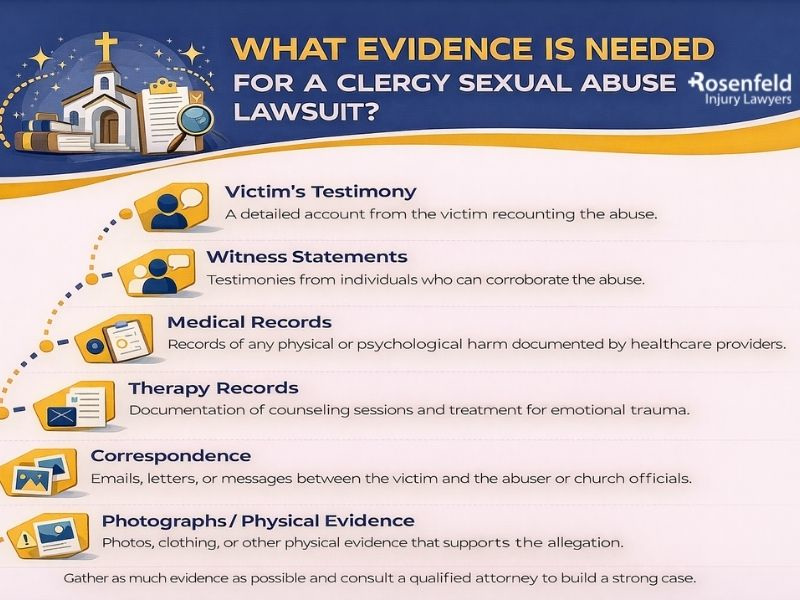
We rely on many forms of evidence to prove clergy sexual abuse, including the following:
Survivor Testimony
Your own account is often the most powerful evidence. Survivor testimony explains how the sexual acts occurred, the emotional trauma you experienced, and the impact on your life. Courts understand that clergy sexual abuse often happens in private, and your voice carries significant weight.
Police Reports
If the abuse was reported to law enforcement, police reports can support the timeline, document interviews, and show how authorities responded. Even if no criminal charges were filed, these reports help establish that the abuse was serious enough to bring to police attention.
Medical Records
Medical records and medical treatment notes documenting physical injuries, psychological symptoms, or post traumatic stress disorder can be essential. They connect the harm to the period when the violation happened and provide objective proof of emotional distress and physical injuries.
Forensic Evidence
In some cases, forensic evidence, such as DNA, clothing fibers, or physical evidence collected after the assault, helps support the clergy sexual abuse lawsuit. While many clergy sexual abuse claims are not reported immediately, any preserved items or reports may strengthen the claim.
Witness Statements
Statements from church members, family, friends, or others you confided in can support your credibility. Witness testimony about behavioral changes, inappropriate touching, or disclosures made years earlier can be extremely valuable evidence of clergy abuse.
Records Proving Institutional Liability
Internal church documents, emails, prior complaints, or reports showing that clergy members had a known history of misconduct are critical. These records help prove a faith-based institution failed to act, hid information, or ignored warning signs.
Evidence in clergy sexual abuse claims that our law firm gathers can not only prove sexual abuse, but also patterns of:
- Negligent hiring (placing clergy with known risks into faith counseling roles)
- Negligent supervision (failing to monitor clergy members appropriately)
- Failure to report suspected or confirmed clergy abuse
- Cover-ups designed to silence sexual assault survivors
- Policy violations within the church entity
Expert Testimony
In many cases, we work with expert witnesses in sexual abuse cases who can explain grooming behaviors, trauma responses, delayed disclosure, and the psychological impact on clergy sexual abuse victims. Their insights help courts understand why sexual abuse happens and how it affects victims long-term.
Electronic Communication Records
Texts, emails, social media messages, or other digital communication showing inappropriate behavior, secrecy, grooming, or attempts to silence you can be considered evidence in priest abuse cases.
Photos or Videos
Photos or videos showing injuries, the location where clergy abuse took place, or even documenting interactions with the abuser can help establish context. Even seemingly small details may become powerful evidence.
Personal Journals
Journals, diaries, or notes you kept, even if written years later, can help confirm what you experienced, how you felt, and how the clergy abuse affected your healing process. These records are especially helpful in cases where sexual abuse happened long ago but was never formally documented.
How Do Clergy Sexual Abuse Cases Develop?
Clergy sexual abuse cases move through several stages, each focused on gathering evidence, protecting your rights, and ensuring your story is heard. Throughout the legal process, we stand with clergy sexual abuse survivors to make sure every step is handled with care, confidentiality, and respect.
Evidence Collection and Filing
We begin by gathering evidence, such as survivor testimony, medical records, witness statements, physical evidence, and relevant documentation from the spiritual institution. Our legal team works closely with you to document how the abuse occurred and identify strong evidence. Once the evidence is organized, we file the lawsuit against the responsible clergy members and the faith community involved.
Discovery
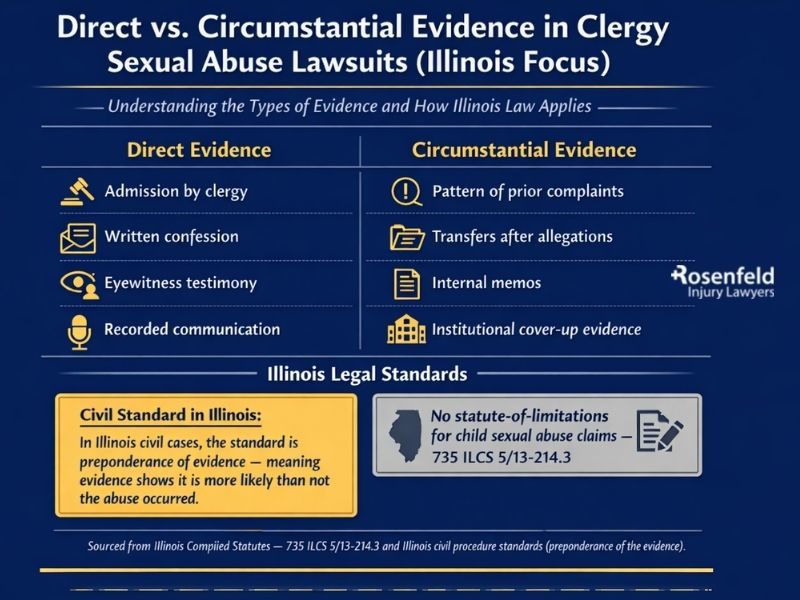
During discovery, both sides exchange information. We obtain internal records, prior reports of sexual abuse, personnel files, emails, and other documentation that may reveal negligent supervision, policy violations, or cover-ups. Depositions of clergy members, church officials, and witnesses often uncover direct evidence of wrongdoing and institutional failures. Discovery is often where the truth finally comes to light.
Alternative Dispute Resolution
Many religious leader abuse cases move into alternative dispute resolution, where both sides work toward a resolution without going to trial. Through mediation or arbitration to reach a settlement, we present convincing evidence showing how clergy sexual abuse occurred and how the institution failed to protect you. These discussions often lead to significant clergy abuse settlements that reflect the harm you suffered and help you move forward in the healing process.
Trial
If negotiation, mediation, or arbitration cannot resolve the case, we take the lawsuit to trial. At trial, we present survivor testimony, compelling evidence, expert analysis, and documentation of institutional misconduct. A judge or jury then decides liability and the damages you deserve. Trial is often the final step when all previous avenues fail, and we stand with you through every moment.
How Does the Evidence Presented Impact Clergy Abuse Case Settlements?
Stronger evidence often leads to higher clergy sexual abuse settlements. When we can show the abuse occurred and that the church ignored warning signs, hid earlier allegations, or failed to act, the case becomes far more compelling. Clear proof of emotional trauma and long-term harm also helps ensure the compensation reflects the survivor’s true losses.
Survivors of clergy sexual abuse can recover three main types of damages:
Economic Damages
These cover measurable financial losses, including medical expenses, therapy, treatment for post traumatic stress disorder, lost future earnings, and other out-of-pocket costs. Medical records and expert analysis help establish these damages.
Non-Economic Damages
These address emotional and personal harm, such as emotional distress, pain and suffering, loss of spiritual guidance, damage to relationships, and reduced quality of life. Survivor testimony and witness statements often support these losses.
Punitive Damages
Courts may award punitive damages when there is evidence of reckless misconduct, policy violations, earlier misconduct submissions, failure to report, or cover-ups. These damages punish the institution and can significantly increase the value of the clergy sexual abuse case.
How Injury Lawyer Team Can Help Throughout the Legal Process
At Injury Lawyer Team, we know that survivors often feel overwhelmed by evidence collection or facing a church organization. You’re not alone. Our clergy sexual abuse lawyers support you from the first call through the final outcome.
Our sex abuse attorneys help gather relevant documentation, such as medical reports, witness testimony, personal journals, and electronic communication. We also obtain internal church records, personnel files, and previous clergy abuse reports that may reveal negligent supervision or policy violations.
We work with trauma-informed professionals and expert witnesses in clergy sexual abuse lawsuits to build compelling evidence for your civil claim. Whether through discovery, settlements, or trial preparation, we focus on strengthening your case and protecting your rights. Our legal team, experienced in clergy abuse cases, is here to help you seek justice and believes you deserve compensation so you can move forward with your life.
FAQs
What are common types of abuse involving clergy members?
Clergy members may commit sexual abuse, emotional and psychological abuse, physical abuse, or financial exploitation, often by misusing trust, authority, or spiritual guidance to harm vulnerable adults or children.
How long do clergy sexual abuse survivors have to file a civil claim?
Filing deadlines vary by state, but many now extend the civil statute of limitations for sexual assault and broaden the statute of limitations for child abuse, giving clergy abuse survivors more time to pursue a civil claim.
Book a Free, Confidential Consultation With a Clergy Sexual Abuse Lawyer
If you’re considering civil sexual abuse lawsuits, we want you to know that you’re not alone. Speaking with a top-rated clergy sexual abuse attorney can help you understand your legal options, gather strong evidence, and take meaningful steps toward healing.
Over the years, our firm has helped more than 5,000 clients, recovered over $450M, maintained a 98% success rate, and built a reputation backed by 100+ years of combined experience. We are available 24/7 to support survivors who need guidance, clarity, and a compassionate legal team on their side.
Our attorneys have consistently been honored by leading national organizations, earning recognition, memberships, and awards from groups such as:
- Million Dollar Advocates Forum
- Super Lawyers®
- American Association for Justice (AAJ)
- Illinois Trial Lawyers Association
- A+ Rating with the Better Business Bureau
- Contributing Author for The National Law Review
- AVVO Rating of 10/10
We handle every case on a contingency fee, so you pay nothing upfront and nothing unless we win for you. Your free, confidential consultation is always available, and we’re here to answer your questions with compassion. When you’re ready to take the next step, contact us. We’re here to support you.
All content undergoes thorough legal review by experienced attorneys, including Jonathan Rosenfeld. With 25 years of experience in personal injury law and over 100 years of combined legal expertise within our team, we ensure that every article is legally accurate, compliant, and reflects current legal standards.