

Sexual Abuse and Assault Injury Lawyers


Legal Boundaries in Clergy Sexual Abuse Cases
At Injury Lawyer Team, we guide survivors through the complex legal boundaries in clergy sexual abuse cases with compassion, clarity, and strength.
When someone comes to us after being sexually abused in a faith-based environment, we know they are carrying years, sometimes decades, of fear, silence, and unanswered questions. We believe in your case, and when you’re ready, we can help you understand your legal options, protect your privacy, and take meaningful steps toward accountability.
Our work focuses on helping abuse survivors pursue justice against religious institutions, religious leaders, individual church members, and institutional cover-ups. Every case is deeply personal, and each survivor deserves a path forward that honors their truth.
We support survivors across all denominations, helping them seek justice through the civil lawsuit process when the church failed to act, concealed abuse allegations, or allowed dangerous church officials to remain in positions of authority.
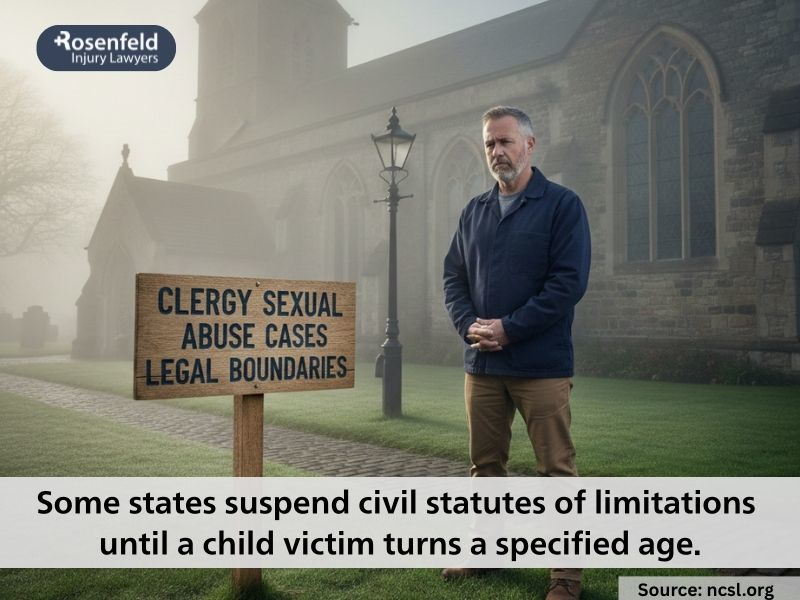
What Defenses Do Religious Institutions Use in Clergy Abuse Cases?
When religious institutions are named in clergy sexual abuse cases, they often raise constitutional defenses. The most common involve the First Amendment to the United States Constitution, which states that:
Congress shall make no law respecting an establishment of religion, or prohibiting the free exercise thereof; or abridging the freedom of speech, or of the press; or the right of the people peaceably to assemble, and to petition the Government for a redress of grievances.
The First Amendment includes:
These clauses protect religious freedom, but they are not shields for institutional negligence, abuse involving a minor, or a church’s failure to protect children. Courts routinely hold that the First Amendment does not bar civil sexual misconduct lawsuits based on neutral laws, such as mandatory reporting requirements, negligent hiring, or general safety standards that apply to all organizations.
Survivors deserve to understand the legal landscape clearly, including the primary arguments religious organizations use to avoid accountability.
Ministerial Exception
The ministerial exception is rooted in the First Amendment and argues that courts cannot interfere with how a religious institution selects, disciplines, or supervises its ministers. Churches may try to use this doctrine to block negligence and abuse lawsuits or avoid scrutiny of their decisions involving ministry personnel.
However, courts have repeatedly held that the ministerial exception does not apply to adult or childhood sexual abuse claims involving criminal misconduct. Sexual assault is not a protected religious activity, but criminal behavior. The ministerial exception cannot stop a survivor from pursuing legal recourse.
Ecclesiastical Abstention
Under ecclesiastical abstention, courts avoid deciding matters of purely religious doctrine or internal governance. Religious institutions often invoke this doctrine to argue that any inquiry into clergy abuse or institutional negligence would interfere with church governance.
But courts consistently draw a bright line: ecclesiastical rules cannot override public safety laws or civil child abuse protections. When the issue involves childhood abuse, systemic negligence, or a failure to report suspected child abuse, courts apply neutral principles of law to ensure justice is possible.
Clergy-Penitent Privilege
Clergy-penitent privilege protects private spiritual communications between a religious leader and a member of the congregation. Religious institutions sometimes attempt to cite this privilege to avoid releasing internal files, communications, or reports about clergy abuse claims.
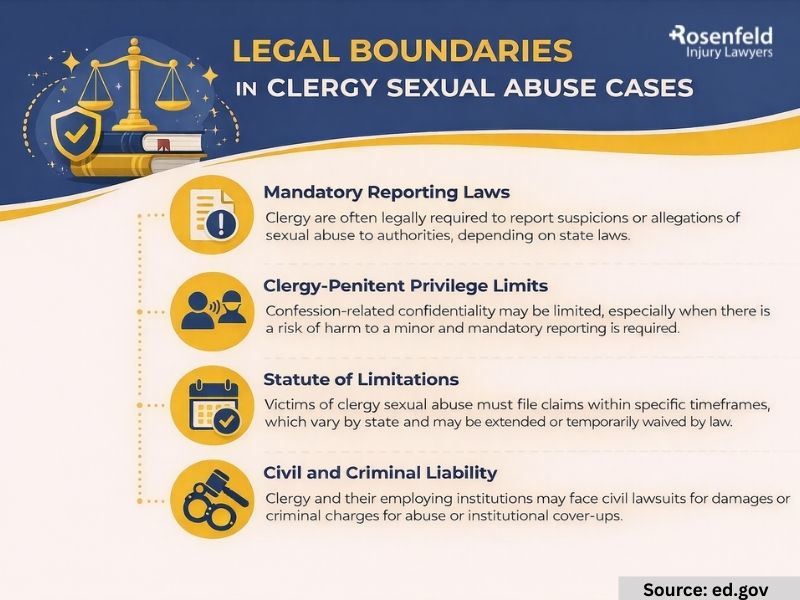
However, this privilege typically applies only to communications made during confession or spiritual counseling, not to institutional records, personnel files, or reports documenting sexual misconduct allegations. It also cannot shield criminal behavior or prevent civil authorities from investigating child maltreatment.
How States Handle Child Sexual Abuse Cases Involving Clergy Members
Across the country, legislatures and courts have strengthened protections for survivors filing clergy sexual abuse lawsuits. Many states now recognize that religious institutions must be held to the same standards of safety, reporting, and accountability as every other organization entrusted with the care of children.
Survivors often bring claims based on the following legal theories:
Neutral Principles of Law
Courts apply “neutral principles of law,” meaning they use secular legal standards rather than religious doctrine. Using these principles, courts examine whether an institution:
- Performed adequate background checks
- Followed mandatory reporting laws
- Responded appropriately to allegations
- Took steps to protect children
- Acted with reasonable care
Neutral principles of law ensure that civil courts can evaluate misconduct without intruding on doctrine or theology.
Institutional Negligence
Institutional negligence occurs when a church fails to protect children under its care. Many clergy abuse cases include evidence that:
- Complaints were ignored
- Abusive priests were transferred to new parishes
- Allegations were kept secret
- Internal investigations were insufficient
- Children were discouraged from reporting
- Known perpetrators were allowed continued access to minors
This pattern has been documented across denominations and is a central issue in civil sex abuse cases.
Negligent Hiring, Retention, or Supervision
Survivors frequently allege that religious institutions:
- Hired pastoral staff without adequate screening
- Failed to remove predatory spiritual leaders
- Supervised church officials inadequately
- Ignored recurring misconduct
- Prioritized reputational protection over child safety
These failures create direct institutional liability, completely independent of the perpetrator’s personal actions.
Failure to Report
Most states classify church officials as mandatory reporters. When religious leaders fail to report suspected abuse of a child to civil authorities, or worse, actively cover it up, they can be held liable. Failure to report is one of the most common allegations in clergy sexual abuse cases.
Fraudulent Concealment
Fraudulent concealment involves hiding or destroying information about abuse. Many child sexual abuse claims against religious organizations involve evidence of:
- Destroyed documents
- Hidden complaint files
- Transferred perpetrators
- Misleading communication to families
- Suppression of internal reports
Fraudulent concealment sometimes extends the statute of limitations, allowing claims that would otherwise be time-barred.
How Long Do Sexual Abuse Survivors Have to Take Legal Action?
Time limits vary by state, but the last decade has radically reshaped the civil statute of limitations for adult survivors of sexual abuse and the civil statute of limitations for survivors of child sexual abuse.
Civil Statute of Limitations for Adult Survivors of Sexual Assault
Many states now allow adult survivors to sue:
- Until an advanced age (e.g., age 40 or 55)
- Within a number of years after discovering the impact of the trauma
- Based on negligent institutional conduct, regardless of when the abuse occurred
These reforms reflect a deeper understanding of trauma, memory, shame, and delayed disclosure.
Civil Statute of Limitations for Survivors of Child Sexual Assault
These laws are typically more generous. Across the country, states have implemented:
- “Lookback windows” allowing time-barred cases to be refiled
- Permanent revival laws
- Extended age deadlines
- Discovery-based statutes
- Laws eliminating time limits for childhood abuse entirely
These changes allow many survivors, some harmed 30, 40, or 50 years ago, to finally seek justice.
Because state laws vary widely, we encourage survivors to reach out for a consultation so we can explain the exact timelines that apply to your case.
The Outcome of Child Abuse Lawsuits Against Religious Institutions
Clergy sex abuse lawsuits have reshaped the legal landscape for survivors across the country. The results are clear: the Catholic Church has paid millions in settlements, new legal reforms continue expanding survivors’ rights, and many churches have filed for bankruptcy due to thousands of childhood sexual assault claims.
Bankruptcy is not a way for institutions to escape liability. Instead, it creates a structured process to evaluate assets, organize claims, and provide compensation to large groups of abuse victims.
These outcomes reflect a growing societal recognition that holding religious institutions accountable when they allow abuse to occur, ignore abuse allegations, or commit systemic negligence must remain a top priority for legislators and advocates.
How Injury Lawyer Team Can Help You File a Civil Lawsuit
When survivors reach out to us, we know how difficult that first step can be. We offer a private consultation to discuss your experience, review any evidence you may have, and explain your legal options clearly and compassionately.
We help survivors navigate:
- Sexual abuse lawsuits
- Claims against religious institutions and individual clergy members
- Evidence gathering and institutional investigations
- Communication with civil authorities
- The full civil lawsuit process
- The emotional and legal challenges of child sexual misconduct litigation
Throughout your clergy sexual abuse case, we guide you through every stage: complaint filing, discovery, negotiations, depositions, mediation, and trial preparation, always prioritizing your comfort, safety, and voice.
You’re not just a case file to us. You are a person who deserves justice, validation, and a path forward. We stand with you, and we believe in your case. Our firm works entirely on a contingency fee model, meaning you owe nothing upfront and no legal fees at all unless we recover compensation on your behalf.
Contact Us for a Free and Confidential Consultation
If you or someone you love has experienced clergy sexual abuse, abuse involving a minor, or organizational negligence by religious institutions, we are here to support you with compassion and strength. You have legal recourse, and you deserve to understand every option available.
Reach out for a free and confidential consultation with our legal professionals today. When you’re ready, we can help you pursue justice and hold institutions accountable.
All content undergoes thorough legal review by experienced attorneys, including Jonathan Rosenfeld. With 25 years of experience in personal injury law and over 100 years of combined legal expertise within our team, we ensure that every article is legally accurate, compliant, and reflects current legal standards.