



Workplace Sexual Abuse


Workplace sexual abuse is a widespread issue, with over 60% of working women reporting sexual harassment or other forms of sex-based misconduct. Our law firm secures justice for survivors and demands accountability from negligent supervisors.
If you have been sexually assaulted or harassed at work, we can help you take legal action. Contact us today for a free consultation about a civil claim.
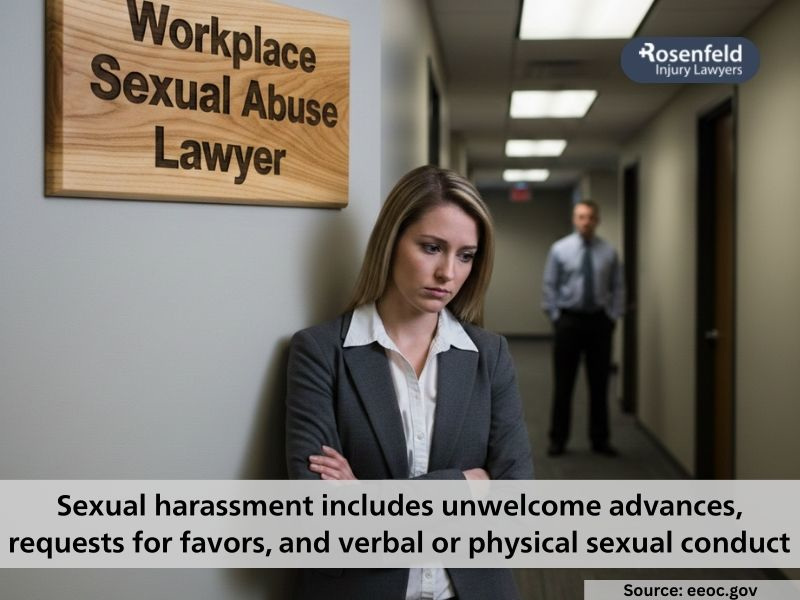
What Is Workplace Sexual Abuse?
While sexual abuse is strictly defined in criminal law (18 U.S. Code § 2242), civil claims have a more expansive definition, encompassing anything of a sexual nature that occurs without the victim’s full consent. If the misconduct is tied to employment, then it becomes workplace sexual abuse.
This type of workplace violence often involves power imbalances and control, particularly if the aggressor is a direct supervisor or has authority in the organization.
Both federal and state laws recognize sexual harassment and abuse as sex-based discrimination. Case law is clear that workplaces have a responsibility to ensure equal access to employment, as the US Supreme Court ruled in Meritor Savings Bank v. Vinson falls under Title VII of the Civil Rights Act of 1964
How Does Sexual Abuse Differ From Sexual Harassment at Work?
Workplace sexual abuse occurs when a person is forced, threatened, coerced, or manipulated into sexual activity. The difference is in the severity and type of behavior. Harassment is often verbal, such as unwanted sexual comments, while abuse may involve actual contact.
Abuse is different from assault in that it does not have to involve sexual activity, only unwanted contact. Groping, fondling, or sexualized touches like unwanted backrubs are common forms of abuse. These two types of workplace misconduct may occur together, and harassment may escalate into abuse over time.
While workplace sexual harassment is a civil matter, sexual abuse may also be a criminal matter.
What Is the Difference Between Workplace Sexual Harassment and Sexual Assault?
Workplace sexual harassment encompasses behaviors meant to intimidate, shame, or coerce a victim, limiting their ability to fully engage in workplace activities and complete their tasks.
The Rape, Abuse, and Incest National Network estimates that 81% of women and 43% of men experience some form of sexual harassment during their lives, which can range from inappropriate comments about someone’s body to unwanted physical contact.
This may escalate to workplace sexual assault if the perpetrator commits a sexual act without the victim’s consent. It can also be considered assault if the person did not have the ability to freely consent because of fear, manipulation, coercion, or intoxication. For example, if the perpetrator threatened to harm the victim’s family if they did not obey, then this would be assault.
As with abuse, workplace sexual assault can be both a criminal and civil matter, while harassment is typically a civil matter.
What Legal Rights Do Employees Have After Workplace Sexual Violence?
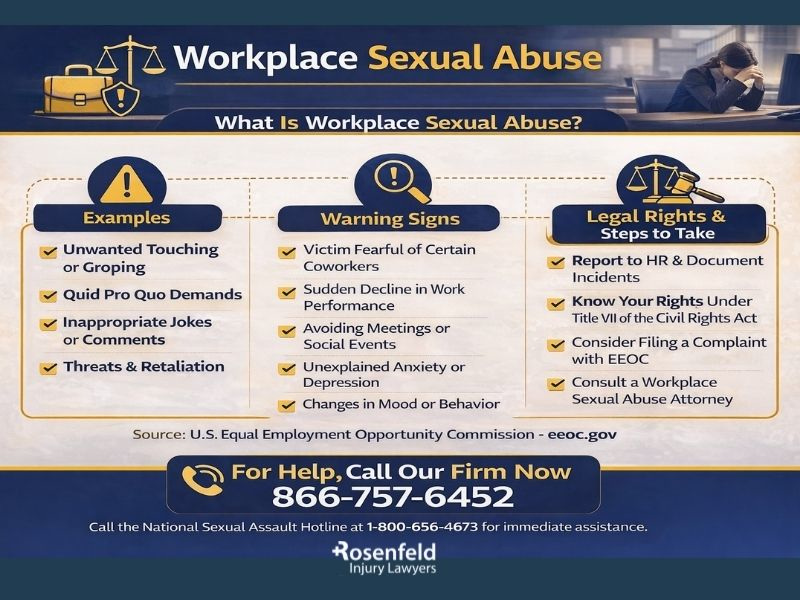
Survivors have a legal right to report abuse to law enforcement when necessary for their safety. Additionally, workplaces have a responsibility to address potential concerns and provide support to the survivor. This can include separating them from the other party, offering accommodations, or providing alternative work arrangements.
Employers may not retaliate against survivors for reporting (42 U.S.C. § 2000e). Retaliation incorporates a range of behaviors beyond simply firing the person. These can include:
- Unfairly low performance reviews
- Transfers to undesirable positions
- Reduced hours or pay
- Increased scrutiny or unfair terminations of contracts
- Threatening to sue or report the survivor
- Purposefully making an individual’s work more difficult, such as changing schedules to conflict with other responsibilities
The survivor must show that these adverse actions were in direct response to the report, such as occurring within days or weeks of the initial claim.
What Role Does the Equal Employment Opportunity Commission Play in Workplace Sexual Assault Cases?
The Equal Employment Opportunity Commission (EEOC) is a federal agency responsible for enforcing employment laws, particularly Title VII of the Civil Rights Act of 1964 (42 U.S.C. § 2000e). The EEOC investigates complaints of sex-based discrimination, retaliation, and harassment in the workplace, then mediates between workers and employers before lawsuits are filed.
In general, you must report illegal employment activity, like a hostile work environment, to the EEOC before filing a federal civil lawsuit (29 CFR § 1601.28). These claims have strict filing deadlines, often 180 or 300 days. If the EEOC determines that you have a valid claim, it will issue you a Right to Sue form. You then must file a lawsuit within 90 days.
A lawyer from our firm can help you coordinate these filings to ensure that all necessary procedures are followed and you have a valid legal action.
Who Can Be Held Responsible for Sexual Assault or Harassment in the Workplace?
A range of parties may be liable for workplace sexual assault or harassment.
- Supervisors: If you report misconduct and your superior fails to respond appropriately, they could be liable for creating an unsafe environment.
- Coworkers: Fellow employees must also ensure safety and support survivors. If they attempt to hide misconduct or support retaliatory behaviors, they can be liable.
- Contractors: If the accused was a third-party contractor, their direct employer can be liable. Contractors who are aware of the circumstances but don’t report may also be held accountable.
- Other Third Parties: Any party under the company’s control that does not intervene or uphold workplace standards may be liable.
How Do State Laws Affect Workplace Sexual Abuse and Harassment Claims?
While all states are subject to federal statutes and must cooperate with the EEOC, they may have additional requirements. The statute of limitations on sexual assault varies by jurisdiction, typically somewhere between one and five years for adults. Additionally, there may be specific filing procedures for employment commission complaints.
Some states allow plaintiffs to seek punitive damages in civil lawsuits. These are non-compensatory damages, meaning they are intended to punish the defendant for reckless endangerment and gross negligence rather than to compensate the survivor. Additionally, states may have statutory caps on non-economic damages like pain and suffering.
Working with an experienced attorney is essential to securing justice while navigating the state legal system. We provide free consultations and work on a contingency fee basis, meaning there is no obligation or out-of-pocket legal fee.
What Additional Resources Are There for Employees Facing Workplace Sexual Abuse?
These resources can help you understand how to respond to sexual harassment, what reporting options are available, and how to care for your mental health while seeking justice.
U.S. Equal Employment Opportunity Commission: The EEOC is the federal agency responsible for investigating employment discrimination and providing information on complaint procedures.
Sexual Harassment in the Workplace Toolkit: This resource, provided by Equal Rights Advocates, explains state and federal laws surrounding sexual harassment.
Know Your Rights: Witnessing Sexual Harassment at Work: This short resource provides intervention tools for those who witness workplace sexual assault or harassment.
What Evidence Is Commonly Used in Workplace Sexual Abuse Cases?
Our firm will secure a range of evidence to support your case, which includes:
- Human Resources records
- Prior complaints against the defendant
- Witness statements
- Surveillance footage
- Private communications referencing the incidents
The goal is to show a pattern of conduct that created an unsafe environment for you or others, rather than to demonstrate improper reporting procedures.
How Our Law Firm Can Help
Everyone deserves a safe and supportive work environment. If you’ve been subjected to unwanted sexual attention at work, we can file a civil sex abuse lawsuit on your behalf and conduct a thorough investigation to prove liability. We will assist you in navigating your state’s administrative action process, then manage third-party negotiations on your behalf.
Our Super Lawyers work on a contingency fee basis: no legal fees unless we win. Contact us at 866-757-6452 or through our online contact form to schedule a free consultation.
All content undergoes thorough legal review by experienced attorneys, including Jonathan Rosenfeld. With 25 years of experience in personal injury law and over 100 years of combined legal expertise within our team, we ensure that every article is legally accurate, compliant, and reflects current legal standards.