



Who Can Be Sued in a Premises Liability Sexual Assault Case?


Understanding who can be sued in a premises liability sexual assault case is crucial to securing financial compensation in a civil lawsuit. While every state has slightly different laws and case precedents, the legal doctrines are similar.
Injury Lawyer Team is a law firm that helps survivors nationwide take legal action against negligent property owners. Contact us today for a free consultation about a civil lawsuit.
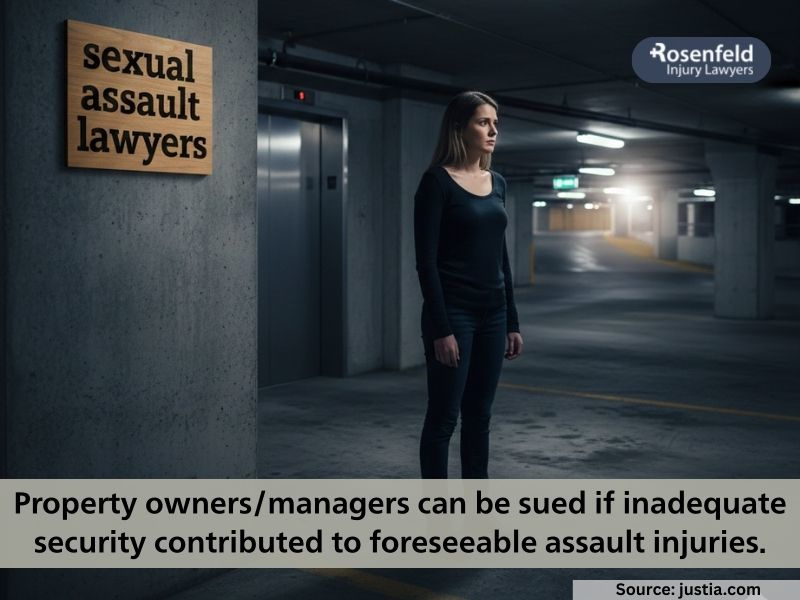
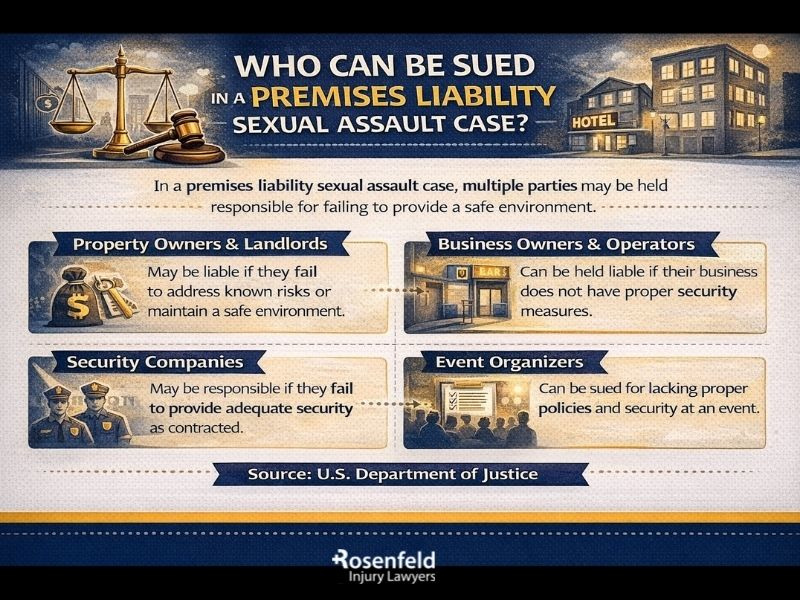
Who Can Be Held Liable for a Sexual Assault Premises Liability Claim?
A premises liability lawsuit is based on the concept that property owners must take reasonable care to provide safe premises for any invitee. It enables victims to seek compensation for physical injuries, emotional distress, or financial losses due to a property owner’s negligence.
The Legal Owner or Controller of the Property
Premises liability prioritizes control of the property, not only ownership. This means more than one individual or entity can be liable for a sexual assault occurring on a given property.
Any property owner, regardless of whether they have day-to-day control of the premises, has a duty to protect invited guests or employees. For example, they may be required to install security cameras, ensure proper illumination, or implement access control measures such as keycards.
Property Managers or Management Companies
Property managers and businesses are responsible for daily oversight, even if they do not own the property. This means they must ensure a safe environment through proper maintenance and security checks. Failure to do so creates independent liability, regardless of the property owner’s actions.
For the manager’s actions to be considered negligent, the sexual abuse must be a foreseeable outcome rather than a random event.
In Gress v. Lakhani Hospitality, Inc., a staff member assaulted a hotel guest. Previously, the directly liable party committed several violent crimes against women, which would have been found on a background check. This shows the business failed to prevent harm to invitees through a careful review.
Landlords of Commercial Property
Commercial property owners are responsible for common areas, like parking lots, lobbies, stairwells, walking paths, alleys, and elevators. It is assumed they do not have direct control over leased areas like individual apartments or storefronts. As such, if a sexual assault occurred in a common area, then the landlord could be liable for failing to uphold their duty of care.
Employers
Workplace sexual assault can fall under state and federal employment law due to sex-based employment discrimination (42 U.S. Code § 2000e), but it can also involve premises liability.
A business owner has a duty to ensure a safe workplace, including access control, adequate lighting, and surveillance cameras. If someone suffered harm due to negligent security protocols or a lack of security infrastructure, this may constitute premises liability.
Security Companies
Some establishments, like nightclubs and hospitals, hire third-party security guards to protect people and property. Their guards should monitor security feeds, conduct regular foot patrols, and use bystander intervention training to prevent or interrupt a sexual assault. If they fail to do so and an invitee is injured during their shift, the individual and the company may be liable.
Schools, Universities, or Educational Institutions
Schools, colleges, and other educational institutions have a duty to prevent sexual assault both due to laws like Title IX and premises liability doctrines. For example, high schools like Whitney M. Young Magnet High School must ensure that only students and staff have access to the campus.
The standards are especially high for elementary schools, given the vulnerability of younger children, and they are expected to maintain strict security protocols and ongoing oversight of pupils.
Religious, Non-Profit, or Community Organizations
Clergy abuse may give rise to a premises liability claim, as the Church is expected to exercise control and oversight over any property it owns. This can include churches, summer camps, daycares, and other Church-affiliated institutions.
Nonprofits and community organizations that serve vulnerable individuals, like counseling centers, homeless shelters, food banks, and nursing homes, must also ensure access control and appropriate security staffing. If a sexual assault occurs, they can be held responsible.
Can Multiple Parties Be Sued for Sexual Assault Under Premises Liability Law?
Yes, multiple parties could be responsible for a sexual assault on a single property. For example, a security company could be liable for failing to intervene, and a property owner could be responsible for failing to repair broken locks or install sufficient cameras.
In many states, this falls under the Joint Tortfeasor Contribution Act. Each party to the lawsuit could be jointly and severally liable for the settlement. This means that if one party lacks funds to pay the settlement, the other parties may be responsible for the entire sum.
In most cases, our lawyers negotiate with the negligent party’s insurance company. Damages can include lost income, medical bills, physical pain and suffering, and emotional distress.
While many cases settle out of court, it’s sometimes necessary to go to trial. A court may award punitive damages if there is evidence of severe recklessness, but they are at the judge and jury’s discretion. These are treated separately from compensatory damages.
FAQs
Is a negligent security claim the same as premises liability?
Negligent security claims are a subset of premises liability laws. These lawsuits arise from an owner’s failure to provide adequate security measures.
You may have a negligent security claim if you can prove a person was able to assault you due to these missing security tools. For example, broken locks on a dorm room on a college campus would constitute inadequate security protocols and maintenance.
Can victims file criminal cases based on premises liability?
These cases are generally civil lawsuits. However, the victim can press charges against the individual perpetrator for criminal sexual assault. This is a separate legal avenue based on punishing the perpetrator.
You can pursue a civil claim without reporting the assault to the police, as the focus of civil litigation is to secure damages for your losses.
Who can be held liable for failing to provide adequate security?
Potentially liable parties may include property owners, property management companies, security agencies, landlords, religious institutions, schools, and nonprofit organizations.
How long do victims have to file a negligent security lawsuit?
Time limits for negligent security lawsuits vary by state. For adult victims, this is typically two years. There are extended statutes of limitations for child sexual abuse.
We provide nationwide legal support to survivors and can assist you in determining the applicable laws in your jurisdiction.
Book a Free, Confidential Consultation to Explore Your Legal Options
Our caring sexual assault lawyers will negotiate compensation for your financial and emotional losses, such as missed work, therapy sessions, and trauma. This is achieved by demonstrating that the property owner, business owner, or other party failed to maintain safe premises, which resulted in sexual assault.
Through meticulous evidence gathering and careful investigation, we can demonstrate negligent security or property management, then negotiate with the applicable insurance company for a fair settlement.
We are proud Super Lawyers with a perfect 10/10 AVVO rating. Our compassionate and trauma-informed approach to sexual assault claims is based on over 100 combined years of legal advocacy, earning us the trust of both our clients and peers.
Injury Lawyer Team works on a contingency fee basis: no legal fees unless we win. To schedule a free consultation, call us at 866-757-6452 or use our online contact form.
All content undergoes thorough legal review by experienced attorneys, including Jonathan Rosenfeld. With 25 years of experience in personal injury law and over 100 years of combined legal expertise within our team, we ensure that every article is legally accurate, compliant, and reflects current legal standards.