



Who Are the Most Common Victims of Sexual Abuse?


Who are the most common victims of sexual abuse? This is a question many survivors, families, and advocates ask when trying to understand risk, prevention, and accountability.
At Injury Lawyer Team, we stand with survivors from every background. Sexual abuse and sexual violence do not discriminate, but patterns do exist, and recognizing them helps protect vulnerable people and hold perpetrators and institutions responsible.
Our firm represents survivors of sexual abuse and institutional abuse nationwide, and seeking information is often the first step toward healing, safety, and justice.
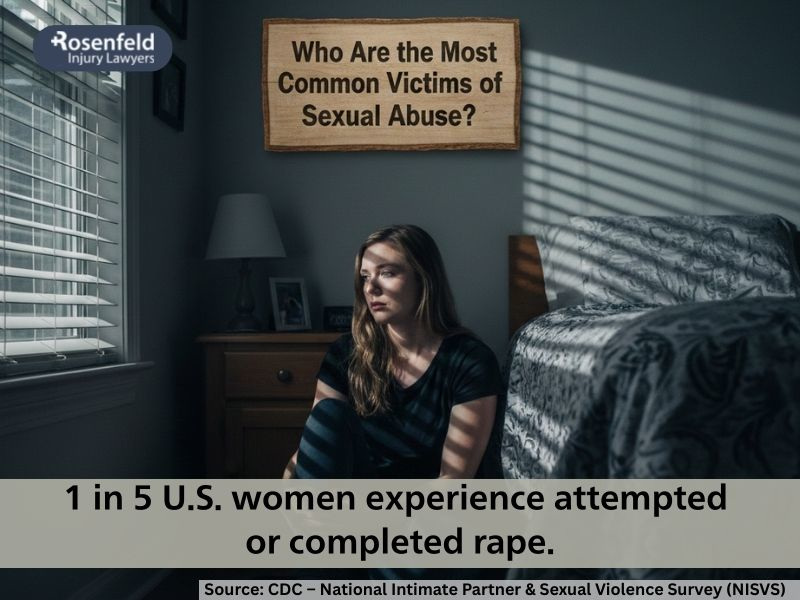
Who Is at the Highest Risk of Experiencing Sexual Violence?
Public health data, criminal justice statistics, and survivor-reported systematic reviews consistently show that some groups face a significantly higher risk of experiencing sexual violence. According to a sexual violence survey by RAINN, the largest national center for anti-sexual violence, nearly every minute someone in the United States is sexually assaulted, and every nine minutes, that victim is a child.
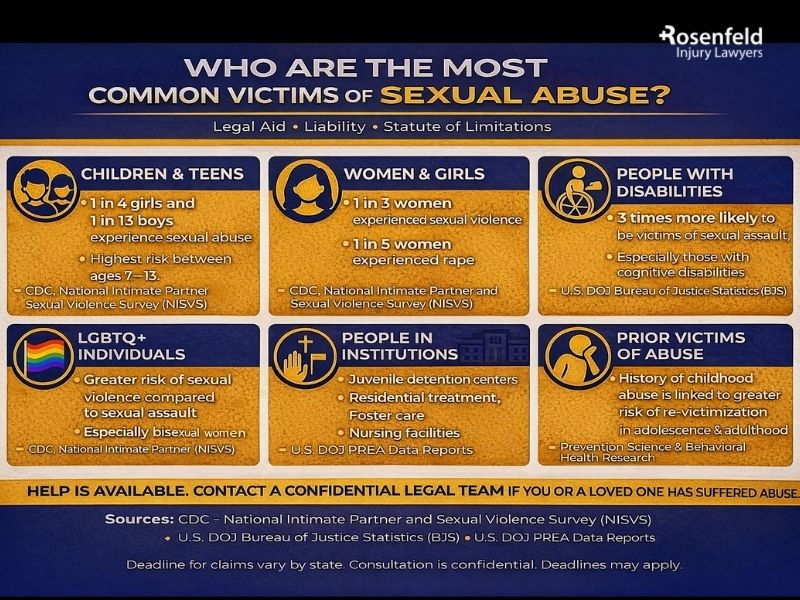
Younger people face the highest risk. Almost 69% of people who experience sexual violence are between the ages of 12 and 34, with high school adolescent health studies showing that 15% of victims are ages 12–17 and 54% are ages 18–34. These numbers reflect reported sexual assaults, meaning the true scope of abuse is likely even larger due to underreporting.
Women and girls are disproportionately affected. Nearly 9 out of 10 rape victims are women, and 1 in 10 victims are men.
Almost half of all victims of rape are under age 25, and 1 in 6 women overall experience attempted rape or completed rape during their lifetime. Among juvenile victims, girls account for more than 80%, highlighting the extreme vulnerability of children, especially girls, within homes, schools, and institutional settings.
College students also face an elevated risk. Women ages 18–24 who attend college are three times more likely than women in general to experience rape or sexual assault. Male college students in the same age group are five times more likely than non-students to be assaulted. Alcohol use, social pressure, sexual harassment, and power imbalances contribute to these risk factors.
More statistics show that race, geography, and social context also matter.
Indigenous Americans are sexually assaulted at twice the rate of people from other racial groups. Survivors living in rural areas often face barriers to reporting abuse and accessing care, increasing the likelihood of repeated sexual victimization. Studies from the Centers for Disease Control confirm that risk increases where prevention resources, injury prevention programs, and survivor services are limited.
Across all demographics, most victims know the perpetrator. Offenders are often a family member, intimate partner, step-parents, trusted authority figures, or someone within the victim’s daily life, rather than a stranger. This reality explains why many survivors delay reporting abuse or never report at all.
Sex abuse often occurs within systems that are supposed to provide safety, supervision, or care. Below are some of the most common institutional and situational contexts where survivors experience sexual violence.
Juvenile Victims in the Criminal Justice System
Children placed in detention facilities face extreme vulnerability. Juvenile detention sexual abuse remains a widespread and deeply underreported problem within the criminal justice system. Juveniles in custody may be sexually abused by staff, contractors, or other detained youth.
Power imbalances, isolation, fear of retaliation, and lack of oversight allow child sexual abuse to continue unchecked. Many children living in these facilities experience lasting physical injuries, genital injuries, and severe mental health consequences. Survivors often struggle with depression, post-traumatic stress disorder, and distrust of authority long after release.
College Students
College sexual abuse affects students across campuses nationwide. Survivors may experience rape, attempted rape, or other forms of contact sexual violence in dormitories, fraternity houses, off-campus housing, or social events.
College students may hesitate to report sex abuse due to fear of academic consequences, retaliation, or disbelief. Many experience sexual assault while incapacitated, pressured, or coerced, yet still blame themselves. We regularly remind survivors: the perpetrator is responsible, not you.
Intimate Partner Violence
Sexual abuse frequently occurs within relationships. Dating app sexual abuse and other forms of intimate partner violence are increasingly common as technology expands access to potential partners.
National intimate partner and sexual violence surveys show that survivors may experience sexual coercion or forced sexual activity by someone they trusted. Sexual violence often overlaps with physical violence, emotional abuse, and stalking. Survivors may remain in dangerous situations due to financial dependence, fear, or concern for children.
Child Abuse in the Foster Care System
Children placed in foster homes are at heightened risk of abuse. Foster care sexual abuse often involves foster parents, caregivers, older children in the home, or others with access to vulnerable youth.
Child sexual abuse victims in foster care may already have histories of trauma, making them targets for repeat abuse. Many develop long-term mental health challenges, struggle academically, and experience higher rates of teen pregnancy, substance use, and future victimization.
Child Sexual Abuse by Clergy Members
Clergy sexual abuse has affected children across denominations and faith-based institutions. Survivors were often targeted due to trust, religious authority, and family involvement in the church.
Many victims of rape and sexual abuse by clergy report delayed disclosure, sometimes decades later, due to shame, fear, and institutional cover-ups. Survivors deserve accountability, regardless of how much time has passed.
What Are the Mental Health Effects on Victims Who Experience Rape?
The emotional and psychological consequences of sexual violence are profound and long-lasting. Survivors of rape or sexual assault commonly face:
- Depression, including persistent sadness, emotional numbness, hopelessness, loss of motivation, and withdrawal from daily life
- Anxiety disorders, including constant worry, panic attacks, and fear of being alone or in public spaces
- Post-traumatic stress disorder (PTSD), with symptoms such as flashbacks, intrusive memories, hypervigilance, avoidance, panic responses, and feeling constantly unsafe
- Emotional dysregulation, such as sudden mood swings, irritability, anger, or emotional shutdown
- Dissociation, feeling detached from one’s body, surroundings, or emotions as a survival response
- Shame and self-blame, even though responsibility lies entirely with the perpetrator
- Difficulty trusting others, particularly authority figures, partners, or caregivers
- Problems with intimacy or sexual relationships, including fear, avoidance, or dissociation during sexual activity
- Low self-esteem and loss of identity, especially when abuse occurred during childhood or adolescence
- Sleep problems, including insomnia, nightmares, night terrors, and fear of sleeping alone or in the dark
- Substance use or risky behaviors, sometimes used as coping mechanisms to numb emotional pain
- Concentration and memory difficulties, which often affect school, work, and daily functioning
- Social withdrawal, isolation, or loss of interest in relationships and activities once enjoyed
- Suicidal thoughts, especially when survivors feel isolated, disbelieved, blamed, or unsupported
How Injury Lawyer Team Can Help
At Injury Lawyer Team, we focus on survivors, not statistics. We represent clients in sexual abuse cases involving child sexual abuse, sexual assault, and institutional abuse. From your first call through final resolution, we stand with you.
Our services include:
- Confidential, free consultations where we listen without judgment
- Case evaluation to identify legal options, deadlines, and responsible parties
- Evidence development, including records, witness statements, and expert review
- Institutional accountability, whether abuse occurred in schools, foster care, churches, detention centers, or other settings
- Negotiation and litigation, pursuing settlement or trial and verdict when necessary
We handle these cases on a contingency fee basis. That means there are no upfront costs, and you owe us nothing unless we recover compensation on your behalf.
If you or someone you love has been sexually abused, sexually assaulted, or experienced sexual violence, we encourage you to contact us. You deserve support, accountability, and the chance to move forward on your own terms.
All content undergoes thorough legal review by experienced attorneys, including Jonathan Rosenfeld. With 25 years of experience in personal injury law and over 100 years of combined legal expertise within our team, we ensure that every article is legally accurate, compliant, and reflects current legal standards.