



Where Does Child Sexual Abuse Occur?


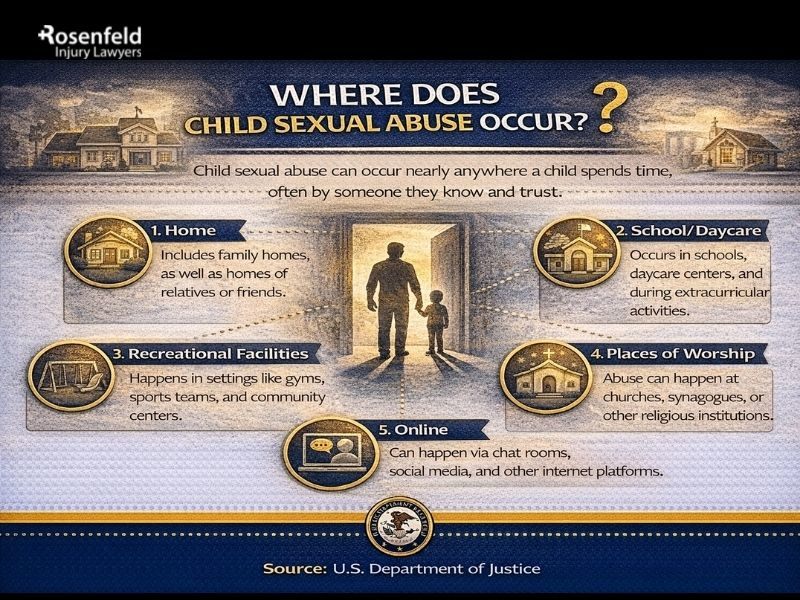
Children are typically unable to recognize many sexual behaviors, and even if they do, they are often incapable of standing up for themselves against abusive individuals. As a result, adults in trusted positions of authority may get away with sexually abusing children for years. To care for these precious members of the community, we must answer the question “Where does child sexual abuse occur?”
Child abuse often happens in places where they should feel the safest. This sexual activity can have a devastating effect on the child’s well-being, usually causing psychological challenges for the rest of their life. At the Injury Lawyer Team, we stand by survivors of child sexual abuse so they can pursue civil action against their abusers and fight for fair compensation.
In this guide, we will discuss the environments where sexual acts against minors often occur.
Why Are Institutionalized Children at an Increased Risk of Being Sexually Abused?
Although children can also be abused in their homes, their presence in institutions also comes with unique risk factors. Many organizations place adults in positions of authority over children, which can lead to power imbalances and a misuse of trust. The ability to gain access to children with less oversight also gives abusers more opportunities to engage in misconduct.
Here are some examples of institutions where child sexual abuse is a serious concern:
- Academic environments – The relationship between teachers/administrators and students can lead to school sexual abuse cases
- Religious organizations – Clergy abuse has been a major problem for years in the United States, often featuring priests who earn the trust of families before taking advantage of children
- Foster care – The foster care system is not always efficient at selecting the safest homes for wards of the state, and the result can be children living with dangerous adults who are abusive
- Youth residential centers – Some children are placed in residential treatment centers for mental health or behavioral issues, but employees in these environments are often allowed too much access to boys and girls and commit sexual misconduct in treatment facilities
- Detention centers – Juvenile detention center sexual abuse is all too common, as many adults in these facilities will abuse their authority over the underage inmates
How Do Institutions Fail to Prevent Child Sexual Abuse
Institutions that work with children are responsible for their safety and well-being. However, numerous systemic issues can increase the likelihood that a child is sexually abused.
Negligent hiring practices may result in a former child molester becoming employed at a school or in a treatment center. If the administrators ignore or cover up complaints of sexual abuse, the offending parties may be allowed to persist in their behaviors.
Poor training will enable predators to get away with misconduct because of the lack of reporting procedures or a failure to educate workers on the signs of abuse. If employees do not abide by mandatory reporting laws, children can be placed at a higher risk of ongoing sexual assault.
How Are Institutional Sexual Assault Cases Involving Child Victims Different Than Domestic Violence?
Institutional sexual abuse is less straightforward than domestic matters. In domestic violence cases, the at-fault party is typically the individual abuser or a negligent parent. For institutional environments, third-party liability may mean the organization is responsible for allowing the abuse to occur.
Proving liability for child sexual abuse against an institution will require evidence of these elements:
- Duty of care – The institution had a legal duty to protect the child
- Breach of duty – The institution’s actions or inaction resulted in harm to the victim
- Causation – There is a causal link between the organization’s actions and the victim’s suffering
- Legal damages – The victim suffered economic and/or non-economic losses because of the incident
Legal strategies differ between domestic violence and institutional sexual abuse. In a domestic case, the investigation centers on the family in question. In an institutional investigation, a review of internal documents, past complaints, and other relevant materials may be part of the legal process. Establishing a pattern of negligence will require corroborating stories.
How Does Identifying Institutional Risk Factors Strengthen Sexual Abuse Lawsuits?
A higher risk for child sexual abuse is present in almost every environment where children interact. From schools to churches to detention centers, concerns may include inadequate supervision, poor security, unmonitored access to children, negligent hiring, and improper complaint procedures.
In a civil lawsuit, demonstrating these risks will have a crucial impact on the outcome. If you can prove that the failures are proof of the foreseeability of sexual abuse, it will strengthen your claim. For example, if a school with mandatory reporters failed to act on past complaints, that would enhance the case of institutional liability, as the organization is failing to enforce federal child-safety laws.
What Consequences Do Most People Suffer Following Child Sexual Abuse?
This type of behavior can change the course of a child’s life. Such abuse has serious psychological and physical consequences. Here are some of the most common effects of child sexual abuse.
Mental Health Issues
Most children will struggle with their mental health if an adult has sexually victimized them. Often, these adults are trusted individuals who betray that trust for their own sexual gratification. The trauma of being sexually assaulted can hamper the adolescent’s development and subject them to years of emotional health challenges, including anger, fear, and suicide ideation.
Post-Traumatic Stress Disorder (PTSD) is a common side effect of child sexual assault, as their mind may not be able to heal from the damage caused by the abuser fully. Depression and anxiety are also common among abuse survivors.
Teen Pregnancy
Another potential consequence of a child being sexually assaulted is pregnancy. Girls who have gone through puberty could face a teen pregnancy if a post-pubescent male rapes them. This atrocious act places the victim in an incredibly difficult situation while the perpetrator rarely has to deal with any long-term consequences.
Reproductive Problems
Depending on the extent of the sexual abuse, the victim could struggle to engage in sex healthily or produce children in the future. This may be a result of the physical damage done by the abuser or the mental trauma associated with sex in the victim’s mind. Either scenario could affect the survivor’s chances of having a healthy relationship with sex in the future.
Book a Free Consultation to Explore Your Legal Options Following Child Abuse
Children are more likely to be sexually abused by family members and trusted adults than by strangers. There are certain places where parents have less control over their child’s safety, such as churches, schools, and residential treatment centers. If these institutions do not have adequate safeguards, the minors in their care may be at risk of being sexually abused.
The Injury Lawyer Team is committed to providing compassionate legal support so victims can tell their stories in a safe environment. We will investigate your sexual abuse case, gather physical evidence, review internal documents, and litigate in civil court if necessary.
Contact our sexual abuse lawyers today at 866-757-6452 to schedule a free consultation with our expert law firm.
All content undergoes thorough legal review by experienced attorneys, including Jonathan Rosenfeld. With 25 years of experience in personal injury law and over 100 years of combined legal expertise within our team, we ensure that every article is legally accurate, compliant, and reflects current legal standards.