



What Is Sexual Harassment?


When answering the question, “What is sexual harassment?”, it is important to define related terms.
Sexual harassment is defined as unwanted or unwelcome sexual advances, requests for sexual favors, or other forms of sexual violence. This behavior often occurs when there are unequal power dynamics, such as an employer-employee relationship or a teacher-student relationship.
However, it can still be confusing to understand if you have been the victim of harassing behavior of a sexual nature or related to your gender.
What Constitutes Sexual Harassment?
Sexual harassment can take many forms and may occur in almost any context. A behavior, advance, or request that is sexual in nature may be enough to constitute sexual harassment. Let’s look at a few categories of sexual harassment that a victim may experience.
Quid Pro Quo Sexual Advances
Quid pro quo means “this for that.” It is an exchange between the harasser and the victim where the harasser offers the victim something in exchange for the sexual favor. For example, a boss may request a specific sexual activity from an employee, and in exchange, the boss will promote that employee or treat them favorably in their current role.
Even if the boss does not commit any physical conduct against the victim, it is still considered a sexual advance because of quid pro quo.
Sexual Assault
Sexual assault is an act of physical behavior of a sexual nature. It could involve inappropriately touching a person’s genitals, groping them, or engaging in non-consensual sexual acts. Essentially, any form of sexual harassment that involves physical contact may be considered assault.
The consequences of being sexually assaulted are often felt for years. Even if there are no lasting physical wounds, the emotional damage can last for decades.
Other Forms of Sexual Violence
Sexual violence encompasses a broad range of inappropriate behaviors. It involves sexual behavior that occurs without the consent of the recipient. It also involves power dynamics, such as a student-teacher relationship in a learning environment or a manager controlling an individual’s employment.
Examples of sexual violence can include unwelcome verbal sexual comments, someone talking about their sex life, persistent telephone calls, suggestive looks, online interactions, sexual jokes, and comments about someone’s body. If you have dealt with such conduct, you may have experienced sexual harassment.
Is a Hostile Environment Harassment?
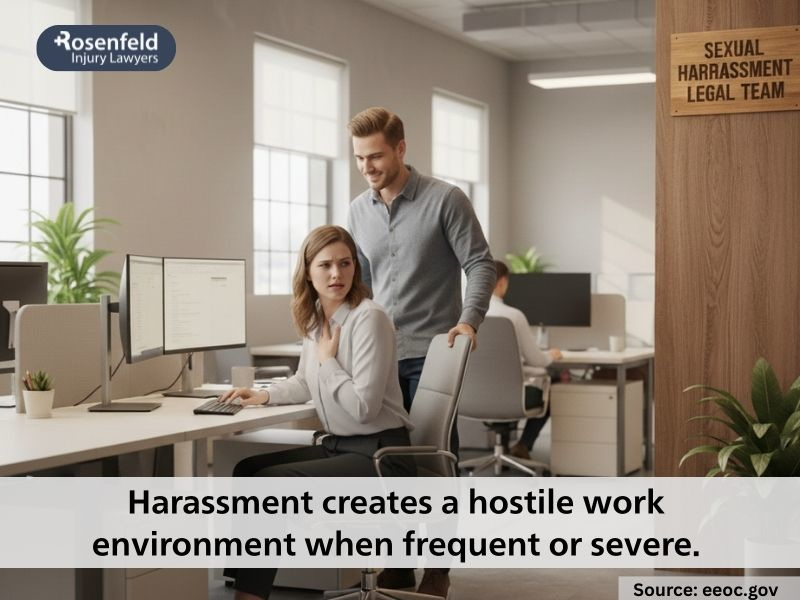
Sexual behavior that turns a workplace or academic setting into a hostile environment can certainly constitute sexual harassment. A hostile environment results from a person’s behavior that unreasonably interferes with someone else’s academic advancement or job duties.
An offensive environment perpetuated by the harasser can make the university, school, institution, or business an intimidating place for the victim. This will affect their ability to pursue their goals. If you are being sexually harassed to the point where your workplace or educational environment feels like a hostile setting, your emotional and mental health could be severely affected.
What Legal Options Do Victims of Sexual Harassment Have?
Understanding the legal definition of sexual harassment may be important if you are considering civil action against the abuser. Whether they engaged in unwelcome conduct or made requests for sexual favors, our expert attorneys can help you pursue fair compensation for legal damages suffered.
Sexual harassment lawsuits can be difficult to navigate alone. You will need to gather evidence of the harassment to prove that the defendant more likely than not made unwanted sexual advances toward you. Additionally, there may be a statute of limitations and specific laws that govern your case.
At the Injury Lawyer Team, our attorneys can provide the following legal services:
- Investigating your case to determine if it involved sexual harassment
- Calculating legal damages to seek fair compensation
- Gathering evidence of unwanted sexual activity
- Navigating state and federal laws related to such conduct
- Negotiating with defendants and insurance companies for a full settlement
- Litigating in civil court if necessary
Get Started With the Legal Process
Our experienced legal team is ready to listen to your story and pursue justice against the person who sexually harassed you. We work on a contingency-fee basis, so you owe nothing unless we secure a settlement.
If you or a loved one has been the victim of sexual harassment, either by a faculty member, employer, manager, or another individual with authority, contact us today at 866-757-6452 or complete the online form to schedule a free consultation about your sexual abuse lawsuit.
All content undergoes thorough legal review by experienced attorneys, including Jonathan Rosenfeld. With 25 years of experience in personal injury law and over 100 years of combined legal expertise within our team, we ensure that every article is legally accurate, compliant, and reflects current legal standards.