



Uber Sexual Assault Lawsuit Settlement


Seek Compensation for Sexual Assault Involving an Uber Driver
An Uber sexual assault lawsuit settlement can help survivors rebuild after traumatic harm tied to the Uber platform, whether the assault happened during a trip, immediately after drop-off, or in circumstances connected to the ride request and driver access.
At Injury Lawyer Team, we represent people who were sexually assaulted while using a rideshare service, and we do it with a survivor-centered approach that prioritizes privacy, safety, and control.
We also know that many survivors hesitate because the experience is painful to revisit, or because they worry they won’t be believed, or because they feel overwhelmed by the legal process. Our job is to make this feel manageable: we listen, we explain your options, and we protect your dignity as we pursue accountability.
When Uber failed to protect riders and implement adequate safety measures, a civil claim may allow survivors to hold Uber accountable and to force meaningful change that helps protect passenger safety going forward.
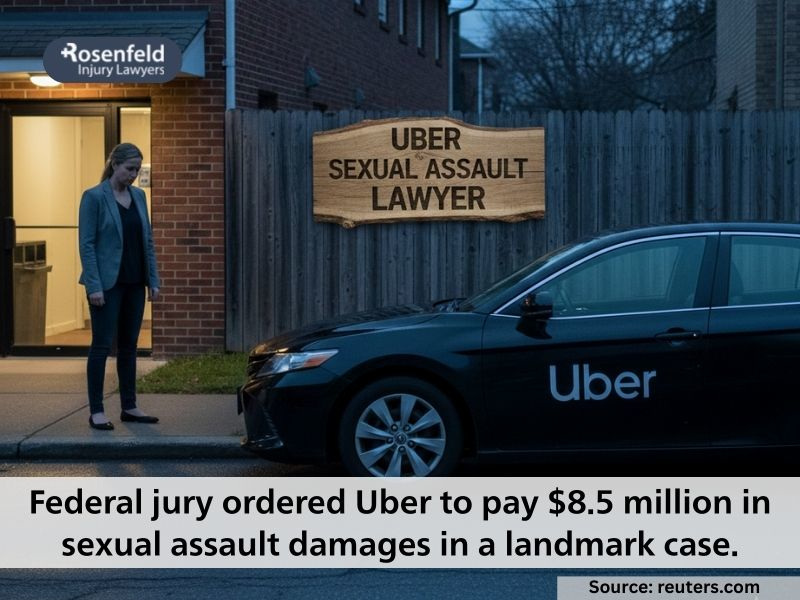
What Is the Average Uber Sexual Assault Settlement?
There is no true “average” settlement for Uber sexual assault lawsuits. These are not standardized claims, such as minor property damage cases. Each survivor’s experience, injuries, evidence, and long-term impact are different, and settlement outcomes depend on the facts, the forum, and how the case develops.
That said, people understandably want a realistic sense of the potential range for an Uber sexual assault settlement, and we can provide ranges based on publicly discussed outcomes and general tort valuation practices. A reasonable way to frame this is by severity, documentation, and proof of Uber’s failures.
Settlement Range Guidelines
- Lower range: Often $50,000–$150,000 in cases with limited corroboration, less extensive treatment, or disputes over liability.
- Mid-range: Often $250,000–$750,000, where survivors have consistent documentation, therapy records, and evidence supporting negligence or failure to enforce safety policies.
- Higher range: Sometimes $1 million+, where the assault involved severe violence, significant physical injuries, long-term psychological harm, and stronger evidence showing the company ignored known risks or patterns.
These ranges are not promises. They’re a way to understand what can drive value in sexual assault lawsuits, and why two cases that sound similar at a headline level can resolve very differently. In our work, we focus on building the strongest possible claim and presenting a clear, well-supported damages narrative that reflects the survivor’s reality.
What Impacts the Value of Uber Sexual Assault Claims?
When we evaluate Uber sexual assault cases brought before us, we look at two big categories: (1) what happened and how it affected the survivor, and (2) what Uber did or did not do before and after the incident.
The type and severity of harm: A case involving rape, coercion, or repeated misconduct is valued differently than a case involving a single incident of unwanted touching, though both can be devastating. The civil system recognizes that survivors experience a wide range of injuries and trauma responses. The fact pattern matters, including whether there was sexual assault committed with force, threats, confinement, intimidation, or exploitation.
Documentation and corroboration: We build cases with what exists, not with what “should have existed.” Evidence can include:
- Medical records and follow-up care
- Therapy and counseling notes (where the survivor chooses to share)
- Witness statements or contemporaneous disclosures
- Uber trip records and driver identifiers
- Communications, screenshots, and timeline markers
- Police reports (when survivors choose to report)
Even when a sexual violence survivor did not go to a hospital or report immediately, a case can still be valid. We work carefully to corroborate the timeline and harm without re-traumatizing our clients.
Prior notice and “pattern” information: One of the most important value drivers is whether a driver has prior complaints, whether there are reported sexual assault allegations, and whether Uber acted appropriately. If there is evidence that the company had notice, through earlier complaints, internal flags, or repeated allegations, jurors and insurers often view the company’s conduct more harshly.
Uber’s response and safety infrastructure: We examine whether Uber had systems in place to prevent harm and respond to it. Survivors often allege that the company failed to implement meaningful safeguards, employed weak monitoring, or treated safety issues as customer-service problems rather than urgent threats. We also look at whether Uber took steps that were more marketing-oriented than protective, what some call “checkbox safety.”
Credibility disputes and defense strategies: In these cases, defense teams often attempt to shift blame or dispute credibility. We prepare for that from day one, because Uber’s legal team typically defends aggressively. Our goal is to reduce avoidable vulnerabilities by preserving records, documenting damages, and creating a consistent, supported narrative.
Damages depth and duration: Long-term therapy, lost income, relocation costs, medication needs, and ongoing symptoms tend to increase value. Emotional trauma is not “soft”; it is real harm recognized by law, especially when supported through professional treatment and consistent reporting.
What Sexual Assault Incidents Qualify for a Lawsuit?
A wide range of conduct can qualify for an assault lawsuit connected to a rideshare trip. What matters is the wrongful act, the connection to the service, and the legal theory against Uber and/or the driver.
Incidents that may qualify include:
- A passenger whom an Uber driver assaulted during a ride
- An Uber driver sexually assaulting a passenger during pick-up, transit, or immediately after drop-off
- Non-consensual touching or groping, including inappropriate sexual contact
- Coercion, threats, intimidation, restraint, or stalking connected to the trip
- Sexual harassment that escalates into physical misconduct
- Broader sexual misconduct involving exploitation of passenger vulnerability (intoxication, disability, age, isolation)
- Any situation where a passenger experienced sexual assault because safeguards failed, or the driver used platform access to target riders
When our Uber sexual assault lawyers assess a case, they look at the totality of the circumstances: the ride context, driver access, Uber’s screening and monitoring, and whether the company’s systems enabled or failed to prevent foreseeable harm. Survivors do not have to prove perfection. They must present the facts and explain how they meet civil liability standards.
Is There an Uber Class Action Lawsuit in Federal Court?
People frequently search for an Uber class action, but the central structure for these cases is not a class action; it is an MDL (multidistrict litigation).
A class action lawsuit typically involves a single case that represents a larger group, with a shared resolution structure and often similar damages. That model is typically not well-suited to sexual assault harm because each survivor’s experience, injuries, and damages are intensely personal and unique.
By contrast, the Uber MDL consolidates many individual cases in a single federal court to improve efficiency. It allows consistent rulings on shared issues (like discovery disputes and corporate evidence) while preserving each survivor’s right to pursue their own damages. That matters because the harm is not “one-size-fits-all.”
The coordinated litigation has been overseen in the Northern District of California, with proceedings associated with District Judge Charles Breyer. In an MDL, the court can manage discovery and pretrial issues centrally while the underlying cases remain separate.
For survivors, an MDL can:
- Reduce duplicative litigation costs
- Create leverage for global settlement discussions
- Force corporate discovery on key safety issues
- Maintain each survivor’s personal damages claim
So when someone asks whether there is an Uber sexual assault lawsuit in federal court as a class action, we clarify: it’s coordinated as an MDL, which is different, and for many survivors, more appropriate.
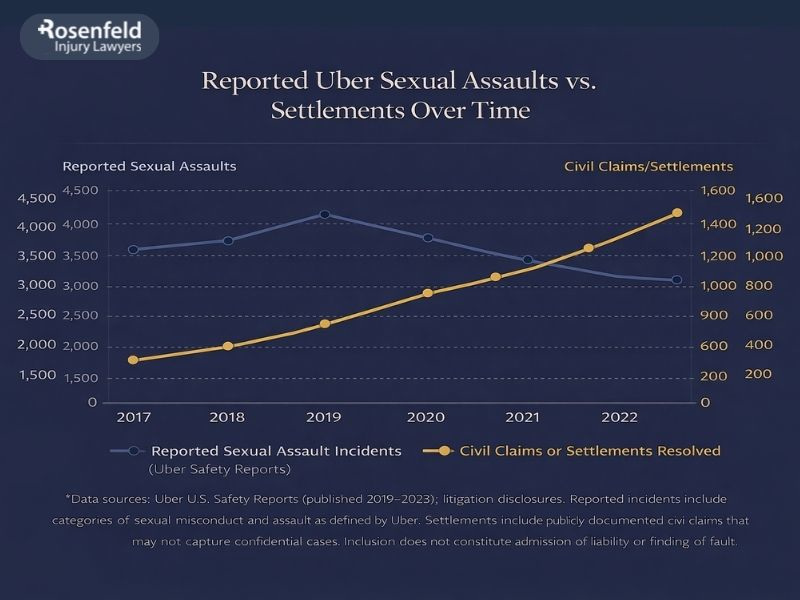
What Damages Can Sexual Assault Survivors Recover in the Uber MDL?
When survivors pursue Uber sexual assault litigation within an MDL framework, damages are still individualized. We typically evaluate three main categories:
Economic Damages
These are tangible financial losses, such as:
- Emergency medical care for physical injuries and follow-up treatment
- Therapy, counseling, psychiatry, medications
- Lost wages, missed work opportunities, reduced earning capacity
- Transportation and safety-related expenses
- Relocation or security costs in serious cases
Non-Economic Damages
These account for human harm that isn’t captured by receipts:
- Pain and suffering
- Emotional trauma and anxiety
- PTSD symptoms, nightmares, hypervigilance, isolation
- Loss of enjoyment of life and relationship harm
- Ongoing fear and impairment in daily functioning
Punitive Damages
Punitive damages may be available where evidence in legal action supports that Uber’s conduct was especially reckless, where plaintiffs argue the company prioritized growth over safety, delayed reforms, or ignored warning signs. Punitive damages are designed to punish and deter, not to reimburse. They can be a critical accountability tool when the facts support them.
What Does the Uber Passenger Sexual Assault Litigation Involve
The passenger sexual assault litigation focuses on whether Uber Technologies used reasonable care to protect riders and respond to threats. In practice, the litigation often examines:
- Background checks and screening: Plaintiffs commonly assert the company’s systems were insufficient to detect risk and prevent foreseeable harm.
- Monitoring and reporting systems: Cases may examine whether the platform’s reporting tools were effective, whether complaints were properly escalated, and whether repeat allegations were handled as serious safety issues.
- Safety design and follow-through: Uber has publicized various safety tools in the app, but litigation frequently tests whether those tools were actually effective, whether riders understood them, and whether Uber took meaningful action when incidents were reported. Survivors often claim Uber did not implement essential safety measures early enough, or failed to enforce them consistently.
- Corporate messaging vs. operational reality: In discovery, litigants often focus on what was promised versus what was done. Did the company adopt enhanced safety measures because they worked or because they were needed for brand protection? These questions can become central in settlement leverage and trial risk.
- Common defense themes: In these cases, Uber argues that drivers are independent contractors and that the company is not directly responsible for their actions. Plaintiffs respond that Uber continues to control key aspects of the platform, access, screening, reporting infrastructure, and safety policies, and that the company can be liable for failing to take reasonable steps to protect passengers. This is also where the “what did Uber know and when did it know it” question matters. Sexual assault reports, internal tracking, and responses to prior complaints are often key evidence in Uber lawsuits.
How Our Law Firm Can Help
We know that survivors don’t just need legal filing; they need a plan, a team, and a process that protects them. As Uber sexual assault attorneys, we support clients with a full case-building approach.
- Confidential consultation and trauma-informed intake: We start with a private, respectful conversation. We will never pressure you. We explain the options, timing, and what pursuing a civil claim realistically looks like. Our role is to help you regain control.
- Safety planning and documentation support: If you’re in immediate danger, we prioritize safety first. We can also help you preserve records connected to the Uber app, including trip details, timestamps, and communications that may later become crucial.
- Evidence gathering and case theory development: We gather the evidence available, identify legal theories, and assess where the case fits, whether in an MDL posture or in another venue. We also help you document the impact of the assault without turning your healing into “paperwork.”
- Filing strategy and forum decisions: Some cases may proceed through the Uber sexual assault MDL; others may be better suited to state court, depending on facts and timing. We explain realistic options, including where issues such as the California State Court might arise in specific procedural contexts.
- Handling corporate defense and negotiations: We deal with Uber’s lawyers and insurers. Survivors should not have to fight a corporate machine alone. We prepare each case as if it could go to trial, because that is how we build settlement leverage.
- Litigation support through discovery, mediation, and trial prep: As the case progresses, we guide clients through discovery, motions, deposition preparation (when required), and mediation. We also prepare for the possibility of bellwether trials in coordinated proceedings.
If you’re looking for a lawyer who treats you like a person, not a case file, we can help. And if you need a compassionate sexual assault lawyer who understands how sensitive these claims are, our firm is ready to stand with you.
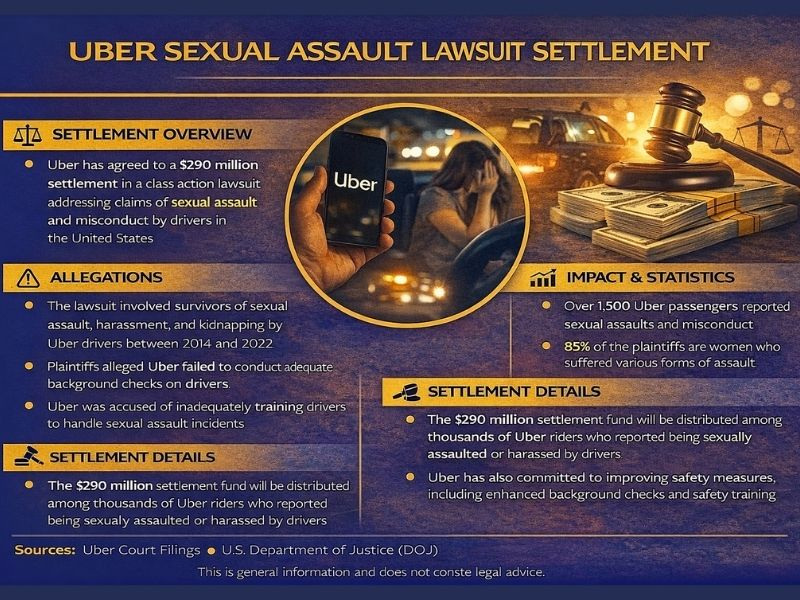
FAQs
Can victims sue Uber if they have been sexually assaulted by one of their drivers?
Yes. In many situations, survivors can sue Uber and also bring claims against the individual Uber driver. The legal theory against Uber often centers on negligent safety practices, failure to respond to complaints, and failure to implement reasonable safeguards to protect riders.
How long do victims have to file an Uber sexual assault lawsuit?
Time limits vary by state and can depend on the facts and where the case is filed. That’s why we encourage survivors to speak with an experienced lawyer as soon as they feel ready. If you want to pursue legal action, we can evaluate deadlines and help you act within the appropriate window.
Can victims sue Uber if the driver was criminally prosecuted?
Yes. A civil vs. a criminal case involves different goals and different burdens of proof. Criminal prosecution focuses on punishment by the state. Civil litigation focuses on compensation and accountability. A criminal case can support a civil claim, but a civil claim can also proceed even without a conviction.
Consult Our Legal Team
At Injury Lawyer Team, we handle sexual abuse cases on a contingency-fee basis, meaning there are no upfront legal fees and you do not pay us unless we recover compensation for you. If you’re one of the Uber sexual assault victims trying to decide what to do next, call us to schedule a free and confidential consultation with our skilled attorneys.
We stand with you, we believe in your case, and we’re ready to help you seek justice and fair compensation.
All content undergoes thorough legal review by experienced attorneys, including Jonathan Rosenfeld. With 25 years of experience in personal injury law and over 100 years of combined legal expertise within our team, we ensure that every article is legally accurate, compliant, and reflects current legal standards.