



Treatment for Sexual Abuse Victims


Treatment for sexual abuse victims is not a single appointment or a one-size-fits-all solution. It is a layered process that unfolds over time, working through bodily injuries, emotional wounds, psychological trauma, and the long-term impact of a traumatic event on a person’s life.
At Injury Lawyer Team, we work closely with survivors and families who are navigating this process while also trying to learn their legal options.
Sexual assault and other forms of sexual misconduct can leave survivors feeling overwhelmed, scared, and unsure where to turn. Many of our clients reach out during periods of overwhelming emotion, such as fear, rage, guilt, confusion, or distress, after a deeply harmful event. Our role is to help protect your safety, connect you with appropriate treatment, and pursue accountability while you focus on healing.
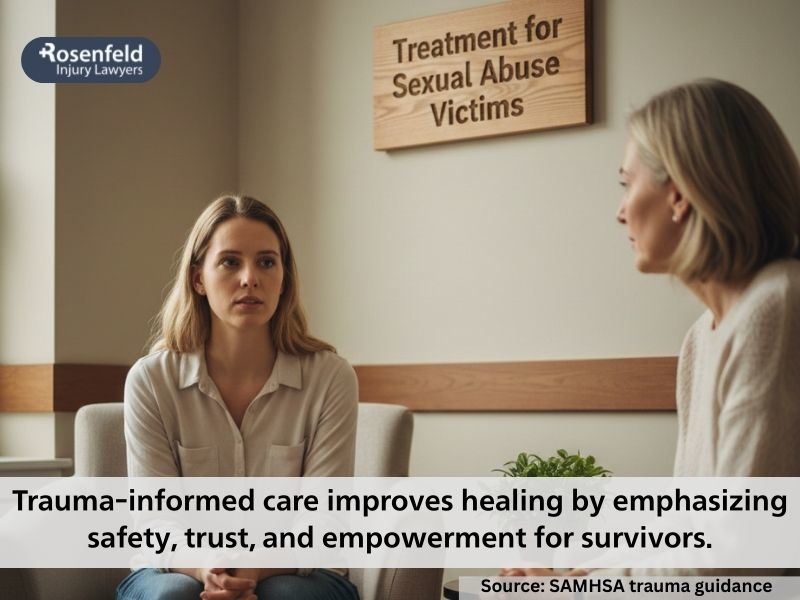
What Are the Immediate Treatment Priorities for Sexual Assault?
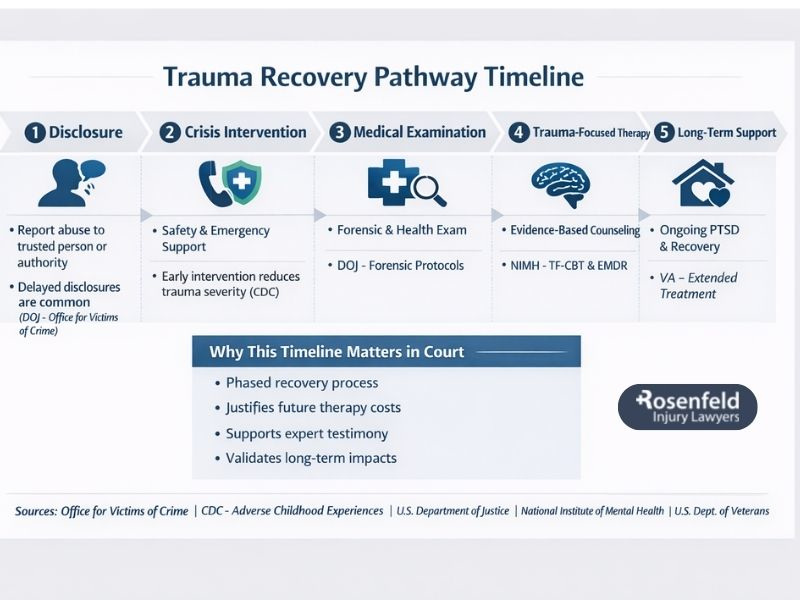
The first stage of care after sexual assault is often called the acute phase. This phase prioritizes immediate physical medical treatment, emotional stabilization, and the preservation of key evidence. For rape survivors, these early steps can feel frightening and invasive, but they are designed to preserve the patient’s health and future options.
Medical Care and Forensic Exams
Many survivors are encouraged to seek medical attention as soon as possible after an assault. This may include a Sexual Assault Nurse Examiner (SANE) exam, which is performed by specially trained medical professionals.
These exams deal with injuries, document what happened, and collect forensic evidence in a respectful, trauma-informed way. Survivors can often choose whether to proceed with evidence collection, and they need not decide immediately whether to involve law enforcement.
Medical treatment during this phase may include:
- Care for injuries and pain
- Testing and preventive treatment for sexually transmitted infections, guided by public-health and disease control standards
- Emergency contraception and other medicines when appropriate
- Evaluation for drug or alcohol involvement
- Documentation that later becomes a baseline for a sexual assault claim
These initial costs are often the foundation of a civil case. Even if survivors are unsure about taking legal action, preserving records and receiving care helps strengthen their ability to seek assistance later.
Crisis Intervention and Emotional Support
In the hours and days following an assault, many sexually assaulted individuals experience shock, anxiety, trouble falling asleep, bad memories, or feeling disconnected from reality. Crisis intervention centers on helping survivors feel safe, grounded, and supported. This may involve advocacy services, short-term counseling, ensuring the survivor has a safe place to stay, and suicide prevention.
At this stage, loved ones and family support can be critical, but survivors may also find it difficult to talk about what happened. Feeling scared, numb, or unsure how to process the experience is common. We remind our clients that these reactions are normal responses to trauma, not personal failures.
How Is Specialized Therapy Used to Address Sexual Trauma?
While the acute phase responds to immediate needs, long-term treatment focuses on healing sexual trauma and its lasting effects on the body and mind. Survivors of sexual exploitation, be it children, teenagers, or adults, may experience posttraumatic stress disorder, depression, anxiety, sleep problems, intrusive memories, or changes in how they relate to others and themselves.
Some survivors experience intrusive thoughts or unwanted fantasies following sexual trauma, and therapy helps patients recognize these reactions without shame or self-blame.
Research shows that specialized, trauma-informed therapy can significantly benefit survivors over several months or longer. A growing body of systematic review literature supports evidence-based approaches that help patients process trauma in a new way, reduce symptoms of post-traumatic stress disorder, and rebuild a feeling of security and control.
Below, we introduce several commonly used treatment models that many therapists rely on when working with sexual assault survivors.
Trauma-Focused Cognitive Behavioral Therapy (TF-CBT)
Trauma-Focused Cognitive Behavioral Therapy is one of the most widely studied treatments for sexual trauma, particularly for children and teens, though adults may also show a positive outcome. TF-CBT helps survivors comprehend how thoughts, feelings, and behaviors are connected after abuse.
This approach can help:
- Confront guilt, shame, and distorted beliefs about the assault
- Reduce symptoms of PTSD, anxiousness, and emotional withdrawal
- Improve emotional regulation and coping skills
- Support family involvement when appropriate
TF-CBT creates a structured, safe environment where survivors can gradually talk about the previous trauma without being overwhelmed. Over time, many patients report reduced post-traumatic stress and depressive symptoms, fewer behavior-related difficulties, less shame and self-blame connected to the abuse, and a renewed sense of hope and potential to move forward.
Eye Movement Desensitization and Reprocessing (EMDR)
Eye Movement Desensitization and Reprocessing is another available treatment for sexual trauma. EMDR centers on how traumatic memories are stored in the brain and uses bilateral stimulation, often guided EMDR, or rhythmic movement, to help the brain reprocess distressing memories.
During EMDR therapy, survivors work with a trained therapist to recall aspects of the assault while engaging in controlled sensory input. This process can reduce the emotional intensity of painful memories and help survivors integrate the experience into their life narrative without reliving the trauma.
Some studies show this form of treatment can be effective in reducing PTSD symptoms and emotional distress.
Holistic and Somatic Treatments
In addition to traditional talk therapy, many survivors show improvement from holistic and somatic approaches that address how trauma is held in the body. Sexual assault is a psychological injury, but it can also affect physical sensations, muscle tension, breathing patterns, and overall well-being.
Holistic and somatic treatments may include:
- Body-based therapies that focus on physical awareness
- Mindfulness and grounding techniques
- Gentle movement practices that restore a sense of control over the body
- Creative therapies that allow expression without words
Initial research shows that these approaches can be especially helpful for survivors who have a hard time talking about sex, assault, or recurring abuse directly. By focusing on bodily sensations and present-moment awareness, survivors often regain a sense of security and connection to their own body.
The Long-Term Healing Process
Healing from sexual abuse is rarely linear. Survivors may feel progress one week and difficulty the next. Intense emotions such as anger, sadness, fear, or numbness can resurface unexpectedly. Certain smells, sounds, or situations may trigger memories of prior events.
Treatment often unfolds over several months or longer, depending on the survivor’s age, history, support system, and the nature of the abuse. Children and adolescents may express trauma differently than adults, and women and men may experience different social pressures that affect recovery.
Throughout this journey, survivors deserve patience, acknowledgment, and access to appropriate care. Therapy is not about “forgetting” the past. It is about integrating it into present circumstances in a way that no longer controls the survivor’s life.
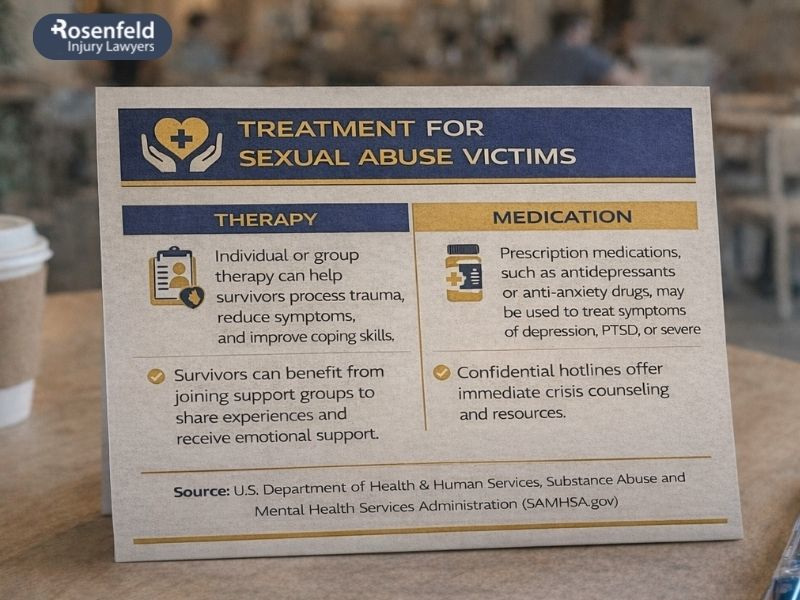
We Help Victims of Sexual Violence Recover Full Compensation for Treatment
At Injury Lawyer Team, our work does not stop at explaining therapy options. We help victims of sexual violence pursue compensation that reflects the true cost of treatment, support, and long-term care.
From the first call to case resolution, we guide our clients through every stage of the legal claim. Our services typically include:
- Listening carefully to what happened and explaining legal options in clear, compassionate terms
- Identifying responsible individuals and institutions involved in the abuse or assault
- Gathering medical records, therapy documentation, and other evidence
- Working with expert witnesses in sexual abuse cases to explain trauma and its long-term effects
- Calculating past and future treatment costs, including therapy, medicine, and related care
- Managing communication with insurers, institutions, and opposing counsel
- Preparing cases for settlement negotiations or trial when necessary
We understand that treatment is not optional; it is essential. Civil claims can help survivors access the resources they need to heal without bearing the financial burden alone.
Contact Us If You Have Further Questions
If you or someone you love has been sexually abused, you may have questions about treatment and legal options. Speaking with experienced sexual abuse attorneys can help you understand your rights and next steps in a confidential, supportive setting.
We offer a free, confidential consultation and work on a contingency-fee basis, meaning there are no upfront costs, and you do not pay unless we recover compensation for you. If you are struggling, hurt, or unsure where to turn, contact us today. We stand with you, and you’re not alone.
All content undergoes thorough legal review by experienced attorneys, including Jonathan Rosenfeld. With 25 years of experience in personal injury law and over 100 years of combined legal expertise within our team, we ensure that every article is legally accurate, compliant, and reflects current legal standards.