



The Role of Consent Education in Preventing Sexual Abuse


Sexual violence prevention doesn’t start in the courtroom but in the classroom. The role of consent education in preventing sexual abuse includes teaching children about bodily autonomy, empowering individuals to set boundaries about sexual activity, and encouraging children to speak up about non-consensual sexual activity.
Our law firm is passionate about creating safer environments for children and adults nationwide. Failure to provide prevention education or stop child sexual abuse is a serious breach of duty. Contact us for a free consultation about holding institutions accountable for sexual violence.
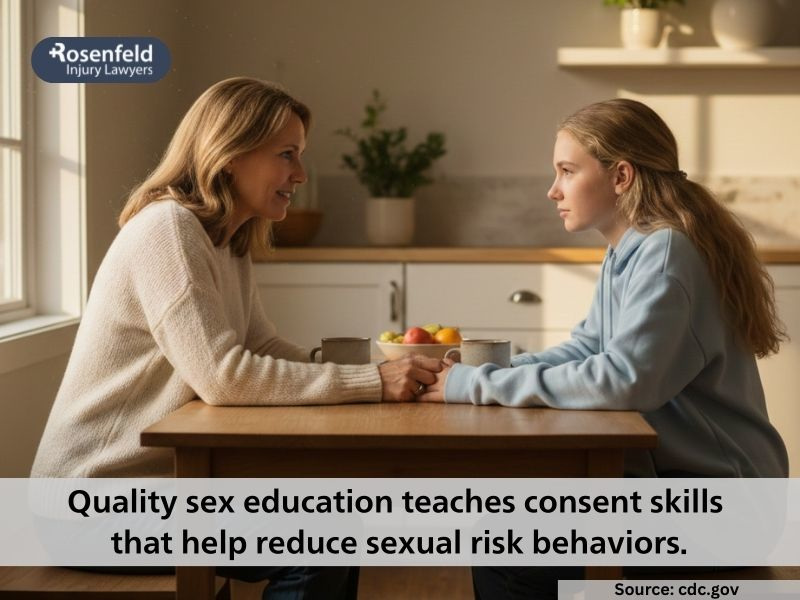
How Does Consent Education Help Prevent Sexual Assault?
Sexual violence is never the victim’s fault. However, understanding consent gives young people the confidence to set and respect boundaries, including resisting peer pressure or cultural norms that may lead to unwanted sexual activity.
A 2021 article published in the Journal of Adolescent Health collected three decades of research on sex education. Its findings noted that a well-rounded consent education curriculum can help students develop positive intimate relationships based on respect.
Why Is Consent Education Essential to Prevent Sexual Violence?
The Centers for Disease Control’s sexual violence prevention resource notes that sexual violence is preventable, and that a comprehensive approach works at multiple levels: individual, relationship, community, and society.
Consent education fits into a broader prevention framework that reduces instances of sexual violence before they can begin. This includes confronting victim blaming, teaching bystander intervention, and encouraging community involvement in child welfare.
What Role Does Sex Education Play in Sexual Abuse Prevention?
Evidence-based and age-appropriate sex education teaches a person about sexual health and the importance of healthy boundaries.
The National Sex Education Standards start with simple explanations about respecting and giving consent, such as role-playing games about where it is appropriate to touch someone else.
Students can practice telling a trusted adult about secrets that make them uncomfortable, empowering them to speak out if they are being mistreated. This sets the groundwork for consent and support well before a person begins to engage in sexual activities, which can help them avoid abusive dynamics.
Unfortunately, many school districts still use abstinence-only sex education, which focuses primarily on preventing pregnancy and sexually transmitted diseases without teaching consent.
Some states allow school districts to opt out of providing sex education, meaning thousands of children may receive little to no information about their sexual well-being during their formative years. As critics note, this can increase young people’s vulnerability to sexual violence.
How Does Comprehensive Sexuality Education Address Consent and Abuse?
According to the World Health Organization, comprehensive sex education programs provide children and young adults with age-appropriate instruction around healthy relationships, personal boundaries, and human sexuality, including sexual orientation.
A comprehensive program should include multiple educational levels aligned with the child’s age, building protective knowledge over time. With this form of curriculum, students understand consent in a variety of contexts so that the concepts will naturally apply to sexual situations as well.
How Can Consent Education Reduce the Risk of Child Abuse?
Research published in the Journal of Trauma, Violence, and Abuse found that consent education is a protective factor. Conversations about personal space and boundary-setting help people identify unsafe situations and encourage them to disclose, enabling early intervention.
A 21-year literature review published in Frontiers in Public Health found that school-based prevention programs were effective in improving the skills, attitudes, and knowledge of young adults, which can reduce sexual violence rates at a societal level.
Why Is Consent Education Considered Primary Prevention of Sexual Abuse?
Primary prevention is any action taken before abuse or violence occurs that may stop it from happening. An article published in the American Journal of Sex Education noted that consent education, particularly around affirmative consent (“yes means yes”), teaches teens how to correctly interpret different forms of consent and to request clarification when unsure.
This can provide individuals with the confidence to explicitly refuse a sexual act or to pause before engaging, which prevents unwanted activity.
Is Consent Education Appropriate for Students as Early as Fifth Grade?
Yes. The National Sex Education Standards recommend that consent education begin in kindergarten, focusing on bodily autonomy and respectful interactions rather than explicit discussion of sexual behavior.
Enough Abuse’s bookshelf includes a range of books that discuss autonomy and consent in child-friendly terms, including how to name body parts and what types of touch are appropriate.
Critics of sex education often claim that teaching about sexuality may encourage early sexual behavior. However, research demonstrates that people who receive comprehensive sex education often delay sex because they are aware of all the consequences.
How Does Consent Education Support Human Rights and Personal Dignity?
Bodily autonomy and safety are human rights as determined by the United Nations. The ability to freely give or withdraw consent is key to maintaining personal dignity, while respecting boundaries is important to interpersonal health.
Consent education equips people with the tools to protect themselves and intervene when they recognize danger. As such, this type of education reinforces respect, equity, and self-advocacy across all levels of society.
How Our Law Firm Supports Prevention Efforts While Advocating for Survivors
Our sexual abuse law firm is here to empower families, schools, organizations, and communities who want to build safer environments. We seek to educate the public, advise institutions on their duty of care, and hold agencies accountable if they fail to prevent sexual violence.
As legal advocates, we regularly contribute to scholarship through outlets such as the National Law Review to share our knowledge and enhance public safety.
One of our primary practice areas is school sexual abuse, which is intricately tied to issues around consent education. As noted by Enough Abuse, only 27 states and Washington, DC, have passed laws that mandate violence prevention education. An additional 11 states have passed legislation that allows or recommends this education, but does not mandate it.
If a child is assaulted or groomed in a school district that opted out of comprehensive sexuality education, the district could be liable for failure to prevent harm. We will use evidence, including the curriculum, public health policies, and witness statements, to demonstrate that the school’s refusal to provide these resources was negligent.
We are a Super Lawyers®-rated law firm and proud members of the American Association for Justice, representing survivors on a contingency-fee basis. If you have questions about consent education or institutional negligence, call us at 866-757-6452 or contact us online for a free case review.
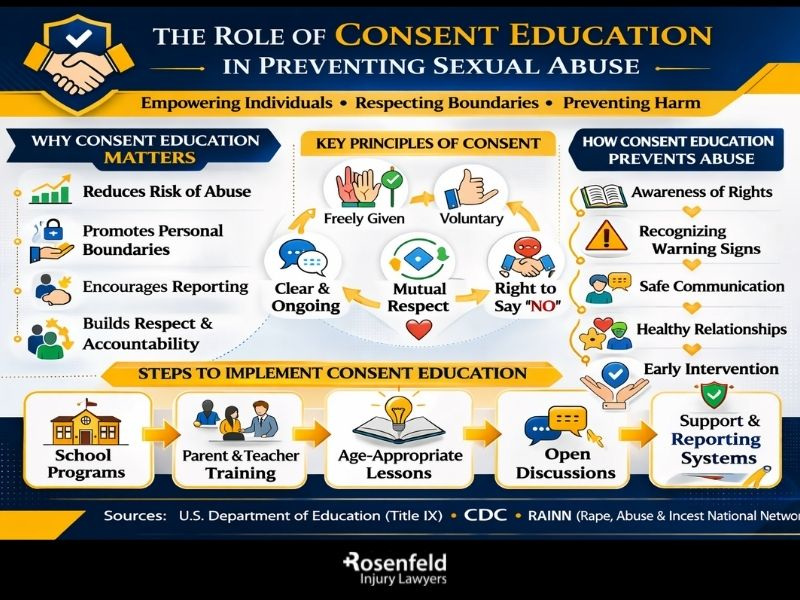
Additional Resources on Consent Education
Clergy Abuse Survivor Resources: Religious institutions, including Catholic schools, have a responsibility to protect vulnerable individuals from grooming. This resource collection is geared toward survivors seeking community.
Types of Sexual Violence: Understanding the different forms of sexual violence is crucial to prevention. Inappropriate sexual conduct encompasses a wide range of behaviors, not all of which involve penetration.
Mandatory Reporting of Child Sexual Abuse: Educators play a critical role in intervention, including reporting concerns to law enforcement. This overview explains state laws around mandatory reporting.
Sexual Violence Prevention Resource for Action: The CDC provides an overview of the different layers of prevention necessary to ensure child safety.
Enough Abuse: Enough! Abuse is the leading national organization advocating for consent education, offering training programs for educators and local agencies.
All content undergoes thorough legal review by experienced attorneys, including Jonathan Rosenfeld. With 25 years of experience in personal injury law and over 100 years of combined legal expertise within our team, we ensure that every article is legally accurate, compliant, and reflects current legal standards.