



The Importance of Trauma-Informed Legal Practices in Sexual Abuse Cases


Sexual abuse has profound effects on every aspect of a person’s life, and coming forward with an allegation can be extremely difficult. Our legal team understands the importance of trauma-informed legal practices in sexual abuse cases, enabling us to reduce anxiety about the legal process and help survivors make informed decisions about their rights.
We’re here to support your emotional well-being throughout the civil litigation process with caring, compassionate advocacy. Contact our trauma-informed lawyers for a free, confidential consultation regarding your legal options.
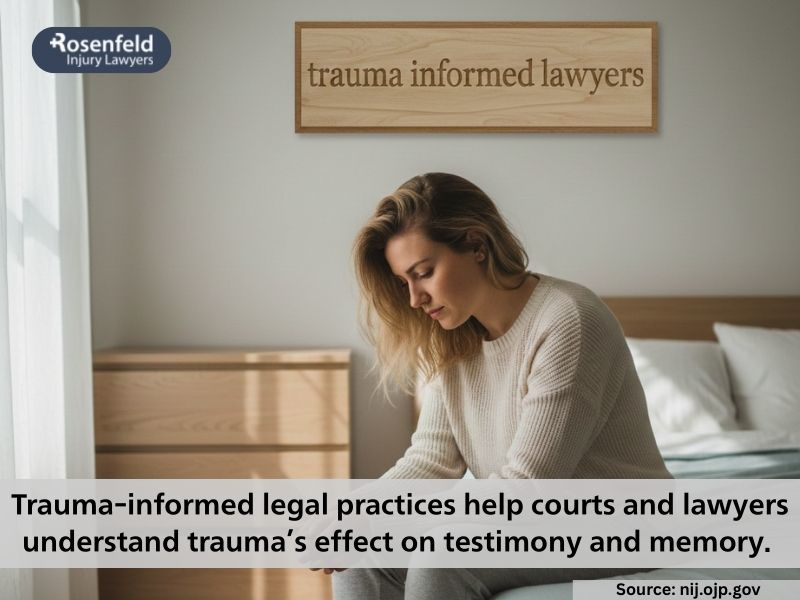
What Does Trauma-Informed Legal Practice Mean in Sexual Abuse Cases?
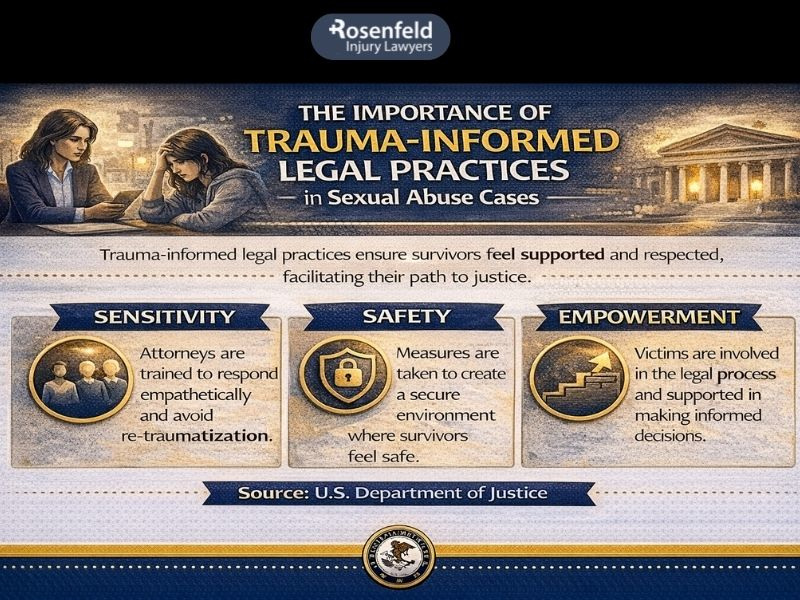
Trauma-informed practices adapt standard legal proceedings to accommodate a survivor’s unique needs, which prevents re-traumatization and builds trust.
Key principles of trauma-informed representation include open communication, a supportive environment, and, where possible, client control over their legal journey.
A trauma-informed approach will prioritize confidentiality and client protection. This can include filing for protective orders against the perpetrator or requesting the use of pseudonyms in accordance with state legal standards.
For example, our legal professionals can cite case precedent, such as Doe v. Readey, to demonstrate that the emotional stress of being publicly named will cause additional harm to the victim that outweighs the public interest.
Why Is Sexual Abuse Survivors’ Mental Health Relevant in Legal Cases?
Traumatic experiences can trigger a range of reactions, some of which may impede legal action. Survivors may not report immediately due to overwhelm or fear of facing the accused in court. They may be uncomfortable sharing certain details or worry about how filing a lawsuit will affect their reputation.
By considering the impact of emotional trauma, we ensure procedural fairness, manage litigation pace to reduce trauma responses, and communicate with all parties in a way that respects the client’s privacy.
One key element is the fact that survivors cannot always remember their experience in granular detail, particularly for childhood sexual abuse. We can use resources like research published by the Substance Abuse and Mental Health Services Administration (SAMHSA) to demonstrate the impact of trauma on memory, which ensures that courts are not prejudiced against incomplete testimony.
Why Is Trauma-Informed Legal Representation Critical in Child Sexual Abuse Cases?
In child sexual abuse cases, understanding how trauma affects a person’s development is crucial to minimizing harm and ensuring a fair trial. One key consideration is maintaining minors’ anonymity in sexual abuse lawsuits.
Sensitive information about child survivors is typically redacted to protect their privacy. Our attorneys can also petition to file a lawsuit anonymously and limit identifying information to only those parties who require it for procedural purposes.
The court can appoint a guardian ad litem (GAL) if there are concerns about a parent or legal guardian’s ability to protect the child from significant harm, such as in domestic abuse cases (750 ILCS 5/506). Rather than being legal counsel, a GAL serves the child’s best interests and can serve as a witness.
Child victims have heightened legal protections in both criminal and civil legal processes. The US Supreme Court case White v. Illinois established that certain out-of-court statements made by child survivors can be used as testimony, allowing clients to limit their time in court. Other protections include the use of remote testimony so that the child does not have to directly face the defendant.
How Can a Trauma-Informed Approach Improve Case Strategy in Sexual Abuse Litigation?
A trauma-informed legal process enables smoother case management. During our first meeting with you, we’ll determine which protective orders can be filed to limit contact with the defendant while preserving anonymity.
We will assess the scope of discovery to ensure it aligns with legal best practices, including that evidence of prior sexual activity is not admitted.
Survivors and associated parties often undergo depositions, which are sworn interviews attesting to the facts of the case. Depositions form a crucial element of the discovery process, but can also be very stressful for survivors. By carefully planning these depositions, we ensure that we collect valuable information without causing undue harm.
Finally, evidence collection and development are essential to building a strong case. Trauma-informed lawyers offer you control over how much involvement you have in this process. Some survivors want to know everything as part of their healing journey, while others do not want to be exposed to this information.
Knowing what you’re comfortable with helps us develop a sound legal strategy, respect your boundaries, and preserve evidence in a way that improves your chances of success.
How Do Trauma-Informed Legal Practices Apply to Child Abuse Claims Against Institutions?
Institutional liability, such as with school sexual abuse or clergy abuse, requires heightened sensitivity, as these cases involve significant power imbalances.
Child abuse survivors who were harmed by an authority figure often do not disclose immediately because they’re afraid of negative consequences or judgment. For example, someone hurt by their teacher at Lane Tech or abused by a priest at St. Patrick’s may worry that fellow classmates or churchgoers won’t believe them.
Recognizing this allows us to take decisive action, preventing further harm while limiting a survivor’s anxiety. We can issue protective orders, require confidentiality agreements, file motions for closed depositions, and limit media coverage.
Our team will also confer with child sexual abuse experts who can explain how factors like spiritual abuse or power dynamics impact when and how a victim discloses. This can be invaluable in cases where the survivor did not come forward until years later or continued associating with the perpetrator.
Can Trauma-Informed Legal Practice Affect Case Outcomes in Sexual Abuse Cases?
Working with a trauma-informed attorney can have a significant impact on sexual abuse case settlements and case verdicts.
Many survivors choose not to continue with their claim because they feel emotionally unsafe, preventing them from getting justice. Providing emotional support can prevent survivors from being re-traumatized and encourage them to continue the process.
A key element of trauma-informed advocacy is preparing survivors for trial, including the arguments opposing counsel might use and the types of questions they will ask. Helping survivors feel comfortable with the legal setting can reduce their emotional response during a trial and secure clearer testimony.
There is also the personal element: how survivors feel during and after the trial. Our trauma-informed approach can alleviate a person’s stress and fear regardless of verdict or settlement outcomes. This helps them move on from a case feeling empowered rather than retraumatized.
How Our Law Firm Can Help
Injury Lawyer Team is a top-rated sexual abuse law firm, serving survivors nationwide. Our trauma-informed lawyers understand that sexual abuse can impact a person’s entire life, including their comfort with legal processes and their ability to remember key details.
Our attorneys have been honored as Distinguished Justice Advocates and named one of America’s Top 100 High Stakes Litigatorsfor a simple reason: we care deeply about our clients’ well-being throughout the legal process. Our 98% success rate reflects our compassionate yet meticulous approach to each claim.
We work on a contingency fee basis, meaning you pay no legal fees unless we win. Schedule a free, confidential consultation with a top-rated sexual abuse attorney by calling 866-757-6452 or using our online contact form.
All content undergoes thorough legal review by experienced attorneys, including Jonathan Rosenfeld. With 25 years of experience in personal injury law and over 100 years of combined legal expertise within our team, we ensure that every article is legally accurate, compliant, and reflects current legal standards.