



The Impact of Media Coverage on Sexual Abuse Cases


Survivors of sexual abuse fear media exposure, which can feel intrusive. In some cases, though, news stories can offer emotional support and validation while raising public awareness. Our compassionate attorneys will assess the impact of media coverage on sexual abuse cases like yours to decide whether the benefits outweigh the potential distress.
How Does News Coverage Impact Conversations Around Sexual Abuse?
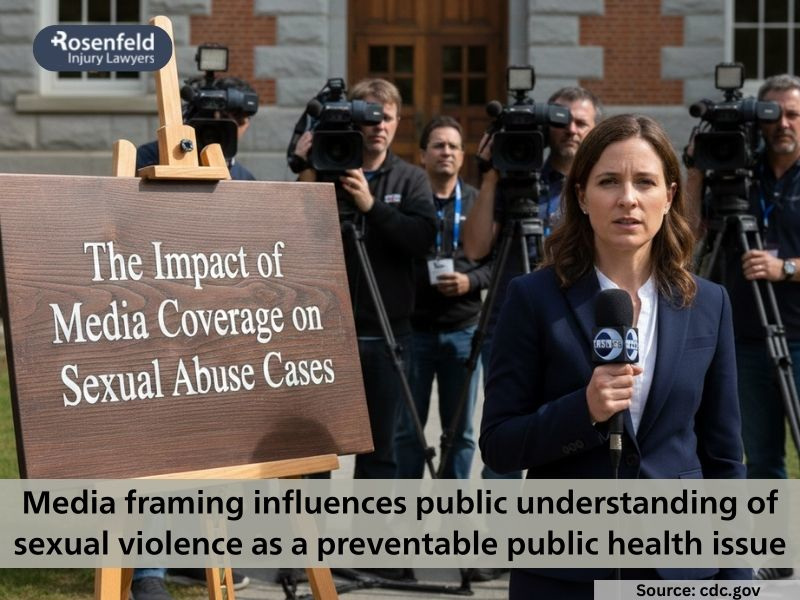
Media coverage strongly influences public awareness and perception of sex crimes, often resulting in legislative changes and greater support. Sensitive and accurate reporting challenges myths, empowers survivors, and can amplify stories in ways that legal procedures alone cannot.
Both social media initiatives and press releases can encourage victims to seek support and increase reporting rates. Yale University found that in the three months after the #MeToo movement began, when survivors shared their stories of abuse, there was a 7% increase in sex crime reporting.
This movement also transformed the legal system, leading to laws like the Ending Forced Arbitration of Sexual Assault and Sexual Harassment Act of 2021 (Public Law No: 117-90). This federal law targeted the common practice of forcing survivors to sign non-disclosure agreements (NDAs), which prevented them from filing civil lawsuits.
Many young men and women are assaulted during college, as 54% of sexual abuse victims are between 18 and 34.
Under Title IX, any educational institution that receives federal funding must have anti-discrimination measures in place and must respond appropriately to any allegations of sex-based discrimination, which includes sexual assault. The Clery Act also requires these institutions to document and report any violent crimes on campus.
However, survivors have found that their stories are swept under the rug, such as the college taking private disciplinary action and discouraging survivors from seeking media coverage.
Following the #MeToo movement, government agencies have increased scrutiny of these procedures, resulting in a $14 million fine against Liberty University and a Department of Justice investigation into Case Western Reserve University’s handling of complaints.
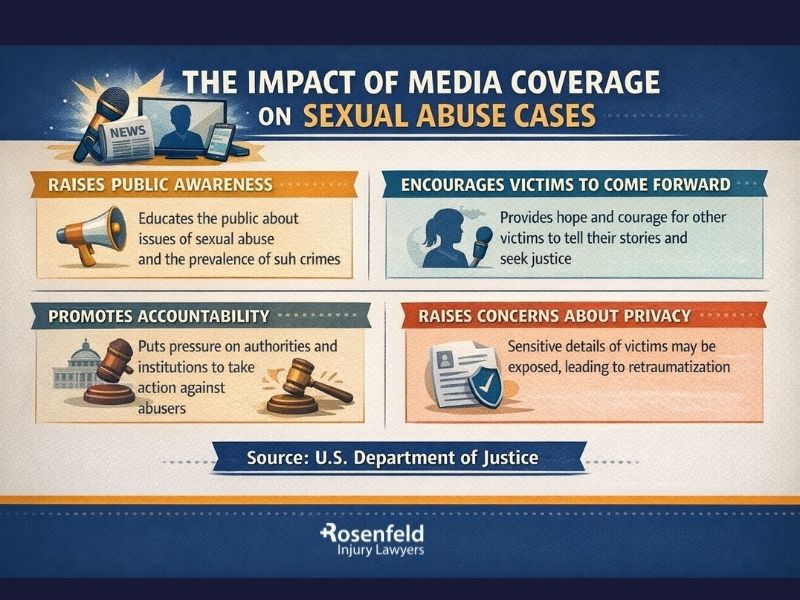
On an individual level, public opinion shaped by empathetic journalism can encourage police, prosecutors, and judges to take a firmer stance on sexual violence, improving a person’s chance of receiving justice. Media coverage can amplify a person’s narrative beyond the courtroom, putting pressure on the justice system to respond in kind.
However, media coverage is not always beneficial. Coverage favors “ideal” victims, particularly those attacked by strangers, and obscures the reality that 60% of rapes are perpetrated by someone known to the victim. This can silence survivors who were harmed by a family member or friend and discourage them from reporting the incident.
In the search for the “perfect victim,” the media may prioritize stories from certain demographics, like white women, while ignoring stories from people of color or men. This media silence can also make survivors feel further marginalized.
The media outlet’s framing can influence whether the narrative encourages accountability or perpetuates rape culture, which normalizes abuse and shames victims. Insensitive reporters may ask intrusive questions or sensationalize the assault, resulting in further stigma.
If a news article goes viral, survivors may have to repeatedly engage with the traumatic event. A study published in the Journal of Interpersonal Violence found that social media can make it hard for survivors to avoid stories of sexual violence, which can be traumatizing, and it can also pressure individuals to disclose before they’re ready.
This can have significant impacts on a person’s well-being and on potential court cases.
Stories that receive significant media attention can prejudice a jury against the perpetrator or the survivor, making it difficult to obtain a fair trial. It can also mean the court case will take longer, as judges place greater scrutiny on the facts to avoid negative press.
How to Decide Whether Your Case Should Reach Media Outlets
Survivors have the right to confidentiality in sexual abuse cases under federal and state laws, which extends to both their identity and their personal history. The legal system allows you to file lawsuits under pseudonyms, preventing journalists from disclosing your identity.
The US Supreme Court case Jaffee v. Redmond held that information such as therapy reports may be admitted into evidence only if the value of the disclosures outweighs the potential harm.
Federal evidentiary law also prevents defense attorneys from sharing information about the plaintiff’s sexual activity outside of the incident, which may be used to shame the survivor or imply they were a willing participant (Rule 412).
These laws mean that approaching the media is optional and that reporters are strongly discouraged from sharing sensitive information without your consent. Our team will help you decide whether your case would benefit from media attention.
In some cases, such as if the offender is a public figure or has a long history of violent behavior, the media can help shape public perception while keeping others safe. Thoughtful news stories can examine the social factors that contribute to interpersonal violence or the institutional actions that perpetuate harm.
For example, if you reported your case to your university and were ignored, going public can encourage the institution to change its reporting systems. Individuals abused in the foster system or while incarcerated can also bring greater awareness to how these systems traumatize vulnerable people, potentially resulting in new laws or better background check policies.
However, media attention can lead to harassment depending on your personal history and the journalist’s angle. A Slate article noted that even though many survivors are assaulted more than once, critics may insist that the person “asked for it” the second time around or did not do enough to protect themselves.
Those who accuse public figures may be harshly criticized, and if the survivor had a pre-existing relationship with the perpetrator, some may believe the accusation is an attempt at defamation rather than receiving justice.
All these factors must be considered when deciding whether to accept interview requests. Additionally, vetting the journalist is crucial. If the reporter has a history of siding with abusers or including defamatory details, then declining a request can protect your mental health and preserve the value of your claim.
How Our Law Firm Can Help
Injury Lawyer Team understands that going public comes with both risks and benefits. Through our trauma-informed legal representation, we help survivors carefully weigh the impact of media attention on their claim while protecting their privacy.
Our goal is to help you take control of your narrative, including whether you choose to accept interview requests or file a lawsuit under a pseudonym. We will employ state and federal law to prevent your life history from being sensationalized or exploited.
We can handle all third-party communications, whether with the perpetrator’s legal team or news outlets, while enabling you to make informed decisions about how much you wish to share.
If your story has already garnered media attention, we can work to prevent negative press from damaging your legal case. Our sexual abuse attorneys will focus the narrative on the irrefutable facts of the claim through meticulous evidence gathering, witness statements, and expert testimony. This ensures that negotiations remain fair and that a civil lawsuit is not damaged by public perception.
Injury Lawyer Team assists survivors from all walks of life on a contingency fee basis: no legal fees unless we win. To schedule a free and confidential consultation with our caring attorneys, call us at 866-757-6452 or use our online contact form.
All content undergoes thorough legal review by experienced attorneys, including Jonathan Rosenfeld. With 25 years of experience in personal injury law and over 100 years of combined legal expertise within our team, we ensure that every article is legally accurate, compliant, and reflects current legal standards.