



What Are the Signs of Grooming?


Children lack sufficient life experience to recognize dangerous situations or inappropriate adult behavior. As a result, an abusive adult could take advantage of a child’s vulnerability to establish a relationship with them that eventually turns into sexual abuse. This is often referred to as the grooming process. To protect children in our communities, we must learn to recognize the signs of grooming.
Grooming is a very serious matter that can naturally transition into sexual contact with a minor. This type of behavior can have a lasting effect on the victim, leading to decades of emotional distress and mental health issues.
At the Injury Lawyer Team, we stand with survivors of child sexual abuse to help them pursue legal action and fight for fair compensation from the at-fault parties. In this guide, we will discuss the red flags that may indicate grooming so we can all keep children in our communities safe.
What Are the Grooming Signs in Child Sexual Abuse Cases?
The sexual grooming of a child is typically a lengthy process that reflects a pattern of behavior rather than a singular act. It also tends to precede sexual abuse, as it involves the adult building trust with a minor to eventually push those boundaries and engage in inappropriate conduct in the future.
Some red flags that may indicate sexual grooming include:
- An adult displaying favoritism toward a specific child
- An adult pushing physical contact boundaries in a child’s life
- An adult discussing sexual topics with a child
- An adult working to isolate a child from other trusted authority figures or family members
How Does Grooming Behavior Contribute to Child Abuse?
The child grooming process is all about pushing the boundaries of an appropriate relationship and establishing trust with the victim. Over time, the perpetrator will move the goalposts to test out the child’s response to sexual behaviors. Eventually, this conduct will feel normal to the child, so the abuser can then push the boundaries even further.
Grooming paves the way to sexually abusing a child by slowly removing the barriers that the child may initially have.
What Are Common Signs of Online Grooming?
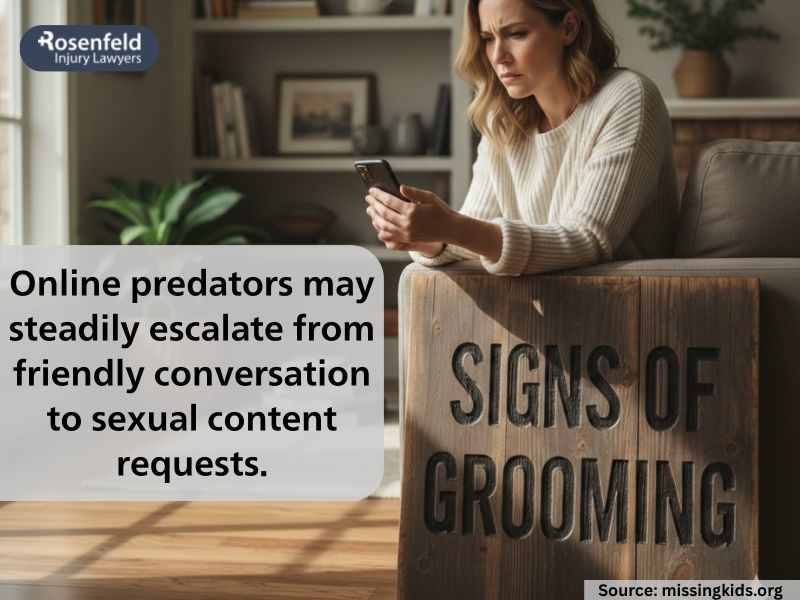
Many grooming behaviors begin online. Children spend more time online than at any point in history, creating numerous opportunities for predators. Private messaging makes it easy for adults to connect with a child online, especially via multiplayer games.
An adult who engages in grooming behavior may encourage a child to be secretive about their devices. The abuser could request images of the child and escalate conversations to include sexual themes. Eventually, the groomer may attempt to move the conversation away from a monitored platform. These can all be precursors to online sex abuse or an in-person relationship.
When Does Grooming Occur in Schools, Churches, or Youth Organizations?
Children are often most vulnerable in the places we expect them to be safe. They are surrounded by supposedly trustworthy adults in schools, churches, and youth organizations, but even these settings have proven to be vulnerable to predators. These institutions allow adults to have authority over minors, build trust with them, and gain access without supervision.
School sexual abuse and clergy abuse are major issues in the United States when adults who sexually abuse children are allowed to serve in these environments.
What Are the Most Common Signs of Child Grooming by Adults in Positions of Trust?
If we can recognize grooming that may eventually lead to child abuse, we can better protect the children in our communities. Here are some common grooming signs that we should be on the lookout for between adults and minors:
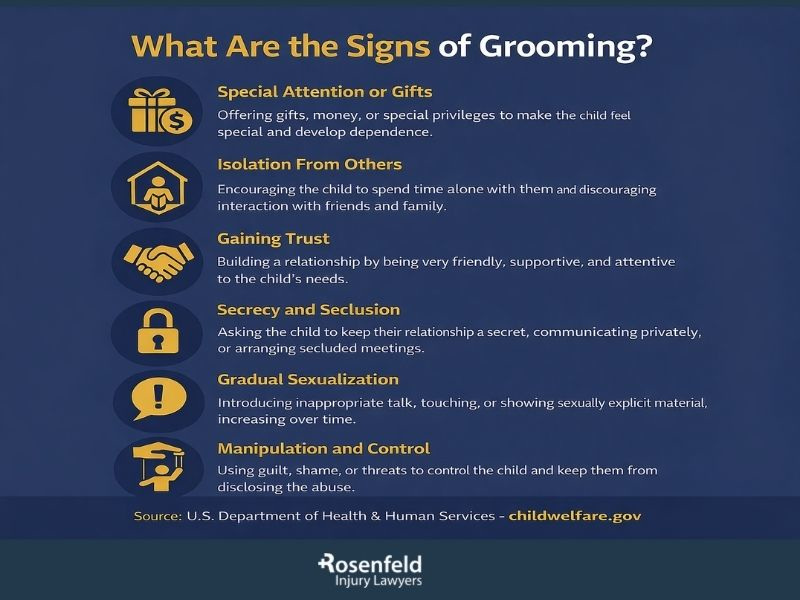
- Increased favoritism toward a child with special gifts, private outings, or excessive affection
- Pushing physical boundaries by giving unwanted hugs or “accidentally” touching the child
- Using sexual language around a child and passing it off as a joke or educational conversation
- Watching a child undress
- Exposing a child to sexual content
- Encouraging a child to keep secrets, often starting small
- Trying to convince a child to mistrust other adults
- Providing alcohol or drugs to a child
How Does Online Grooming Target Children and Young People?
When grooming occurs online, it is a more secretive way to target children. Although many platforms are improving their practices to prevent grooming behaviors, there are still ways for adults to earn a child’s trust.
Private messaging from an adult can make a child feel like they have a special relationship. Device secrecy further isolates the child from the trustworthy adults in their life. Many children are also less wary of online activity because they cannot perceive an immediate threat. Online sexual exploitation takes advantage of these lowered barriers to establish inappropriate behavior.
What Behavioral Changes in Children and Young People Can Signal Grooming?
A child being groomed may also exhibit behavioral changes. They may begin withdrawing from their parents, siblings, or friends at school. Unexplained gifts are a major red flag if they are consistent. If the child becomes secretive when using a device, it could indicate communication with an adult. Fear of certain individuals may also indicate grooming. Another red flag is a sudden sense of loyalty to an individual adult.
What Other Warning Signs Suggest Grooming May Be Taking Place?
Grooming can occur at the institutional level. For example, if you know that multiple parents have made complaints about their children communicating with a specific adult, and those complaints have been ignored, this could be a sign of a cover-up for suspected abuse.
At a daycare center or youth organization, there may be extended periods of minimal or no supervision of the children. This is a major red flag that could create opportunities for abusive adults to step in and establish trusting relationships with the children. If a school fails to respond to a parent’s concerns, and it is not the first time, it may be protecting a staff member from reprisals for abuse.
These common patterns of institutional cover-ups can allow groomers to isolate children from their families and pave the way for sex abuse.
How Do Child Protection Failures Allow Grooming to Continue?
Grooming typically occurs in private settings. Therefore, robust policies are necessary for the prevention of these situations that compromise a minor’s safety.
However, many institutions and platforms have weak child protection policies. Poor training for employees and volunteers in youth settings can make it easier for groomers to get away with their behavior. A failure to act on complaints will also make it easier for an abusive adult to continue in their conduct.
Grooming escalates into child sexual abuse when nothing is done in terms of prevention. Without a community that is educated on warning signs and institutions with strong policies, the chances of sexual violence against children increase.
How We Can Help When Organizations Fail to Keep Kids Safe
Unfortunately, our communities fail to prevent all sexual contact between adults and children. When an adult knows how to gain trust and isolate a potential victim from their family members, it is easier for them to engage in sexual misconduct.
At the Injury Lawyer Team, we stand by survivors who have been failed by organizations and other adults in their lives. We understand that child exploitation can lead to mental health problems like depression and suicidal thoughts, and we want to help you pursue justice against the at-fault parties.
Contact us today at 866-757-6452 to schedule a free and confidential consultation with our expert sexual abuse attorneys.
All content undergoes thorough legal review by experienced attorneys, including Jonathan Rosenfeld. With 25 years of experience in personal injury law and over 100 years of combined legal expertise within our team, we ensure that every article is legally accurate, compliant, and reflects current legal standards.