



Sexual Abuse Victims’ Drug and Alcohol Use


Sexual abuse victims’ drug and alcohol use is a complex and deeply misunderstood issue. At our firm, we see every day how sexual violence affects a survivor’s emotional well-being and their relationship with drugs, alcohol, and other substances over time.
Survivors are often judged or blamed for substance use without any understanding of how past trauma shapes coping behaviors. We stand with survivors, and we believe in your case, regardless of how you responded to what happened.
At Injury Lawyer Team, our practice is centered on representing survivors of adult and child sexual abuse with dignity, privacy, and respect. Substance use after sexual violence is not a moral failure or a personal weakness, but a trauma response.
Every person responds to sexual traumatization differently, and there is no single “right” way to cope with what happened. Many survivors eventually find that support, treatment, and accountability are critical steps toward long-term healing.
Our role is to help survivors understand their legal rights, access support, and take the first step toward accountability and recovery in a safe place. Throughout this article, we will focus on research-based data and real-world experience to help survivors understand their rights and options.
How Common Is Substance Abuse Among Victims of Sexual Violence?
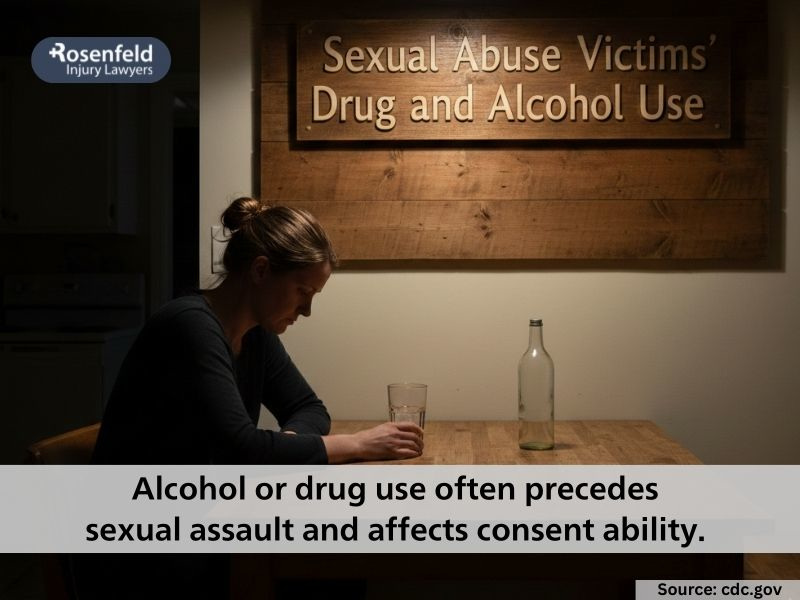
Research consistently shows a strong link between sexual abuse and drug and alcohol abuse. Survivors of rape, molestation, and other forms of interpersonal violence face a significantly higher risk of developing substance use problems compared to people who have not experienced abuse.
One of the most harmful misconceptions we encounter is the idea that drugs or alcohol “caused” the abuse. In reality, abusers frequently use substances as a tool. Many adult victims report being intoxicated at the time of the sexual assault and, therefore, unable to give consent. This does not make the victim responsible. It reflects the abuser’s deliberate decision to exploit vulnerability.
When compared with non-victims, rape victims are statistically far more likely to engage in substance abuse:
- 3.4 times more likely to use marijuana
- 5.3 times more likely to use prescription drugs for non-medical purposes
- 6.4 times more likely to use cocaine
- 10 times more likely to use hard drugs other than cocaine
These numbers highlight prevalence, not character. They show how trauma reshapes behavior, especially when survivors are struggling with symptoms of PTSD, guilt, and an overwhelming feeling that they do not yet have the tools to manage the pain.
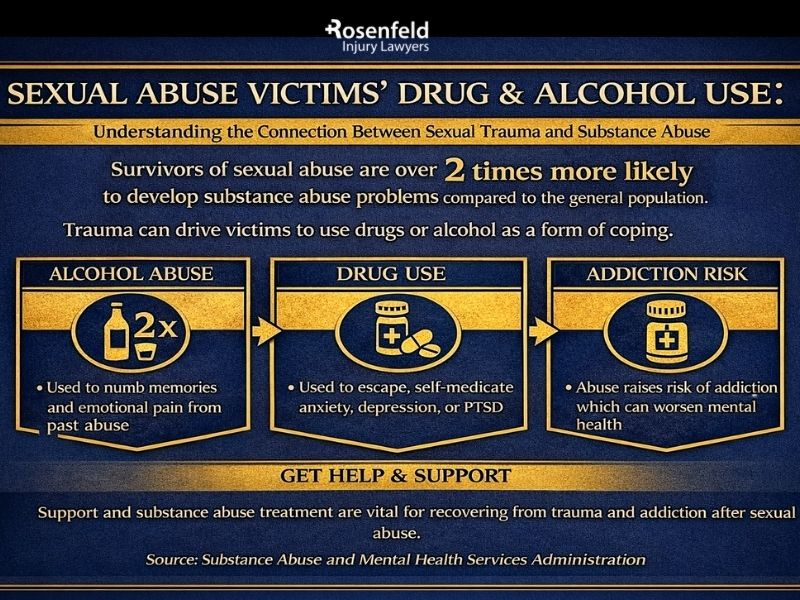
For many survivors, substance use begins as an attempt to self-medicate. Drugs and alcohol can temporarily dull intrusive memories, nightmares, hypervigilance, and emotional numbness associated with post-traumatic stress disorder. Survivors often describe how they started drinking or using substances to quiet their thoughts, sleep through the night, or function at work or school.
However, when substance use stops, PTSD symptoms frequently return with greater intensity. This cycle increases the likelihood of relapse and addiction. What begins as coping can become alcoholism, drug abuse, or a long-term substance use disorder.
Patients with a history of sexual abuse often require specialized, trauma-informed approaches to addiction and mental health treatment.
Child Sexual Abuse, Alcohol, and Drugs Later in Life
Researchers identify certain characteristics, such as prior trauma, age at abuse, and lack of support, that increase vulnerability to substance use after sexual assault.
Many survivors report that their first exposure to drugs or alcohol occurred during the sexual abuse itself. Some predators gave children alcohol or drugs to reduce resistance, impair memory, or maintain control. For certain people, this early exposure laid the groundwork for dependency later in life.
Surveys involving victims of child sexual abuse show that alcohol abuse was reported more frequently among male participants than female participants (21% and 15%, respectively). Drug abuse followed a similar pattern, with men reporting higher rates compared to women (15% vs. 10%).
These statistics challenge stereotypes about who is vulnerable and highlight that men and boys face unique barriers to disclosure, treatment, and support.
Survivors often describe using substances to escape memories of childhood abuse that resurface unexpectedly in adulthood during relationships, parenting, medical care, or other stressful life events. Trauma does not stay in the past simply because time has passed. It resides in the body and nervous system and often re-emerges years later.
We routinely speak with adult survivors who say they did not connect their drinking, drug use, or depression to childhood abuse until much later in life. Education, age, or professional success does not erase trauma history. Survivors exist across every background and walk of life.
Why Survivors Turn to Substances After Sexual Trauma
Psychological research confirms what survivors tell us directly: substance use often serves as a coping strategy. Moreover, the self-medication theory explains that survivors experiencing PTSD and depressive symptoms may use alcohol or drugs to reduce emotional distress. Substances can blunt fear, shame, and intrusive memories, at least temporarily.
Unfortunately, this form of coping increases long-term risk. Survivors with untreated trauma are more likely to develop addiction, experience worsening mental health, and face difficulty maintaining relationships, employment, or stability. Substance use can also increase vulnerability to further victimization, creating a devastating cycle.
Far too many survivors describe getting into trouble with alcohol or drugs while trying to manage overwhelming stress, memories, and emotional pain. This does not mean survivors are broken. It means trauma requires understanding, treatment, and accountability from those who caused harm, not judgment toward victims.
Does Substance Use Affect Sexual Trauma Victims’ Ability to Take Legal Action?
Many survivors struggling with addiction worry that drug or alcohol use will prevent them from pursuing a sexual abuse lawsuit. We hear this concern often, and it is one of the most common barriers to coming forward. Substance use does not eliminate survivors’ legal rights. Under the law, responsibility for sexual abuse rests with the perpetrator, not the victim’s coping behaviors or mental health issues.
That said, substance use can complicate legal proceedings. Defense teams may attempt to shift blame, attack credibility, or misrepresent a survivor’s history. This highlights the importance of trauma-informed legal representation for survivors whose background may be misunderstood or misused.
At our firm, we know how to counter these tactics and protect survivors from retraumatization during the legal process.
We work with admissions team members trained to listen without judgment and to create a safe environment from the very first call. Survivors deserve legal advocates who understand trauma, addiction, and the realities of recovery.
What Damages Can Sexual Assault Victims Recover?
In cases involving sexual trauma and substance abuse, damages reflect the full scope of harm, not just the assault itself. Survivors may be entitled to compensation for both visible and invisible losses.
Economic damages may include:
- Medical treatment for injuries, addiction, or mental health care
- Therapy and trauma-informed treatment programs
- Rehabilitation and recovery services
- Lost wages or reduced earning capacity
- Prescription medications and ongoing medical support
Non-economic damages may include:
- Emotional distress and psychological harm
- Pain and suffering related to PTSD, depression, and anxiety
- Loss of enjoyment of life
- Damage to relationships with family members
- Shame, guilt, and long-term trauma effects
Punitive damages may be available in cases involving particularly egregious abuse, institutional failures, or intentional misconduct. These damages are designed to hold abusers accountable and prevent future abuse.
How We Can Help Victims of Child Sexual Abuse
We support survivors from the first step through case resolution, whether the outcome is a settlement, trial, or verdict. Our approach is survivor-centered, trauma-informed, and accountable.
Our services include:
- Free, confidential consultations in a supportive environment
- Careful evaluation of legal options and time limits
- Gathering evidence with sensitivity to trauma history
- Working with expert witnesses in sexual abuse lawsuits
- Coordinating with medical and mental health professionals
- Protecting survivors from aggressive defense tactics
- Pursuing justice while prioritizing survivor safety and dignity
We handle these cases on a contingency fee basis. That means there are no upfront costs, and you do not pay us unless we recover compensation on your behalf. We believe access to justice should never depend on financial resources.
All content undergoes thorough legal review by experienced attorneys, including Jonathan Rosenfeld. With 25 years of experience in personal injury law and over 100 years of combined legal expertise within our team, we ensure that every article is legally accurate, compliant, and reflects current legal standards.