



Sexual Abuse Lawsuit Timeline


Trying to understand the sexual abuse lawsuit timeline can feel overwhelming, especially when you are already coping with the psychological harm, confusion, and trauma that often follow abuse. At Injury Lawyer Team, we stand with you, and we believe in your case.
Our legal team works every day with sexual abuse survivors who want clarity, dignity, and a realistic understanding of what to expect from the legal process. This guide explains the timeline, key stages, and factors that affect how long a sexual abuse lawsuit may take so that you can move forward with confidence and support.
What Is the Basic Timeline of Filing a Sexual Abuse Lawsuit?
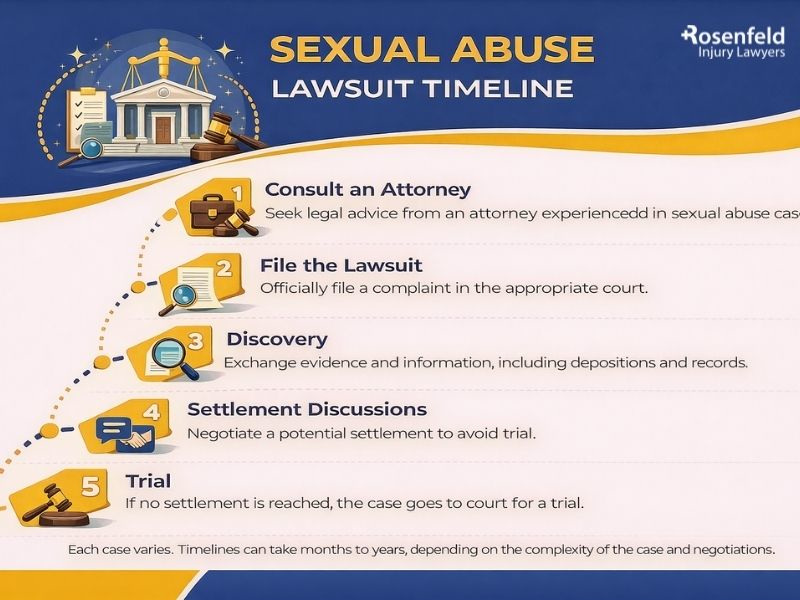
Every abuse lawsuit is different, but most sexual abuse cases follow a similar structure once legal action begins. Below, we outline the timeline, from the first conversation with a lawyer through resolution in the legal system.
Free Consultation
The process typically begins with a free consultation. When survivors contact our firm, we first listen. We learn how the abuse occurred, who the perpetrator was, and the resulting harm. Many victims worry about the statute of limitations, whether childhood sexual abuse claims are still valid, or whether a criminal case must happen first. We explain your legal options clearly and compassionately.
At this stage, we also discuss whether filing a sexual abuse lawsuit makes sense, what evidence may be available, and how the law applies to your situation. There is no obligation, no pressure, and no upfront cost. Our goal is to support survivors and help them feel informed rather than rushed.
Filing the Lawsuit
If you choose to move forward, the next step is formally filing a sexual abuse lawsuit in court. This filing outlines the abuse, identifies the defendant or defendants, and explains how the abuse caused harm. In some cases, the defendant may be an individual abuser. In others, institutions, employers, medical professionals, or organizations may share responsibility.
Filing a sexual abuse claim triggers deadlines, court oversight, and procedural protections. This step is especially important when statute of limitations issues apply, including extended or revived limitations for childhood sexual abuse survivors.
Discovery Phase
The discovery phase is often the longest part of the process. During discovery, both sides gather as much evidence as possible. This may include medical records, therapy notes, institutional documents, witness testimony, emails, personnel files, and expert opinions.
Survivors prepare for written questions, document requests, and, at times, depositions. We work to protect our clients from misleading questioning and unnecessary retraumatization. Discovery can feel like a lengthy process, but it is essential for building strong sexual abuse cases and holding abusers accountable under the law.
Settlement Discussions
After key evidence is exchanged, many cases move into settlement discussions, sometimes more than once. These negotiations may happen informally, during mediation, or after critical evidence is presented.
It is important to understand that sexual abuse settlements do not mean a case lacks merit. In fact, settlement negotiations often reflect the strength of the evidence and the defendant’s desire to avoid a sexual assault trial. Our attorneys evaluate every offer carefully and advise survivors on whether a proposed resolution is fair.
Pretrial Motions and Case Progression
If settlement discussions do not yield a reasonable agreement, the case proceeds to trial. Courts may hear motions about what evidence is allowed, whether claims survive legal challenges, and how the trial will be structured. These steps are part of the formal court system and may affect the timeline.
Trial if a Fair Settlement Offer Cannot Be Reached
When settlement negotiations fail to produce a fair settlement, a trial becomes necessary. While not every sexual abuse lawsuit reaches this stage, we prepare every case as if it could. Trial preparation signals to the defendant that we are serious about accountability and fully prepared to present the evidence in court.
For many victims, the idea of a trial can feel overwhelming. We take the time to explain next steps, answer questions, and ensure our clients understand how the process works. Throughout this phase, our attorneys continue to explore resolution options while ensuring the case is positioned strongly if a full trial becomes necessary.
Preparing for a Sexual Abuse Trial
Trial preparation is intensive. Our attorneys organize evidence, prepare witness testimony, work with experts, and ensure survivors feel supported throughout the process. A sexual abuse trial can be emotionally demanding, but it also provides an opportunity for truth and accountability within the court system.
Evidence Presented at Trial
At trial, evidence is presented publicly before a judge or jury. This may include survivor testimony, corroborating witnesses, expert analysis, and documentation showing how the abuse caused lasting harm. We present cases with respect, clarity, and a survivor-centered approach.
Verdict and Resolution
After the trial concludes, the court reaches a verdict. If successful, survivors may receive financial compensation for medical care, therapy, lost opportunities, and long-term psychological harm. Even when cases resolve before a verdict, trial readiness strengthens our negotiating position.
What Factors Impact the Timeline of Filing a Civil Lawsuit for Sexual Abuse?
While the basic timeline provides structure, several factors influence how long a civil claim for sexual abuse may take. Our attorneys help clients understand these variables so expectations are realistic and grounded in experience.
Statute of Limitations
The statute of limitations is one of the most important factors. Different regulations apply depending on when and where the abuse took place, the victim’s age, and changes in the law. Many survivors of childhood sexual abuse now have expanded opportunities to seek justice, but timing still matters. Early legal guidance from a qualified attorney helps protect your claim.
Complexity of the Abuse and Defendants
Cases involving a single perpetrator may move more quickly than cases involving institutions, multiple defendants, or systemic abuse. When organizations failed to protect survivors, additional investigation, discovery, and legal arguments are often required.
Evidence Availability
The amount and type of evidence significantly impact the process. Cases supported by medical records, corroborating witnesses, or institutional documentation may progress differently from cases relying primarily on survivor testimony. Our attorneys work diligently to gather all available evidence, regardless of how long ago the abuse happened.
Criminal Case Overlap
Sometimes, a criminal prosecution runs alongside a civil claim. While these are separate processes, criminal proceedings can affect timing. A civil case may pause or adapt depending on developments in criminal court, especially when the same abuser is the defendant.
Settlement Negotiations
Settlement negotiations can shorten or extend the timeline. Some defendants delay meaningful offers, while others make early offers. Our attorneys’ role is to protect survivors’ interests, not to rush resolution at the expense of justice.
Length and Complexity of the Trial
The duration of a trial itself can significantly affect how long a sexual abuse lawsuit takes to resolve. Some trials last only a few days, while others extend over weeks, depending on the number of witnesses, the volume of evidence introduced, and whether multiple defendants are involved. Cases that rely on extensive expert testimony, historical records, or detailed institutional policies may require more court time.
Court scheduling, judicial availability, and procedural disputes can also influence how long a trial lasts. While this phase can be demanding, our attorneys carefully prepare survivors and advocate for efficient proceedings that respect both the court’s time and our clients’ well-being.
Get Started With the Legal Process
Taking the first step toward a sexual abuse lawsuit can feel daunting, but you do not have to face it alone. At Injury Lawyer Team, our sexual abuse lawyers today focus on compassion, confidentiality, and results that honor survivors’ experiences.
Our firm works on a contingency-fee basis, meaning there are no upfront costs and no legal fees unless we secure financial compensation for you. We offer free consultations, explain every stage of the process, and stand with survivors from filing through resolution.
If you are considering legal action, have questions about the statute of limitations, or want to understand what to expect from the lawsuit process, contact us. We believe in your case, and we are committed to helping you seek justice through the civil justice system: on your terms, at your pace, and with dignity at every step.
All content undergoes thorough legal review by experienced attorneys, including Jonathan Rosenfeld. With 25 years of experience in personal injury law and over 100 years of combined legal expertise within our team, we ensure that every article is legally accurate, compliant, and reflects current legal standards.