



Sexual Abuse and Sleep Problems


Child sexual abuse and sleep problems are closely intertwined. Survivors of childhood sexual violence often report poor sleep outcomes, including trouble falling or staying asleep. In this article, our sexual abuse attorneys will present studies demonstrating the connection between child abuse and disturbed sleep.
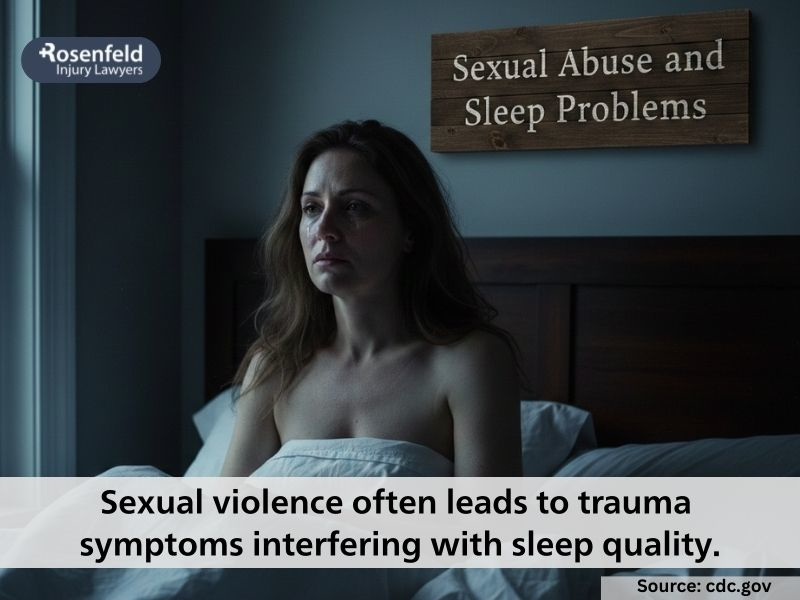
Does Childhood Abuse Cause Sleep Disturbances?
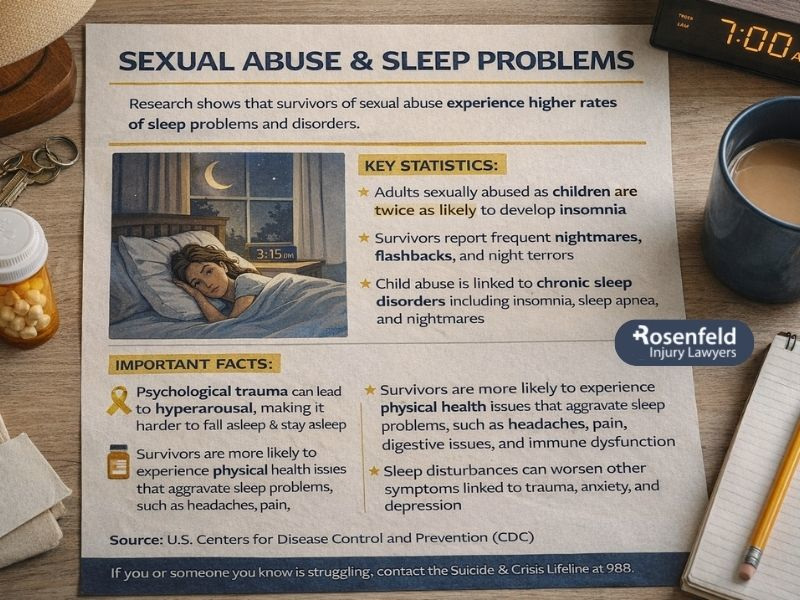
Systemic abuse effects on the brain are associated with greater sleep disturbances. A study published by Cleveland State University noted that child abuse survivors had higher physiological arousal than those without this trauma exposure, even when compared to children who had other adverse childhood experiences.
Hyperarousal can have significant impacts on physical and mental health. As Nature and Science of Sleep notes, hyperarousal is a core component of insomnia symptoms, specifically dysregulated stress responses.
Unfortunately, this predisposes survivors to lower life satisfaction, as good sleep quality is essential for overall well-being. The Mayo Clinic notes that chronic insomnia symptoms are correlated with lower immune response and increased risk of high blood pressure, stroke, obesity, diabetes, and depression.
Systematic Reviews on Poor Subjective Sleep Quality
In 2023, the academic journal Sleep Medicine Reviews published a systematic review finding a strong connection between childhood maltreatment and several sleep disturbances, including increased insomnia symptoms, shorter sleep duration, and nightmares.
According to the World Health Organization, childhood maltreatment includes all forms of ill-treatment, such as emotional abuse, physical abuse, neglect, and sexual assault.
Focusing specifically on sexual abuse, this type of childhood abuse was strongly associated with lower sleep satisfaction across numerous studies. The Sleep Medicine Reviews article highlighted that in one study, 20.7% of sex abuse survivors reported sleep disturbances compared to only 8.3% in the non-abuse group.
Additionally, one study found that sex abuse survivors had a longer sleep onset latency and more sleep disturbances, like night waking, than those who had experienced other forms of childhood abuse.
There may be gender differences in the connection between adverse childhood experiences and adolescent sleep impairment. A study in the Journal of Clinical Sleep Medicine found that adolescent girls with a history of child sexual abuse reported poorer sleep quality as assessed by the Pittsburgh Sleep Quality Index (PSQI).
The PSQI comprises seven metrics: sleep latency, sleep duration, sleep disturbance, self-reported sleep quality, daytime dysfunction, and use of sleep medication. Abused girls reported more sleep difficulties across all dimensions, showing that traumatic event exposure is a significant risk factor for lower sleep quality.
Post-Traumatic Stress Disorder (PTSD) and the Diagnostic and Statistical Manual (DSM-5)
The DSM-5, published by the American Psychiatric Association, is the manual used to diagnose mental disorders, including Post-Traumatic Stress Disorder (PTSD). Clinicians ask patients to discuss any adverse experiences they may have had, including childhood abuse.
According to the DSM-5, one of the hallmark PTSD symptoms is sleep disturbances, including restlessness and nightmares. Other symptoms include depressive symptoms, hypervigilance, self-destructive behavior, difficulty concentrating, and associated anxiety disorders.
An article published in Frontiers in Psychiatry also found that PTSD and sleep paralysis were closely connected, suggesting that there may be other sleep disturbances associated with this condition.
Sleep Apnea and Its Impact on Physical Health
Sleep apnea is a sleep disorder characterized by repeated episodes of apnea (cessation of breathing) during sleep. The brain sends signals to the body to wake, resulting in brief periods of wakefulness throughout the night. As a result, the person may be unable to achieve deep REM sleep, leading to chronic sleep deprivation.
The Journal of Clinical Medicine reported in 2022 that posttraumatic stress disorder is closely associated with obstructive sleep apnea (OSA). This article notes that the hyperarousal present in PTSD can further exacerbate the sleep symptoms by making it hard to settle after being awoken.
What Damages Can Childhood Sexual Abuse Victims Recover for Sleep Disruption?
In addition to seeking compensation for other damages, we can seek damages for the ways in which sleep disturbances have disrupted your life. These may include the following.
Lost Income
Insufficient sleep can lead to daytime sleepiness, thereby impairing job performance. If you feel that you have lost income due to chronic sleep disturbances, our team can work with economists to calculate the financial impact of these losses.
Sleep Medicine
An article published in Sleep Med found that certain pharmacological interventions, such as prazosin, significantly reduced nightmare frequency in PTSD patients.
As these are prescription medications, you can claim damages related to both the prescription costs and the psychiatric visits.
Some patients use over-the-counter medications as sleep aids, such as melatonin or Benadryl. These can also be incorporated into a settlement.
Psychiatric Medications
A range of medications used to treat posttraumatic stress disorder can also improve sleep quality and duration. A study published in the Journal of Childhood Sexual Abuse found that the medication clonidine, which is used to treat high blood pressure and ADHD, helped to downregulate the arousal system and improve habitual sleep efficiency.
The National Network for PTSD also highlights the range of medications that can reduce PTSD symptoms, which can also improve sleep.
These prescription medications must be taken under the supervision of a physician, who may also order regular labwork and follow-up appointments. Our law firm will calculate the expenses related to these in your settlement.
PTSD Treatment
A report published in Current Opinions in Psychology found that treatment modalities, such as Cognitive Behavioral Therapy, have been found to improve sleep quality in patients, including reducing nightmares and restlessness.
The American Psychological Association recommends treatment modalities such as Cognitive Behavioral Therapy, Cognitive Processing Therapy, or Eye Movement Desensitization and Reprocessing (EMDR) therapy. These treatments often take regular appointments with a counselor or therapist, and the co-pays can be included in your demand letter.
C-PAP Machines
For patients with obstructive sleep apnea, C-PAP machines are a first-line treatment. A CPAP machine is worn at night and delivers pressurized air into the airway, preventing the muscles from relaxing. CPAP machines can cost between $750 and $1,300, with some models exceeding $3,000. In addition to the initial purchase, CPAP machines may require maintenance and repairs.
Pain and Suffering and Emotional Distress
Sleep problems can result in significant pain and suffering, as they are associated with symptoms like a weakened immune system and poor concentration. Survivors may have lower life satisfaction, diminished health, and difficulty with interpersonal relationships due to chronic fatigue.
Additionally, nightmares are highly distressing and result in hypervigilance. Our attorneys can use evidence such as sleep diaries, personal testimony, and witness statements from friends and family to demonstrate the severe impact of poor-quality sleep on your life.
How We Can Help Victims of Sexual Assault Suffering from Sleep Disorders
Injury Lawyer Team can file sexual abuse lawsuits on behalf of abuse victims, ensuring that the totality of their life circumstances is considered. Through consultations with sleep experts and psychologists, we can estimate the financial cost of sleep treatment and the emotional toll it takes on a person’s life.
During your initial consultation, we will refer you to resources to help assess your sleep disturbances, such as psychological consultations or sleep studies. These can provide strong evidence connecting your sleep issues to the abuse, helping us incorporate this into your claim. We will also gather further evidence like medical records, private communications, and witness statements that support your case.
Our firm understands the sensitive and distressing nature of these cases. We will uphold your confidentiality throughout the process, protecting you from third-party communications and negotiating a fair settlement on your behalf.
Book a Free Consultation
Our Super Lawyers® are here to help you reclaim your life – and that includes your sense of safety at night. We take cases on a contingency fee basis: no legal fees unless we win. To schedule a free and confidential consultation with a caring attorney, call us at 866-757-6452 or use our online contact form.
Sleep Hygiene Resources
Sleep Hygiene: Simple Practices for Better Rest (Harvard Health)
Sleep Resources (Centers for Disease Control and Prevention)
Mastering Sleep Hygiene: Your Path to Quality Sleep (Sleep Foundation)
Educational Resources on Sleep (National Institutes of Health)
Understanding CBT-I: What Is Sleep Hygiene? (Veterans Health Library)
Sleep Hygiene Tips (Mount Sinai New York)
Sleep Better (American Academy of Sleep Medicine)
All content undergoes thorough legal review by experienced attorneys, including Jonathan Rosenfeld. With 25 years of experience in personal injury law and over 100 years of combined legal expertise within our team, we ensure that every article is legally accurate, compliant, and reflects current legal standards.