



Repressed Memories and Sexual Abuse


Repressed memories and sexual abuse are closely linked for many survivors who were harmed in childhood but did not fully understand or remember what happened until years later.
At Injury Lawyer Team, we stand with survivors as they navigate resurfacing memories and emotions.
Sexual abuse often happens at an age when children cannot understand the nature of what is happening. When abuse involves fear, manipulation, violence, or trusted authority figures, the brain may suppress memories to protect against overwhelming pain. These repressed memories can resurface in adulthood, reshaping survivors’ understanding of their childhood and of themselves.
We represent adults confronting childhood sexual abuse through resurfaced memories. Many of our clients always sensed something was wrong, even without a clear recall. When memories surface, the process can be disorienting, but it can also mark the beginning of healing and accountability.
What Are the Different Types of Conditions Leading to Repressed Memories of Childhood Sexual Abuse?
Repressed memories do not appear without cause. They are often linked to the brain’s response to childhood trauma, particularly when abuse occurred repeatedly or involved a sexual act, threats, or betrayal by a trusted person. Childhood trauma can affect how episodic memories form and how the brain stores emotional experiences.
Children who experience sexual abuse may dissociate or mentally disconnect as a survival response. Over time, memories may be stored as implicit memories, experienced through emotions, physiological responses, or behaviors, rather than through conscious recall. Years later, certain events, sounds, or emotional triggers can lead to the discovery of such memories.
Below are common trauma-related conditions associated with repressed memories.
Complex Post-Traumatic Stress Disorder (C-PTSD)
Complex post-traumatic stress disorder is commonly associated with prolonged or repeated trauma, especially trauma that occurred during childhood. Unlike a single traumatic event, this form of post-traumatic stress disorder usually develops when abuse occurred over time and involved power imbalances, fear, and dependency.
C-PTSD is frequently linked to PTSD and sexual abuse, particularly when victims were raped by someone they depended on for care, safety, or guidance. Survivors may struggle with emotional regulation, memory gaps, chronic shame, difficulty trusting others, and disruptions in relationships.
Many adults with complex post-traumatic stress disorder report repressed or partially accessible memories. Instead of clear recollections, they may experience intense emotions, physical reactions, or non-conscious memory responses without knowing why. Over time, therapy, life stressors, or aging can lead to the emergence of these event-based memories.
Dissociation and Memory Suppression
Dissociation is a common trauma response in children who cannot physically escape sexual abuse. When the brain perceives no safe option, a child may “check out” mentally. This process can lead to repressed memories or fragmented recall of traumatic experiences. Survivors may struggle with concentration and focus, particularly when trauma-related memories begin to surface unexpectedly.
Children may recall isolated details, emotions, or sensations, while other things remain unclear or fragmented until later in life. As adults, they may struggle to understand why certain situations trigger fear, pain, or panic. When memories resurface later, they can feel sudden, vivid, and emotionally overwhelming.
Abuse by Authority Figures or Institutions
Repressed memories are particularly common in cases where trusted authority figures committed abuse. For example, this can include clergy sexual abuse cases and school sexual abuse cases. In these environments, children are often taught to obey, trust, and stay silent.
When abuse is committed by clergy, teachers, coaches, foster parents, or other caregivers, the child’s brain may suppress memories to preserve a sense of safety or attachment. Acknowledging the abuse at the time may have felt impossible, especially when parents or family members were unaware or dismissive.
Years later, when the survivor gains emotional distance, independence, or support, the brain may allow those memories of childhood trauma to emerge.
Developmental Factors and Age at the Time of Abuse
Age plays a significant role in how memories are formed and stored. How memories are stored and later recalled can be heavily influenced by a child’s age, environment, and relationship to the person who caused the abuse.
Very young children may not yet have fully developed episodic memory systems, which can lead to more fragmented recall. Instead of being stored as narrative memories, trauma may be encoded as a non-conscious memory and experienced through emotions, bodily sensations, or behavioral patterns.
As children grow into adults, often seen in foster care sexual abuse cases, their brains develop the ability to contextualize past events. This developmental shift can allow suppressed memories to be discovered later in life, often during therapy or after a triggering event.
Can Sexually Abused Victims Recover Memories?
Yes. Many sexually abused victims recover memories later in life, though the process varies from person to person. Resurfaced memories may surface gradually or suddenly, often triggered by therapy, emotional stress, or major life events.
Some survivors cope with unresolved trauma through substance abuse, often without realizing the connection between their behaviors and suppressed memories of sexual abuse during childhood.
Delayed recollections are not the same as false memories. While false memories are sometimes raised by defense attorneys, trauma-related memory repression is widely recognized in psychology.
Survivors of sexual abuse often experience self-doubt when memories resurface, questioning whether what they remember really happened. We encourage survivors to acknowledge their experiences and seek support from trauma-informed therapists.
At our firm, we do not dismiss survivors simply because memories surfaced later. Trauma does not follow a predictable timeline, and neither does healing.
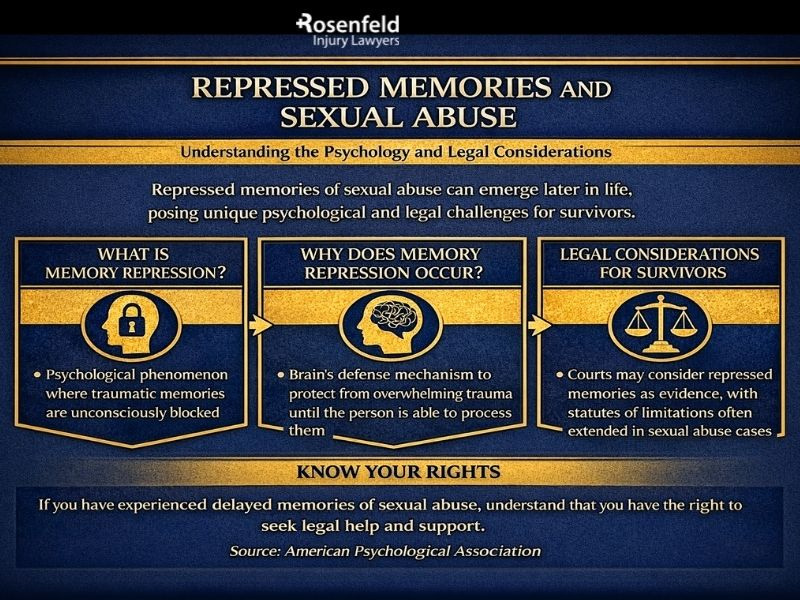
How Do Repressed Memories of Childhood Trauma Impact Victims’ Ability to Take Legal Action?
Survivors often worry that too much time has passed after the traumatic experience to pursue justice. While suppressed memories can complicate legal timelines, they do not automatically prevent legal action.
Sexual Abuse Statutes of Limitations
Sexual abuse statutes of limitations set deadlines for filing civil claims. Historically, these laws failed to account for delayed disclosure and repressed memories. Today, many states have expanded or eliminated these deadlines for child sexual abuse cases.
Some states have enacted temporary lookback windows allowing survivors to file claims regardless of when the abuse occurred. Others have permanently revised their laws to reflect modern understandings of trauma.
The Discovery Rule
The discovery rule is especially important for survivors of sexual abuse with suppressed memories. Under this rule, the statute of limitations may begin when the victim discovers, or reasonably should have discovered, the connection between their injuries and the abuse that occurred.
For survivors, this may mean the legal clock starts when memories resurface or when a therapist helps identify the source of trauma. This rule acknowledges that victims cannot act on abuse they could not consciously remember.
We carefully evaluate how memories were discovered, what symptoms were present, and how trauma affected the survivor’s ability to understand what happened.
How We Can Help Victims of Child Sexual Abuse and Sexual Assault
At Injury Lawyer Team, we help survivors pursue a sexual abuse lawsuit with compassion, discretion, and respect. Our role is not to pressure you, but to support you and explain your options so you can decide what is right for you.
We assist adults who have experienced sexual abuse or other sexual acts during childhood by:
- Listening without judgment
- Evaluating newly recalled memories and legal viability
- Identifying responsible individuals and institutions
- Explaining laws in clear, supportive language
- Working with therapists and experts when appropriate
We understand that revisiting childhood trauma can be painful. You control the pace, and we respect your process. We handle sexual abuse cases on a contingency-fee basis. There are no upfront costs, and our clients pay no legal fees unless we recover compensation. We also provide a free, confidential consultation so you can speak with us privately and without pressure.
All content undergoes thorough legal review by experienced attorneys, including Jonathan Rosenfeld. With 25 years of experience in personal injury law and over 100 years of combined legal expertise within our team, we ensure that every article is legally accurate, compliant, and reflects current legal standards.