

Sexual Abuse and Assault Injury Lawyers


Rancho del Campo and Rancho del Rayo Sexual Abuse Lawsuits
Compensation for Victims of Sexual Abuse at the San Diego Juvenile Ranch Facility
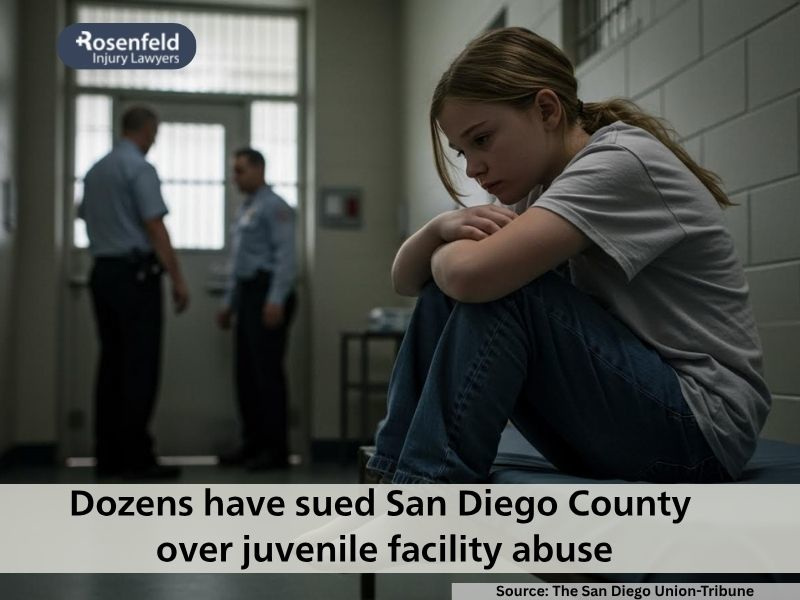
At Injury Lawyer Team, we understand how devastating it is when young people are abused in facilities that are supposed to protect and rehabilitate them. Survivors of Rancho del Campo and Rancho del Rayo sexual abuse have endured traumatic experiences inside locked juvenile detention centers operated by San Diego County.
Instead of receiving care, structure, and education, many vulnerable youth were sexually abused by staff members who were obligated to protect children in their custody.
Our experienced legal professionals represent survivors in a California juvenile detention sexual abuse lawsuit, helping them file claims, pursue financial compensation, and seek justice against responsible parties. With countless survivors now stepping forward, the time to explore legal options is now.
Alleged Abuse at Rancho del Campo and Rancho del Rayo
The San Diego Juvenile Ranch Facility (JRF) in Campo was divided into two campuses—Rancho del Campo and Rancho del Rayo. These sites were operated by the San Diego County Probation Department and housed boys considered “low risk.”
Officially, they were designed to offer vocational training, structure, and education for young residents. In reality, survivors allege that the very structure of these ranches left vulnerable youth exposed to sexual abuse and misconduct by the very staff members who were supposed to protect them.
Facility Background
Located roughly 65 miles east of San Diego, the Juvenile Ranch Facility was intentionally remote and built with open dormitories rather than cells. There were no perimeter fences. Instead, officials relied on distance and supervision to deter runaways. Rancho del Campo High School served the detained boys, and Rancho del Rayo emphasized substance abuse treatment and vocational programs.
At its peak, JRF could hold up to 250 juvenile inmates, though inspection reports from 2014 documented only 69 youths present on the day of review.
Despite this smaller population, reports noted persistent problems: dozens of minor-on-minor assaults, repeated use of pepper spray, and poor oversight. State and county regulators required Prison Rape Elimination Act (PREA) notices and interviews, but according to later civil lawsuits, those safeguards were not effective in preventing abuse.
Lawsuits and Survivor Accounts
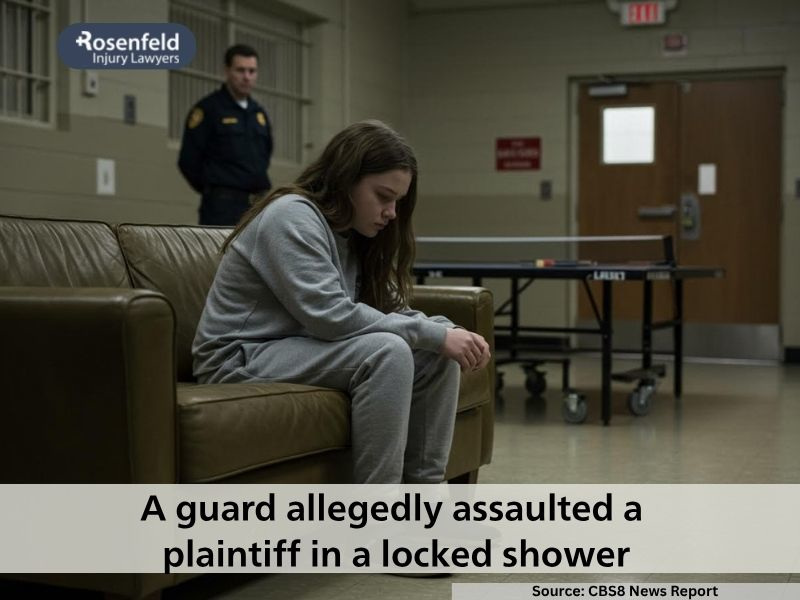
In May 2023, six men filed lawsuits against San Diego County, alleging widespread sexual assaults inside juvenile detention facilities, including Rancho del Campo. One plaintiff reported being only 14 years old when abuse occurred while other staff members stood guard at the door.
The complaints describe a pattern where staff used their authority and access to locked facility dorms and showers to exploit young people who had no ability to leave the facility.
Although many publicly filed cases focus on abuse at Kearny Mesa Juvenile Detention Facility, law firms and media repeatedly highlight that the same department ran Rancho del Campo and Rancho del Rayo, and that the failures extended across all county-run detention facilities.
The lawsuits accuse the County of ignoring red flags, failing to investigate allegations, and allowing abusive staff to remain in positions of power.
Oversight Failures and Systemic Problems
A 2014 San Diego Civil Grand Jury inspection of JRF revealed troubling conditions:
- 21 minor-on-minor assaults in 2012, 21 more in 2013, and 13 in 2014.
- Multiple uses of pepper spray each year to control fights.
- At least two recorded assaults on staff.
While no suicides were recorded during the time abuse occurred, survivors later alleged that staff misconduct was deliberately underreported, and that sexual abuse claims were minimized or ignored. The open dormitory design, combined with insufficient monitoring and a culture of silence, created opportunities for abuse.
Closure of the Ranch Facilities
By 2015, San Diego County officials announced plans to consolidate Rancho del Campo and Rancho del Rayo into Camp Barrett, citing declining populations. Both facilities were permanently closed by 2016.
However, advocates argue that closure did not resolve the harm already done. Survivors contend that years of abuse at the ranches left countless survivors struggling with psychological harm well into adulthood, and that the County continues to bear responsibility for the abuse caused during its operation.
Broader Pattern of Abuse
The Rancho del Campo and Rancho del Rayo allegations are part of a larger sex abuse scandal in San Diego County’s juvenile detention system.
Court filings identify multiple probation officers accused of sexual misconduct at various sites between the early 1990s and 2012, reinforcing claims that the problem was not isolated but rather a systemic failure. The California Attorney General’s Office has since launched investigations into conditions at San Diego juvenile halls, further underscoring the scale of the crisis.
What Types of Financial Compensation Can Sexually Abused Juvenile Inmates Recover?
Survivors of Rancho del Campo and Rancho del Rayo sexual abuse may be entitled to substantial compensation through sexual abuse lawsuits in San Diego.
Financial compensation often includes:
- Economic damages: Medical bills, therapy, psychiatric care, and lost income or educational opportunities.
- Non-economic damages: Pain, suffering, emotional distress, and lifelong psychological harm caused by abuse.
- Punitive damages: In cases of egregious misconduct, state law allows courts to punish wrongdoers and deter future abuse.
- Institutional liability: Survivors can also hold the San Diego County and other responsible parties liable for negligent hiring, supervision, or ignoring complaints.
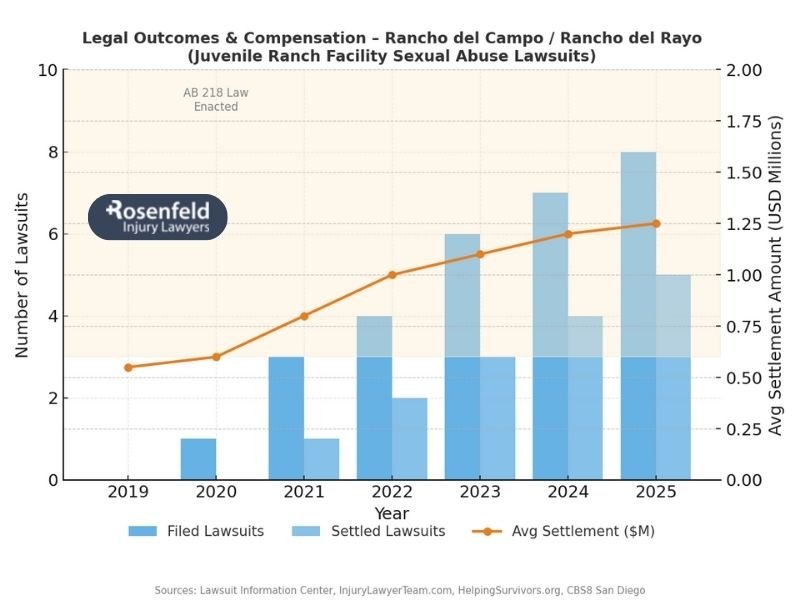
Recent settlements in California youth detention sex abuse lawsuits can vary depending on severity, duration, and proof of failure of the system, and they can range from hundreds of thousands to millions of dollars. Structured payouts may also cover ongoing counseling and recovery needs.
What California Laws Govern Sexual Abuse Cases Against California Juvenile Detention Centers?
Survivors of Rancho del Campo and Rancho del Rayo sex abuse have important rights under both California law and federal protections. These laws were created to protect vulnerable youth, hold institutions accountable, and ensure that sexual abuse claims inside youth detention facilities are investigated and prosecuted. Understanding these legal frameworks and the statute of limitations is crucial for survivors considering civil lawsuits in San Diego County.
State Laws
Child Abuse and Neglect Reporting Act (California Penal Code §§ 11164–11174.3): Requires teachers, probation officers, and other juvenile facility staff to act as mandated reporters. Any suspicion of childhood sexual abuse must be reported immediately, ensuring allegations are documented and investigated.
Title 15 – California Code of Regulations: Provides minimum standards for youth detention facilities, including staffing, infrastructure, and supervision requirements. These rules are designed to protect children, and violations may serve as supporting evidence in a juvenile detention sexual abuse lawsuit.
Federal Laws
Prison Rape Elimination Act (PREA): Applies to both adult and juvenile facilities, requiring strict prevention policies, specialized staff training, and reporting systems. PREA also conditions federal funding on compliance, meaning detention facilities that ignore these mandates risk losing resources.
Civil Rights of Institutionalized Persons Act (CRIPA): Gives the U.S. Department of Justice authority to investigate systemic abuse in juvenile facilities. If a pattern of misconduct is found, courts may order reforms to protect young residents from further harm.
Together, these laws establish that San Diego County’s entities are legally obligated to prevent abuse, investigate complaints, and protect children in their custody. When these duties are ignored, survivors have powerful grounds to hold responsible parties liable through legal action.
How Long Do Victims Have to File Civil Lawsuits in California?
Time limits for filing sexual assault lawsuits in California depend on the survivor’s age at the time of the abuse. Recent statute of limitation changes have significantly expanded access to justice for those who suffered sexual abuse in juvenile detention centers like Rancho del Campo and Rancho del Rayo.
Under AB 452 (Cal. Code Civ. Proc. § 340.1), the civil statute of limitations for childhood sexual assault claims has been abolished. This means survivors who were sexually abused as minors may now bring a lawsuit at any time, regardless of how long ago the abuse occurred.
However, if the survivor is 40 years of age or older at the time of filing, state law requires a certificate of merit. This certificate must be signed by both the survivor’s attorney and a licensed mental health professional, confirming that the claim has a reasonable basis before moving forward.
Who Can Be Held Liable for Sexual Abuse at a Juvenile Detention Facility?
In a juvenile detention sexual abuse lawsuit, multiple parties may be held responsible for the harm caused to residents at facilities like Rancho del Campo and Rancho del Rayo. Sex abuse survivors are not limited to seeking justice by only suing the individual abuser, and state law allows claims against broader institutions and systems that failed to protect children.
Potentially Liable Parties
- Individual staff members: Probation officers, counselors, or other staff who directly engaged in sexual assault or misconduct.
- Supervisors and administrators: Facility leaders who ignored complaints, failed to act on reports, or knowingly placed youth in unsafe environments.
- San Diego County: As the operator of Rancho del Campo and Rancho del Rayo, the County may be liable for negligent hiring, training, or supervision, as well as for maintaining unsafe conditions.
- Third-party contractors: Vendors or outside service providers (such as medical or vocational staff) who had access to juveniles and engaged in misconduct.
- The County of San Diego: Ultimately responsible for oversight of its youth detention facilities, the County can face liability for systemic failures that allowed abuse to occur.
Many survivors face abusers who lack the resources to pay meaningful damages. By filing lawsuits against the responsible institutions, survivors can pursue substantial compensation and force accountability for systemic negligence.
How Injury Lawyer Team Can Help
At Injury Lawyer Team, we are committed to standing with juvenile detention sexual abuse survivors across California. Our experienced sexual abuse lawyers understand the trauma that many survivors carry into adulthood and the challenges of confronting powerful institutions.
Services We Provide
- Free consultation: Survivors can schedule a confidential consultation with us free of charge to learn important information relevant to their case such as the statute of limitations and explore their options for filing claims.
- Thorough case investigation: We gather evidence, subpoena facility records, and work with mental health experts to strengthen your claim.
- Pursuing compensation: Our legal team fights to recover damages for medical care, therapy, lost opportunities, pain and suffering, and other lifelong impacts of sexual abuse during childhood.
- Contingency fee representation: You will never pay upfront fees. We only get paid if we win your case and secure compensation for you.
Survivors of sexual assault in California deserve justice, accountability, and the chance to rebuild their lives. If you or someone you love was harmed at Rancho del Campo, Rancho del Rayo, or another San Diego juvenile detention facility, our legal team is here to help you seek justice by filing sexual abuse lawsuits, holding responsible parties liable, and providing financial compensation.
All content undergoes thorough legal review by experienced attorneys, including Jonathan Rosenfeld. With 25 years of experience in personal injury law and over 100 years of combined legal expertise within our team, we ensure that every article is legally accurate, compliant, and reflects current legal standards.