



Navigating the Legal System as a Survivor of Institutional Abuse


Navigating the legal system as a survivor of institutional abuse can feel overwhelming, confusing, and deeply personal, especially when the abuse occurred within an organization that was supposed to provide safety, care, or authority.
At Injury Lawyer Team, we understand that survivors of institutional abuse are often forced to confront painful memories and a complex legal system that was not designed with trauma in mind.
As a law firm that focuses on representing survivors of institutional sexual abuse, our work is grounded in compassion, clarity, and accountability. Survivors often come to us unsure of their legal options, worried about strict time limits, or afraid of challenging powerful institutions.
Our role is to provide steady legal guidance, explain the legal process, and help you identify a path forward that protects your well-being as you seek justice.
Institutional abuse cases involve unique challenges, multiple legal avenues, and timelines that vary depending on where and when the abuse occurred, whether there were previous complaints, and how evidence can be preserved. We help survivors develop a general understanding of what to expect while tailoring a strategy to each individual’s needs.
What Are Common Types of Institutional Abuse Cases?
Institutional abuse occurs when sexual abuse or exploitation happens within an organization that exercises authority, supervision, or control. These cases often involve evidentiary hurdles, internal cover-ups, and systems that failed to respond to warning signs.
Some of the most common institutional abuse cases we handle include:
School Sexual Abuse
School sexual abuse can occur in public schools, private schools, boarding schools, or special education programs. Survivors may be harmed by teachers, coaches, counselors, or staff members.
These cases often raise questions about negligent supervision, failure to investigate complaints, and violations of federal law designed to protect children. Many child sexual abuse cases involve delayed disclosure due to fear, shame, or retaliation.
Clergy Sexual Abuse
Clergy sexual abuse cases involve abuse by religious leaders or volunteers within churches, dioceses, or faith-based organizations. Survivors often face profound emotional distress tied to faith, trust, and community. These sexual abuse lawsuits may involve decades-old conduct, institutional concealment, and new legislation that revives time-barred claims previously.
Hospital Sexual Abuse
Hospital sexual abuse occurs in medical centers, psychiatric units, nursing homes, and other healthcare settings. Survivors may have been sedated, restrained, or dependent on caregivers for medical treatment, creating severe power imbalances. These cases frequently rely on medical records, internal reporting failures, and expert testimony to establish how the abuse occurred.
Residential Treatment Facility Abuse
Sexual abuse in residential treatment facilities, including youth treatment centers, behavioral programs, and other long-term residential facilities, often involves prolonged exposure to unsafe environments.
These cases frequently reveal systemic neglect, inadequate background checks, or failures to respond to warning signs. Facilities may be civilly liable when policies or staffing decisions place residents at risk.
Juvenile Detention and Correctional Facility Abuse
Abuse in juvenile detention centers, jails, and correctional facilities is a serious form of institutional sexual abuse involving extreme power imbalances. Survivors may be abused by guards, contractors, or other authority figures while under state custody.
These cases may implicate federal law, civil rights protections, and constitutional standards. Survivors often fear retaliation or disbelief, making early legal representation critical.
Foster Care and Child Welfare System Abuse
Children placed in foster homes, group homes, or under child welfare supervision may be sexually abused by caregivers, staff, or other residents.
These cases often involve multiple institutional failures, including inadequate screening, lack of oversight, and ignored reports. Survivors may not realize until adulthood that the state or agency responsible for placement may be legally accountable for the harm they endured.
University and Campus Sexual Abuse
Sexual abuse and assault on college and university campuses may involve faculty members, staff, coaches, or individuals operating under institutional authority.
These cases frequently intersect with administrative reporting systems, internal disciplinary processes, and failures to protect students despite known risks. Survivors may face pressure to remain silent to protect institutional reputations, making civil legal action an important accountability tool.
What Legal Options Exist for Survivors of Institutional Abuse?
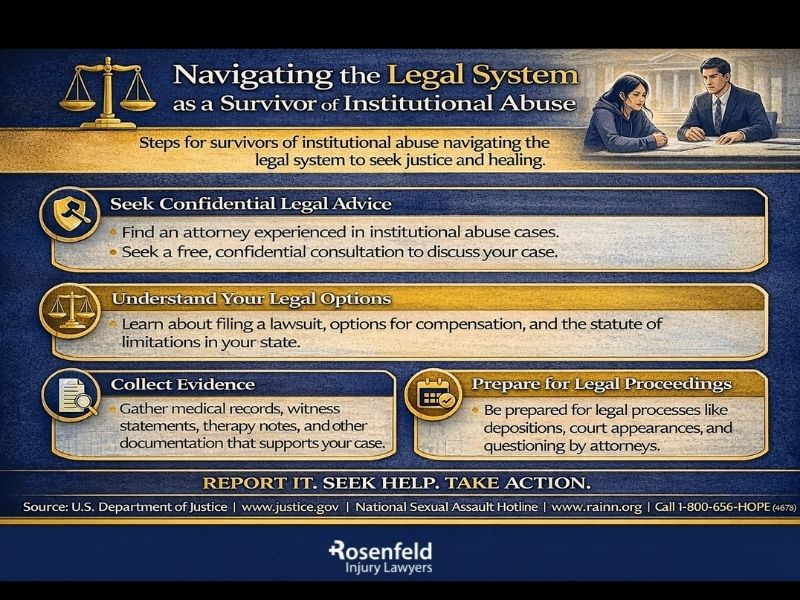
Survivors of institutional abuse often have more than one legal option available. Understanding these choices is a critical step in navigating the legal landscape and deciding how to pursue justice.
Administrative Claims
Some institutions are governed by administrative or regulatory systems. Administrative claims may involve internal investigations, licensing boards, or government oversight agencies. While these actions rarely provide compensation, they can play a critical role in documenting misconduct and connecting survivors to broader accountability efforts.
Criminal Cases
Criminal cases are pursued by the state and may involve a police report, investigation, and prosecution by a district attorney. These cases can lead to criminal charges and, in some circumstances, jail time for the perpetrator. Survivors do not control criminal prosecutions, but participation can support broader justice efforts and protect others.
Civil Cases
A civil lawsuit allows survivors to seek compensation and hold institutions accountable for the harm they caused or failed to prevent. Civil claims focus on responsibility, damages, and systemic failures rather than punishment. Many survivors choose civil litigation to seek justice on their own terms, even without criminal charges.
How Long Do Victims of Institutional Sexual Abuse Have to Take Legal Action?
Time limits are one of the most confusing aspects of navigating the legal system. Survivors are often surprised to learn that the law recognizes the sensitive nature of trauma and delayed disclosure, but deadlines still apply.
Statute of Limitations
The statute of limitations on sexual assault sets deadlines for filing claims. These limits vary by state, by type of claim, and by whether the survivor was a minor when the abuse happened. In institutional abuse cases, these deadlines can differ for individuals and organizations.
Discovery Rule
The discovery rule allows the clock to begin when a survivor reasonably understands the connection between their injuries and the abuse. This doctrine is especially important for survivors who experienced sexual abuse as a child but did not fully process its impact until adulthood.
Because these rules are complex and evolving, consulting a qualified attorney early can help protect your rights.
What Damages Can Victims Recover Through a Civil Lawsuit?
A civil case seeks to address the real-world consequences of abuse and provide resources for healing. Depending on the facts, survivors may recover:
Economic Damages
Economic damages address the tangible financial losses survivors experience as a result of institutional abuse and the harm that followed, including:
- Medical expenses, including emergency care, examinations, hospitalization, medications, and follow-up treatment related to the abuse
- Therapy and counseling costs, such as trauma-informed therapy, psychiatric care, group counseling, and long-term mental health treatment
- Lost wages, including income missed due to medical appointments or an inability to work during recovery
- Loss of future earning capacity, when the impact of the abuse affects career advancement, job stability, or long-term employment prospects
- Future care needs, including ongoing therapy, medication management, or specialized treatment required for lasting physical or psychological effects
- Out-of-pocket expenses, such as transportation to medical appointments, relocation costs, or necessary accommodations related to recovery
Non-Economic Damages
Non-economic damages recognize the deeply personal effects of sexual abuse that cannot be measured with receipts or invoices, including:
- Pain and suffering, reflecting the physical and emotional toll of the abuse and its aftermath
- Emotional distress, including anxiety, depression, fear, shame, and PTSD
- Loss of enjoyment of life, when survivors are no longer able to engage fully in activities or experiences they once valued
- Impact on relationships, including difficulties with trust, intimacy, family dynamics, and social connections
- Harm to personal identity and self-worth, especially in cases involving abuse by authority figures or trusted institutions
- Ongoing psychological effects, such as sleep disturbances, hypervigilance, or emotional numbness, that persist long after the abuse occurred
Punitive Damages
In cases involving egregious misconduct or cover-ups, punitive damages may be available to deter future abuse and reinforce accountability.
How Our Law Firm Can Help You Take Legal Action
Our law firm provides comprehensive legal services for survivors at every stage of the legal process. We treat each case with a trauma-informed approach that respects dignity, autonomy, and safety.
Our services include:
- Free consultation to understand your experience and goals
- Careful case evaluation to identify viable legal action
- Gathering evidence, including medical records, witness testimony, and institutional files
- Investigating previous complaints and patterns of misconduct
- Coordinating with experts to overcome evidentiary hurdles
- Managing communications with law enforcement, insurers, and defense counsel
- Filing and litigating sexual abuse lawsuits in civil court
- Supporting survivors through every stage as the case proceeds toward resolution
Our dedicated legal team brings deep legal experience in institutional abuse litigation, understands the legal complexities, and provides steady emotional support throughout the process. We offer clarity, advocacy, and compassion, and provide guidance that does not constitute legal advice until an attorney-client relationship is established.
Book a Confidential Consultation
If you are considering a sex abuse lawsuit, we invite you to contact us for a free, confidential consultation. We handle cases on a contingency-fee basis, so there are no upfront costs, and you only pay for legal counsel if we recover compensation on your behalf.
Reaching out can feel overwhelming, but taking steps toward justice can also mark the beginning of healing and accountability. We are here to help you seek compensation, protect your well-being, and move forward with confidence. Contact us today to speak with a legal professional who can advise you on the path forward.
All content undergoes thorough legal review by experienced attorneys, including Jonathan Rosenfeld. With 25 years of experience in personal injury law and over 100 years of combined legal expertise within our team, we ensure that every article is legally accurate, compliant, and reflects current legal standards.