



Illinois Sexual Assault Statute of Limitations


Victims of sexual abuse can pursue multiple legal pathways to bring the offenders to justice, but specific laws govern these actions. One of the most important regulations in cases involving sexual abuse and assault is the relevant statute of limitations. The Illinois sexual assault statute of limitations determines how long a victim or plaintiff has to pursue legal action against the perpetrator or negligent institution. These timelines differ depending on the specific circumstances of your case.
At the Injury Lawyer Team, we are committed to supporting survivors of sexual abuse who are seeking compensation for legal damages via civil lawsuits. Our attorneys will stand by your side and provide compassionate support as we fight for every dollar you deserve while holding the at-fault parties accountable.
In this guide, we will discuss how the various statutes of limitations in Illinois may affect criminal and civil cases.
What Is the Criminal Statute of Limitations for Sexual Abuse?
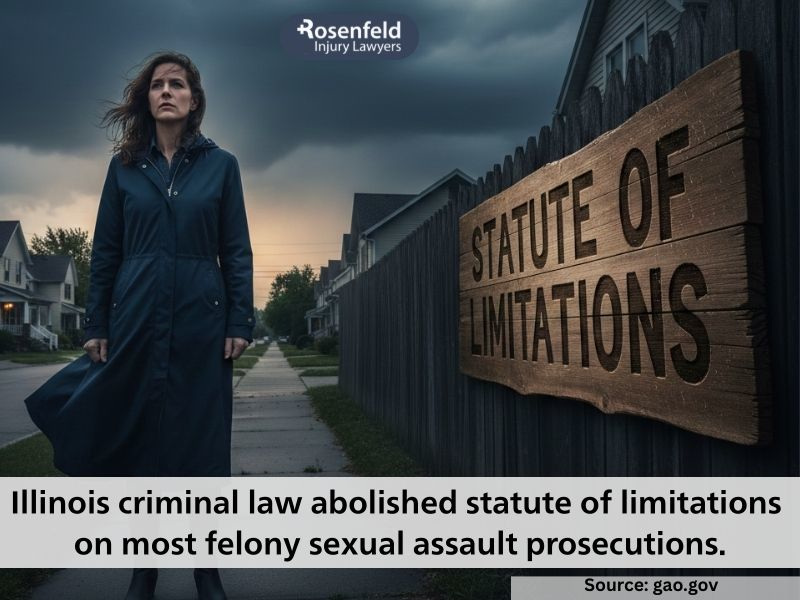
The criminal code in Illinois details the time limits for prosecuting sex crimes in the state. The applicable legal deadline for your case depends on the designation of the crime.
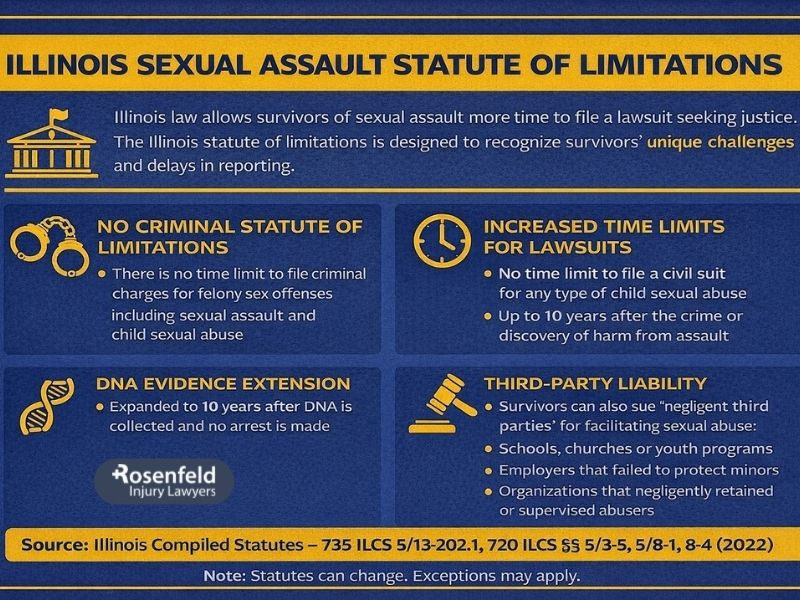
For example, under state code 720 ILCS 5/3-6, there is no criminal statute of limitations for aggravated criminal sexual abuse, aggravated or predatory criminal sexual assault. This means a victim can come forward at any point to report the crime and request that the offender be prosecuted.
The lack of a deadline is not always the case for less severe sex crimes. For misdemeanor criminal sexual abuse of a child, the victim has ten years from the day they turn 18 years old to seek justice by pressing criminal charges. For crimes involving the sexual exploitation of a child, the time limit is one year after they turn 18 years old or within three years of the act itself, whichever is later.
What Is the Illinois Statute of Limitations for Civil Lawsuits?
In the Illinois legal system, civil statutes of limitations are distinct.
Until January 2014, these claims were governed by 735 ILCS 5/13-202, which states that survivors have 20 years from their 18th birthdays to pursue civil claims for sexual abuse suffered as children. For adults, the statute of limitations was governed by the state’s general personal injury laws, which allow two years for victims to seek damages.
However, these laws have since been completely removed from the Illinois codes. There is no longer a legal deadline for victims of sexual abuse to seek justice through civil law. This means you could pursue a civil claim on your own timeline.
These changes were made to reflect the fact that many survivors struggle to report their abuse and bring charges against the perpetrators, especially if the incident occurred long ago.
Is There an Extended Statute of Limitations for Child Victims of Sex Crimes?
Currently, there is no statute of limitations for child abuse in the state of Illinois. As a result, a knowledgeable attorney can help victims seek compensation at any time.
However, cases that would have fallen under the old statute before January 2014 would still apply to that law. This means if you experienced child sex abuse before 2014, you have 20 years from your 18th birthday to fight for accountability for the abuser.
Under the old statutes, the timeline could be delayed for various reasons. For example, if new DNA evidence were uncovered to prove the defendant committed the abuse, this could essentially reset the deadline.
Additionally, if the defendant left Illinois or went into hiding to avoid prosecution, the statute of limitations could also be affected. The discovery rule states that the statute of limitations can be delayed if the survivor did not discover the connection between their abuse and current suffering until a later date. These exceptions may apply to both criminal and civil cases.
Do Victims Need to File a Criminal Case to Be Eligible for a Lawsuit?
If you are the victim of sex crimes, you may be unsure of the differences between civil and criminal cases. Each legal action is designed for a specific purpose and is a distinct process with different outcomes.
When prosecuting sex crimes, the purpose is to determine if the defendant is guilty and to sentence them to a punishment if they are. The sentencing may involve probation, community service, or imprisonment.
Illinois law requires a higher standard of proof for conviction. The prosecution must prove beyond a reasonable doubt that the defendant is guilty of the crime. If found guilty, the judge will administer a sentence, which is discussed among the legal teams involved.
In civil cases, the primary intention is not to punish the defendant, but to compensate the survivor for legal damages. If you were victimized by child pornography production, domestic violence, or another form of abuse, the suffering caused by this offense can have monetary value attached to it. Legal damages that you may qualify for in a civil legal action include:
- Medical expenses for diagnosis and treatment of injuries, including surgery, emergency room visits, and medications
- Future medical bills related to ongoing treatment, such as therapy and rehabilitation costs
- Emotional distress, such as Post-Traumatic Stress Disorder, anxiety, depression, suicide ideation, and self-harm
- Pain and suffering from physical injuries and treatment procedures
- Loss of enjoyment of life for a diminished ability to experience happiness due to trauma
The standard of proof is lower in civil lawsuits than in criminal charges, typically requiring a preponderance of the evidence (more likely than not). Since these two processes are separate, the existence of a criminal proceeding is irrelevant to your civil claim, though a guilty verdict would certainly strengthen your chances of earning compensation.
How Our Law Firm Can Help
The Injury Lawyer Team specializes in supporting survivors of sexual abuse as they seek justice for rape, abuse, and other sexual violations. We protect defendants from the overwhelming or confusing aspects of a sexual abuse lawsuit, helping them understand which time limit applies to their case under Illinois law and when the abuse occurred.
Our legal services include:
- Investigating the offense that happened
- Gathering evidence, such as testimony from witnesses, medical records, and mental health advocate statements
- Assessing all legal damages
- Navigating exceptions to the Illinois statute of limitations
- Protecting your rights
- Negotiating for full compensation
- Litigating in civil court
Our attorneys work on a contingency-fee basis, meaning you pay nothing unless we win. Additionally, we offer a free consultation, during which you can ask questions about the Illinois statute of limitations, what constitutes a sexual offense, and fairness during the legal process.
Contact us today at 866-757-6452 to schedule your free and confidential consultation.
All content undergoes thorough legal review by experienced attorneys, including Jonathan Rosenfeld. With 25 years of experience in personal injury law and over 100 years of combined legal expertise within our team, we ensure that every article is legally accurate, compliant, and reflects current legal standards.