



How to Hide a Minor’s Identity During a Sexual Abuse Lawsuit


A crucial part of protecting a child’s emotional safety after abuse is understanding how to hide a minor’s identity during a sexual abuse lawsuit. Illinois, like other states, offers robust protections for child victims, including concealing their real names from the public record.
Fear of public scrutiny or media exposure should not keep you from pursuing justice. Injury Lawyer Team works nationwide to hold institutions accountable for endangering children, including throughout Chicagoland and Illinois. We will help your family navigate the legal system while ensuring that sensitive records remain private.
Why Do Courts Prioritize Anonymity for Minors in Sexual Abuse Lawsuits?
The Victim Rights Law Center explains that public exposure can be a significant barrier to seeking justice for many minors and their families. Media attention can retraumatize victims, discourage further disclosures, and increase their reluctance to cooperate with investigations.
Making the victim’s name part of the public record can also encourage harassment, either by the direct perpetrator or their associates. Well-known institutions like the Catholic Church have a history of trying to silence victims, either by shaming them or offering hush settlements.
As such, Illinois and other states allow victims to file a lawsuit anonymously. This encourages victims to seek justice while protecting them from harassment or intimidation.
How Can a Minor File a Civil Lawsuit Without Using Their Real Name?
A minor cannot file a lawsuit on their own behalf. Instead, a parent or legal guardian can file lawsuits on their behalf until they turn 18, after which they can file on their own.
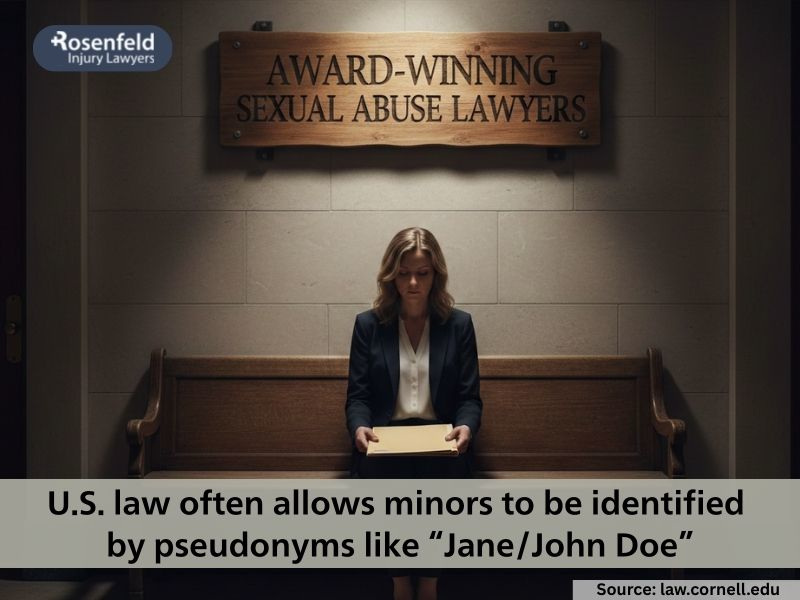
The Illinois Code of Civil Procedure entitles individuals to use a fictitious name, such as Jane Doe or John Doe, when a lawsuit includes sensitive documents that may cause harm if associated with the individual (735 ILCS 5/2-401).
A Circuit Court of Cook County case explains the rationale behind this in Doe v. Readey. In this case, the defendant sought to compel public disclosure of the victim’s identity, but the court denied the request, finding that “plaintiff’s interest in protecting her identity outweighs any interest the public may have in knowing it.”
Other states have similar legal strategies to protect victims while still holding institutions accountable.
What Legal Actions Are Used to Keep a Minor’s Identity Confidential?
Rules 26-37 of the Federal Rules of Civil Procedure require the mandatory disclosure of certain records during discovery, which forms the legal framework for most state civil procedures. Because disclosure is automatic, an attorney needs to petition for exceptions.
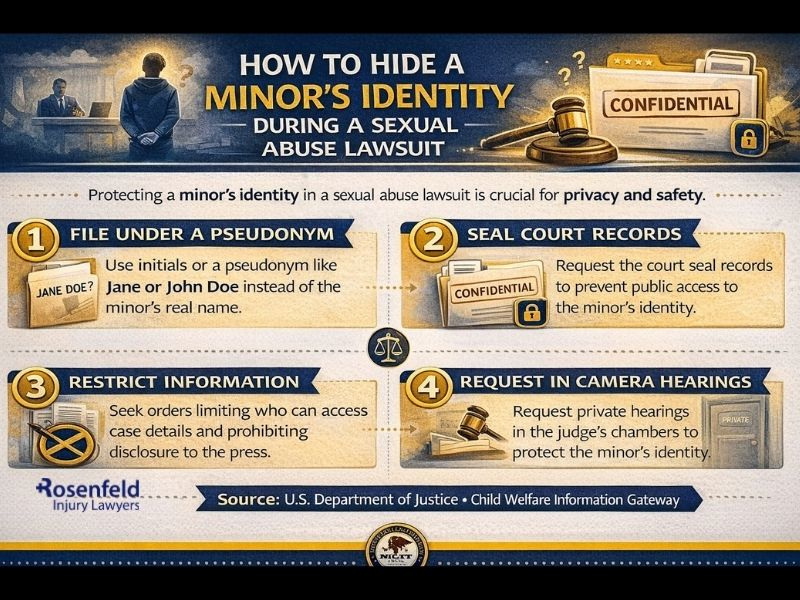
Your attorney will file a motion to proceed anonymously under a pseudonym such as Jane Doe or John Doe. This petition will provide justification, citing risks such as reputational damage or harassment from public exposure of sensitive records.
Protective orders are also a way to preserve a minor’s confidentiality, limiting exposure to the perpetrator and denying the person further access to the victim.
How Are Identifying Details Limited in Public Court Records?
The Judicial Conference of the U.S. implemented privacy procedures in 2008 that allow child victims to pursue justice without being retraumatized. These policies require redacting certain sensitive information from electronic court records, including Social Security numbers, names of minor children, financial account numbers, and dates of birth.
Illinois follows these standards through Illinois Supreme Court Rule 138, and other states have similar procedures.
In some sexual abuse cases, entire records are sealed if the attorney can demonstrate that the need for privacy outweighs the need for public disclosure.
How Is a Minor’s Identity Protected During Discovery?
As the National Crime Victim Law Institute notes, there are several ways to protect a minor’s identity while still complying with civil discovery procedures. These can include designating certain documents as confidential, restricting document access, and redacting sensitive details.
Courts can also rule that information be restricted to only the necessary parties, such as attorneys, expert witnesses (e.g., medical professionals), or court staff (e.g., process servers).
What Safeguards Are Used When a Minor Is Deposed or Gives Testimony During the Legal Process?
While the Sixth Amendment gives defendants the right to face their accuser in criminal sexual abuse cases, civil lawsuits are more flexible. The primary legal framework is due process under the Fifth and Fourteenth Amendments, meaning the defendant has the right to be fairly heard and to challenge the testimony. This does not give the accused an automatic right to face the plaintiff directly.
As such, courts often offer special provisions for child victims to ensure their comfort and safety. In Illinois, this can include giving prerecorded interviews (750 ILCS 5/604.10), using closed or limited-attendance depositions, and anonymized transcripts. Federal rules of order also allow some out-of-court statements, like spontaneous admissions of child victims, to be submitted into evidence (Rule 803).
Which Court Documents Are Most Likely to Reveal a Minor’s Identity if Not Protected?
Certain documents may reveal a victim’s identity if their attorney does not file a motion for anonymity. Forensic examinations, medical records, transcripts, recorded interviews, depositions, and witness statements may all include these details.
In some cases, public exposure may allow others to identify the victim. For example, if the inappropriate behavior or sexual abuse occurred at a youth organization with a limited number of attendees, and the name of the organization was made public, then others may be able to guess the person’s identity.
How Do Courts Prevent Institutions From Disclosing a Minor’s Identity?
Courts can use protective orders, motions, and directives to prevent schools, churches, and other parties from disclosing sensitive details about the victim without informed consent.
Courts have also required court reporters to sign a pledge not to disclose a minor victim’s identity (595 N.E.2d 1052 (1992)).
Can a Minor’s Identity Remain Protected if the Case Proceeds to Trial?
Yes. States like Illinois have robust legal processes to protect a minor’s identity, and our attorneys will use all available legal strategies to preserve the victim’s right to anonymity. This can include anonymized testimony, restricted spectators, and sealed exhibits.
The Illinois Supreme Court, like other states, has permitted some witnesses to provide remote testimony (Rule 241). Judges can determine whether this is appropriate based on the circumstances, including whether confronting the accused would retraumatize the victim.
Does Confidentiality Affect Liability or Damages in a Lawsuit?
Confidentiality does not impact a plaintiff’s ability to seek compensation, and it does not determine liability. Victims have the right to seek justice while protecting their identities, and anonymity alone cannot be used to decide how much they deserve.
What Happens to a Minor’s Privacy After a Sexual Abuse Case Ends?
Confidentiality does not end after the parties resolve claims. Settlements can be sealed, and parties can agree to ongoing non-disclosure agreements. In court cases, the records can be sealed and would require legal action to unseal them.
How Can Protecting a Minor’s Identity Help Prevent Future Abuse?
Protecting minors from public scrutiny is a crucial way to prevent future harassment, retraumatization, or potential grooming. Additionally, these measures ensure that perpetrators cannot gain further access to the victim or attempt to retaliate against their families.
Book a Free, Confidential Consultation to Explore Your Legal Options
Our award-winning sexual abuse lawyers assist victims and their families in Chicago, Illinois, and nationwide. With a 98% success rate and over 100 combined years of legal experience, we can protect your privacy while taking effective legal action.
We work on a contingency fee basis: no legal fees unless we win. To schedule a free, confidential consultation, call us at 866-757-6452 or use our online contact form.
All content undergoes thorough legal review by experienced attorneys, including Jonathan Rosenfeld. With 25 years of experience in personal injury law and over 100 years of combined legal expertise within our team, we ensure that every article is legally accurate, compliant, and reflects current legal standards.