

Sexual Abuse and Assault Injury Lawyers


Drug Rehab Center Sexual Abuse Lawyer
Substance abuse disorders have become a national epidemic. The National Survey on Drug Use and Health estimates that 20.7 million people needed substance abuse treatment in 2017. Unfortunately, sexual assault and the mistreatment of patients inside rehab centers are destroying patients’ chances for recovery. A drug rehab center sexual abuse lawyer can help you get justice.
Our legal team has extensive combined experience handling rehab sexual abuse cases at rehabilitation centers, giving us the expertise and credibility to fight for your rights.
If you or someone you love has suffered rehab sexual abuse at an inpatient rehab facility, contact the personal injury attorneys at Injury Lawyer Team LLC for a consultation.
Our rehab center sex abuse attorneys can help you hold a negligent or criminal treatment center accountable for your injuries. Individuals seeking treatment in rehab centers are often in a fragile state, making patient safety a top priority to prevent abuse and neglect. You or a loved one may be eligible for compensation through a civil suit against the rehab facility.
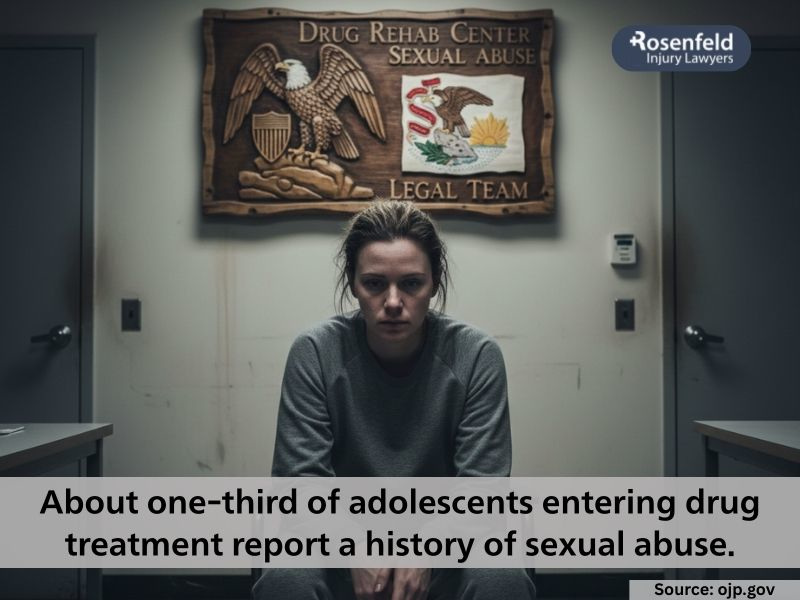
What is Drug and Alcohol Rehabilitation Center Abuse?
Rehab sexual abuse is any action or omission that takes advantage of substance abuse patients trying to obtain sobriety. Abuse, including sexual assault, in drug rehabilitation facilities can take many forms.
Patients might suffer physical violence, neglect, or mistreatment at the hands of a negligent staff member or other patients. They might also suffer emotional abuse in the form of belittling, humiliation, isolation, or inappropriate use of restraints.
Some rehab center abuse aims to give the perpetrator financial gain. Financial exploitation of rehab facility patients can involve health insurance fraud, breach of contract, or outright scams.
Treatment centers may falsely advertise their services to patients and engage in health insurance or fraud schemes that harm patients. They might also steal and sell a patient’s private information.
Adequate supervision is a crucial standard of care in rehab centers. Without supervision, abuse and neglect can occur, and staff members may fail to respond to emergencies or prevent harm.
Rehab sexual abuse can occur in any setting where perpetrators have easy access to victims, including rehabilitation facilities. Many rehabilitation facilities prioritize profits over patient care, leading to inadequate supervision and unsafe conditions.
Why Does Drug Treatment Center Sex Abuse Occur?
The federal government has no official definition of what constitutes a treatment or rehabilitation facility sex crime. Licensing requirements can vary by state.
Unlike doctors’ offices or other medical facilities, drug rehabilitation facilities are distinct legal entities. They do not have to conform to the standards imposed on the medical industry.
Any entrepreneur— with or without medical education or experience— can open a narcotic rehabilitation center. With the ongoing opioid epidemic and the national narcotic addiction crisis, a proliferation of rehabilitation centers has cropped up around the nation.
Hundreds of entrepreneurs have capitalized on the current demand for treatment and opened their own facilities. The government only loosely regulates these facilities. The lack of official guidelines, rules, or safety standards creates significant risks.
Drug rehabilitation facilities face no regulatory scrutiny or oversight, nor are they required to comply with the same health and safety standards as other medical facilities. The government rarely inspects these centers and largely leaves operators to their own devices.
Unfortunately, this industry’s lack of oversight has opened the door to patient abuse, neglect, and exploitation.
What are the Most Common Forms of Drug Rehabilitation Center Abuse?
Drug treatment center abuse can range from physical to financial. Any mistreatment of a facility patient that causes the patient harm can constitute abuse.
Physical abuse can include intimidation, causing bruises or other injuries, or acts of sexual abuse such as inappropriate physical contact. Financial abuse could cause the patient to lose thousands of dollars to the facility or one of its employees.
Examples of rehabilitation center abuse include:
- Physical violence
- Sex crimes
- Emotional abuse
- Neglect or mistreatment
- Lapses in patient care
- Failure to give medication
- Withholding food from patients
- Keeping the patient confined
- Financial exploitation
Many cases of sexual abuse in rehab facilities go unreported, especially among victims with a history of substance problems.
The lack of governmental authority over narcotic treatment centers does not give them the right to mistreat or abuse patients. Injured victims have the right to pursue justice against the facilities’ abusive staff and operators in the civil courts.
Filing a civil suit could be an avenue for justice, closure, and financial recovery for innocent and unsuspecting individuals seeking sobriety.
What are the Signs a Loved One is Experiencing Sexual Assault?
Speak out if your loved one is currently residing in a drug rehabilitation facility or staying at an inpatient center, and you notice possible signs of abuse. Reporting signs of abuse or someone experiencing sexual assault can save lives. It could also hold the center responsible for its negligence, misconduct, or fraud.
Learning how to notice the red flags of rehabilitation facility abuse is the first step toward obtaining justice.
Signs might include the following:
- Unusual or unexplained injuries. If anyone suffers broken bones, bruising, lacerations, burns, strap marks, or other unusual injuries during their stay, physical abuse might be the cause. Look for frequent “accidents” or injuries that do not align with the center’s excuse.
- Malnourishment. Undergoing detoxification can cause some physical changes, but after an initial detox period, they should start to recover. If they finished detox and still appear too thin, sickly, malnourished, or dehydrated, the center might not provide proper food, drink, or medications.
- Medical malpractice. Doctors and other medical care providers might not accurately diagnose mental health disorders and recommend the wrong treatment program that harms them instead of helping them. Some wrongful death incidents could have been prevented had the medical team followed the established protocols and not made a mistake.
- Behavioral changes. If they allow you to visit or speak with your loved one during inpatient rehab, watch for signs of concern. Your loved one should be receiving therapies, classes, and recovery exercises to improve the mind, body, and spirit in a safe environment. If your loved one instead appears to be distant, depressed, anxious, or suicidal, he or she might be the victim of facility abuse.
- Abrupt changes in financial situation. Rehabilitation facilities and nursing homes are not free, but the center should be transparent about its disclaimer fees and the costs associated with care. It should provide invoices and breakdowns of all charges. Monitor your or your loved one’s bank account while in the care facility. Alert the authorities of any unauthorized or unusual charges to the account.
Abuse, neglect, and fraud are perpetrated against those in a weakened position to defend themselves, including children, the elderly, and people struggling to overcome drug abuse.
Spotting signs that something is wrong could prevent further harm to the victim. As soon as you notice signs of abuse, remove yourself or your loved one from the facility and contact an attorney.
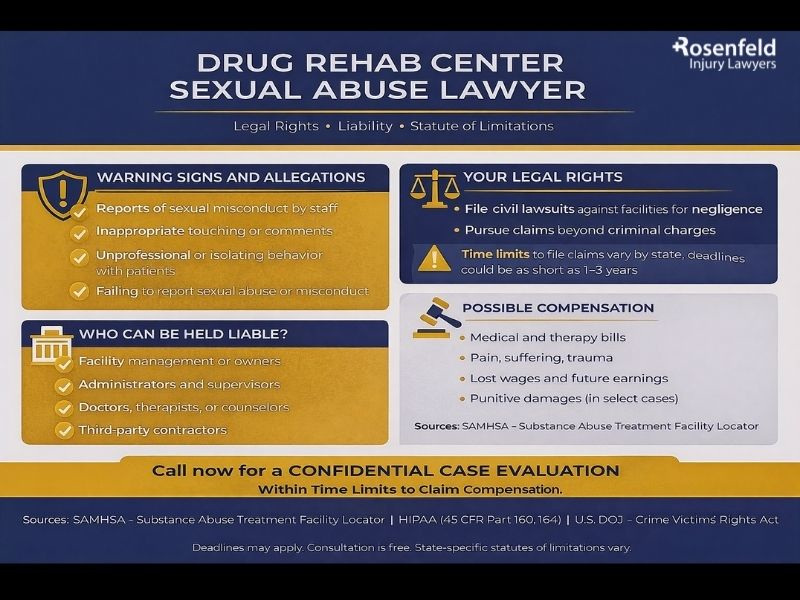
Physical and Emotional Trauma Caused by Rehab Center Sexual Abuse
Experiencing sexual abuse in a rehab facility can have devastating and far-reaching effects on survivors, both physically and emotionally. For many, entering a facility is a vulnerable time, as they are seeking help for addiction and often dealing with complex behavioral issues.
When these individuals are sexually abused in a setting that is supposed to provide safety and support, the trauma can be overwhelming.
Physically, survivors of rehab facility sexual abuse may suffer from a range of injuries, from minor bruises to more serious physical harm that requires immediate medical care. In some tragic cases, the consequences can even lead to wrongful death.
The lack of proper supervision and many facilities’ failure to provide adequate care can leave people vulnerable to harm from staff or other residents. Recent reports have highlighted alarming data rates of sexual abuse in residential treatment facilities, underscoring the urgent need for better oversight and accountability.
Emotionally, the impact of sexual abuse in treatment centers can be profound and long-lasting. Many sexual abuse victims develop post-traumatic stress disorder (PTSD), anxiety, depression, and other mental health challenges.
The emotional damage can affect every aspect of a victim’s life, from their ability to trust others to their progress in recovery. Feelings of shame, guilt, and self-blame are common, making it even more difficult to reach out for help or report the incident.
Compassionate care from mental health professionals is essential for those who have been sexually abused in rehabilitation centers. Therapy sessions and counseling can provide a safe environment for victims to process their trauma, rebuild their self-esteem, and begin the healing process.
Unfortunately, many people receiving treatment in facilities are dependent adults or otherwise vulnerable individuals who rely on the facility for their safety and well-being. When a facility fails to provide proper supervision or ignores warning signs, it can be held liable for the resulting abuse and harm.
Civil litigation offers victims a path to seek justice, hold negligent facilities accountable, and pursue compensation for their physical injuries, emotional suffering, and financial losses.
If you or a loved one has experienced sexual abuse in a rehabilitation center, it is important to act quickly. Reporting the incident to local authorities and seeking a free case evaluation with an experienced lawyer can help you determine your legal options and begin the healing process.
Many facilities have been held accountable for their failure to protect people, and taking legal action can help prevent future incidents and ensure justice for victims.
Remember, you are not alone. Support is available, and compassionate professionals are ready to help you navigate the legal process and access the care you need. Don’t hesitate to seek a consultation to discuss your situation and take the first step toward recovery and justice.
What Laws Govern Drug Rehab Center Sexual Abuse Cases?
Sexual abuse in rehabilitation centers is governed primarily by state civil law, with additional protections arising from licensing regulations and patient rights statutes. Because individuals in treatment are often in vulnerable positions, including impaired capacity, courts frequently apply heightened scrutiny to facilities that fail to protect residents from abuse by staff, contractors, or other residents.
State Civil Laws Governing Rehab Center Sexual Abuse
Most sexual abuse lawsuits are brought under state civil causes of action, including sexual assault, negligence, negligent supervision, negligent hiring, premises liability, and breach of fiduciary duty. Many states recognize that treatment facilities owe residents a duty of care.
States also recognize that individuals undergoing substance abuse treatment may lack the ability to provide meaningful consent, particularly when abuse involves staff members, counselors, or authority figures. Several states expressly treat sexual contact between treatment providers and residents as inherently nonconsensual under civil law standards.
Florida Laws
Florida is a major hub for rehabilitation facilities, making its laws especially relevant. Civil lawsuits against rehabilitation centers are often based on negligence and statutory violations.
Under Florida Statutes § 397.501, people in substance abuse treatment facilities have specific legal rights, including the right to be free from abuse, neglect, or exploitation. Violations of these rights may give rise to civil liability against licensed facilities.
Facilities may also be liable under general negligence principles and for sexual battery under Florida Statutes § 794.011, even in the absence of criminal prosecution.
Statute of Limitations for These Sexual Abuse Cases
Statutes of limitations vary by state and depend on whether the survivor was a minor or adult at the time of abuse.
In Florida, most negligence and premises liability claims must be filed within two years under Florida Statutes § 95.11(4)(a).
For sexual abuse involving minors, Florida provides extended timeframes under Florida Statutes § 95.11(7), allowing civil claims until age 25 or later in certain circumstances.
Other states with large rehabilitation industries provide longer filing windows:
- California allows childhood sexual abuse civil claims until age 40 or within five years of discovery under California Code of Civil Procedure § 340.1.
- Arizona permits civil child sexual abuse claims until age 30 under Arizona Revised Statutes § 12-514.
Licensing and Regulatory Oversight
Rehab centers are regulated at the state level by licensing agencies, and failure to comply with safety, reporting, and supervision requirements can give rise to civil claims. Regulatory violations may also provide evidence of negligence when facilities ignore complaints or fail to address known risks.
Working with an experienced sexual abuse lawyer can help you get the justice you deserve.
Why Choose Us for Civil Litigation Against Medical Facilities?
Choosing your personal injury attorney is the first step toward achieving a positive outcome. The lawyer you choose should have the experience, compassion, and resources to optimize your claim’s strength.
Look for legal counsel with a proven history of success and specific experience in narcotic rehab center abuse law. Clients choose Injury Lawyer Team to represent them for many reasons, including:
- We will invest the necessary resources to increase your chances of success and financial recovery in your case.
- We never work for corporations, insurance companies, physicians, or drug treatment centers. We only work for you, the victim.
- We have won record-setting recoveries for past clients. We maximize payouts for clients with contingency-fee cost arrangements.
- We have a network of trusted attorneys across the United States to refer you if we cannot help you.
Our lawyers care what happens to you. We are passionate about protecting the rights of people in substance abuse treatment. Our firm understands the nature of drug and alcohol addiction and the challenges you face each day.
We know the personal and financial losses the abuse might have cost you. We want to help you fight for justice and financial compensation. Initial consultations are always free and completely confidential.
Drug Rehabilitation Facility Sex Abuse FAQs
Below are some frequently asked questions raised by people sexually abused in a drug and alcohol rehabilitation center. We appreciate your feeling of uncertainty and perhaps fear. In many cases, other patients can be witnesses or even perpetrators of abuse, and their testimony may play a crucial role in uncovering patterns of neglect and supporting legal cases.
How Can I Tell Who Is a Sex Offender?
Potential sex offenders are not easily identifiable. Many sexually assaulted victims begin distrusting men to protect themselves from sexual assault predators.
However, only a small number of men are sex offenders. To stay protected, follow safety guidelines, including staying aware of your surroundings, trusting your instincts, and avoiding self-shame, fear, or blame.
Who Can I Speak to If I Am Sexually Assaulted?
If you were sexually assaulted, it is essential to report what happened to the local law enforcement authorities right away. Also, speak with a trusted friend who can provide support during a difficult time.
Reach out to local crisis centers that typically provide 24/7 information, referrals, support, and advocacy.
How Can I Help a Friend Who Was Sexually Assaulted?
Open the lines of communication with your sexually assaulted loved one, and avoid judging their decisions. Instead, provide a reinforcing message that does not blame them for what occurred.
Help your friend seek support during the recovery process and be sensitive to any new behaviors or fears they may need to overcome, such as feeling unsafe or avoiding crowds. Recognize that it takes time to heal, and that you will be there to listen whenever they want to talk.
Do All Sexual Abuse Rehabilitation Cases Involve Strangers?
Most sexually violent incidents happen between individuals who know each other, leading to embarrassment, confusion, broken trust, guilt, hurt, and misunderstandings.
Many residents share the same addiction issues with underlying causes in rehab centers, including financial problems, parental/spousal mistreatment, emotional abuse, domestic violence, or genetic predisposition.
Many rehabilitation center abuse victims are pressured, manipulated, or overpowered when saying no to unwanted sexual contact. Non-consensual sexual activity is a crime that should be reported to local law enforcement and the facility.
Rehab center abuse can do more than derail recovery—it can cause a host of new problems that might plague the victim. Abuse can cause relapse, overdose, and wrongful death, and involve significant physical, financial, and emotional suffering for all affected.
Contact Us for a Free Consultation
Were you or a family member harmed by an abuser at a drug and alcohol abuse center while receiving residential treatment? If so, contact our law firm today at(toll-free phone call) or through the contact form to schedule a consultation.
All discussions with our Chicago injury law firm remain confidential under the attorney-client privilege.
All content undergoes thorough legal review by experienced attorneys, including Jonathan Rosenfeld. With 25 years of experience in personal injury law and over 100 years of combined legal expertise within our team, we ensure that every article is legally accurate, compliant, and reflects current legal standards.