



Do Sexual Abuse Survivors Have to Face Perpetrators in Court?


At Injury Lawyer Team, we work every day with survivors who are trying to find out the answer to: “Do sexual abuse survivors have to face perpetrators in court?”, how the process works, and learn what options exist to move forward without unnecessary trauma. When someone has endured abuse, the idea of entering a courtroom, seeing the defendant, or giving testimony can feel overwhelming.
We stand with you, and we want you to know you’re not alone, you are believed, and there are many legal pathways that do not require direct confrontation. Our role is to guide our clients and their families through the legal system with protection, care, clarity, and strength.
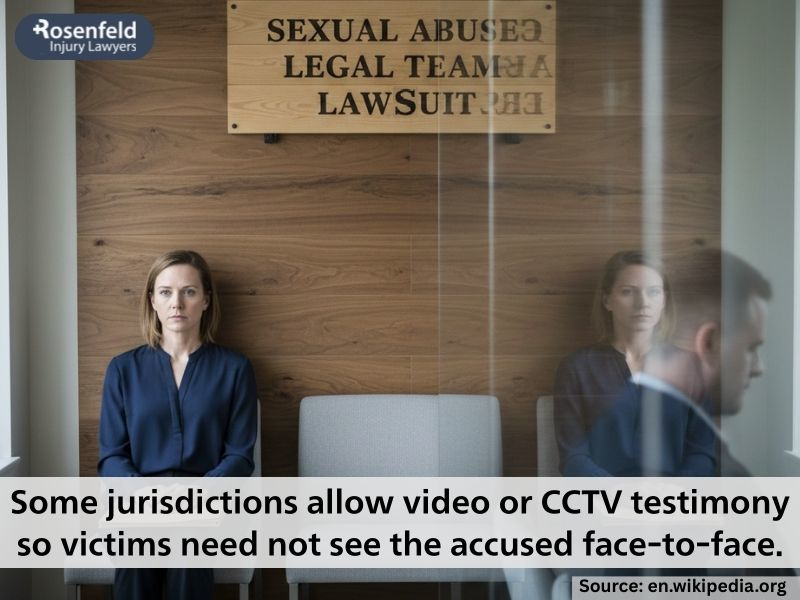
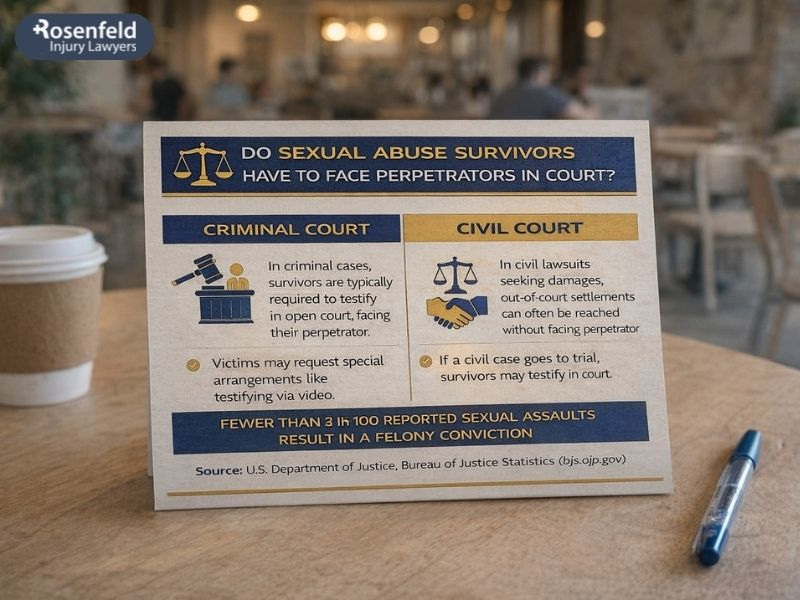
How Courtroom Roles Differ for Survivors in Civil vs Criminal Court
One of the most important things we help survivors learn early on is the difference between criminal and civil sexual abuse cases, because these systems operate very differently, and the survivor’s involvement depends on which path is taken.
In criminal court, the case is brought by the state. Prosecutors, not the survivor, decide whether to file charges, how the case proceeds, whether to negotiate a plea, and whether the survivor is legally required to appear as a witness.
In many situations involving rape, child sexual abuse, or other crimes against children, the survivor may need to provide some form of statement or testimony, especially if the incident was not fully reported to the authorities at the time. However, even then, prosecutors and victim-advocacy teams often work to reduce trauma whenever possible.
In contrast, civil claims are fully controlled by the survivor. The survivor decides whether to file a lawsuit, whether to sue a perpetrator, an institution, or both, and whether to accept a settlement. Civil cases focus on compensation, accountability, emotional harm, and healing rather than criminal punishment.
Because the survivor controls the claim, there is far more flexibility in how evidence is presented and whether testifying in person is necessary. Survivors have the ability to prioritize their emotional well-being and avoid experiences that make them feel unsafe.
These differences also impact the burden of proof, the rules of evidence, and the survivor’s experience in the legal system. Criminal court focuses on punishment and community safety, whereas civil court focuses on healing and financial recovery. Understanding this important distinction helps many victims see a path that is safe and manageable.
Do Survivors Have to Testify in Civil Sexual Abuse Cases?
Many survivors worry they will be forced to face the perpetrator or stand in a public courtroom to describe what happened. In civil cases, that is rarely the case because most civil sexual abuse cases settle without going to court. Many survivors choose the civil process precisely because it offers more privacy and more control.
In civil cases:
- Survivors are often able to testify through a deposition, not in court.
- Depositions can take place in a quiet conference room, with trauma-informed safeguards and your lawyer right beside you.
- Some survivors provide recorded or written testimony, depending on the situation and the rules of the jurisdiction.
- Survivors can often remain anonymous through “Jane Doe” filings, meaning their identity stays confidential.
- Civil claims allow survivors to avoid reliving the most painful details in open court.
- The survivor, not the state, decides whether to pursue settlement or go to trial.
This flexibility is one reason many survivors choose the civil legal path. They want justice, but they do not want to face the person who hurt them. Civil law respects those needs.
What Happens If a Case Goes to Trial?
While most cases settle, we prepare our clients in the event a trial becomes necessary. We want to remove the fear surrounding the unknown. If your case goes to trial, this is what the process typically looks like:
Pretrial Motions
Before trial begins, the lawyers file motions addressing what evidence can be shown, whether certain testimony can be limited, and what kind of protections the survivor should receive. Our firm always pushes for limits on unnecessary questioning.
Survivor Preparation
We spend extensive time preparing survivors so they know exactly what to expect. We review the courtroom layout, who sits where, who speaks when, and what the overall environment is like. We help you understand your rights, your protections, and how to manage the emotional burden that may arise.
Cross-Examination (and Protections)
If you must testify, the defendant’s attorney may cross-examine you. This is often the most painful part for survivors to imagine. However, there are protections. Judges can limit inflammatory questions, prevent harassment, and prevent irrelevant attacks on your family, friends, or personal history. Your lawyer stands beside you the entire time.
The Courtroom Environment
A courtroom may seem intimidating, but it also operates under clear guidelines designed to create order, respect, and fairness. Only authorized people speak. Everyone behaves professionally. Our clients often find that even though it’s difficult, it is far less chaotic and frightening than they anticipated.
Survivor Support
We coordinate advocate support teams, mental-health professionals, and debriefing sessions before and after every appearance. Your emotional safety matters as much as your legal safety.
Even when trials are hard, many survivors tell us the experience helped them reclaim their voice, regain a sense of power, and finally feel like the community heard and believed them.
Why Many Victims Choose Civil Settlements to Remain Anonymous
In civil cases, sexual abuse cases can be filed anonymously, which gives survivors a level of privacy that criminal court rarely provides. This anonymity is a major reason why most victims choose settlement instead of trial, especially when the victim’s presence in the courtroom could risk retraumatization.
Survivors often choose settlement because:
- They want to avoid reliving trauma in a public setting.
- They want to protect their identity, privacy, and emotional stability.
- They want to control how and when they share their story.
- They want a resolution that minimizes disruption to their lives and their family.
- They want to avoid seeing the defendant, hearing testimony about the abuse, or facing public scrutiny.
Civil settlements are not a sign of weakness. They are a form of justice that lets survivors move forward on their own terms. Settlements can provide meaningful compensation and accountability while allowing survivors to proceed without the stress of trial.
How Injury Lawyer Team Protects Survivors From Direct Confrontation
Our firm focuses on trauma-informed, survivor-centered representation. We prioritize emotional safety at every step and work to ensure survivors rarely, if ever, need to face the perpetrator directly. In civil sexual assault lawsuits, we take proactive steps to reduce the emotional impact of the legal process.
We protect survivors by:
- Negotiating Settlement Early: We move quickly to secure meaningful settlement options before any trial is scheduled.
- Filing Motions to Limit Testimony: We regularly file protective motions to limit stressful questioning, restrict unnecessary witness testimony, and avoid retraumatizing descriptions.
- Requesting Protective Orders: These orders can shield sensitive information, restrict contact, and prevent the defendant from using the case to intimidate or frighten the victim.
- Managing All Communication: We interact with defense counsel, insurance companies, and institutions so survivors never need to communicate directly with the other side.
- Working With Advocate Teams: We collaborate with advocates who help survivors find stability and ensure they’re supported throughout the process.
If you’re unsure whether you’ll have to appear in court, testify, or stay anonymous, we can guide you through your legal options.
Our work is confidential, and our cases are handled with strong privacy protections. Moreover, we work on a contingency fee basis, so you pay nothing unless we recover compensation for you.
When you’re ready to contact us, we’re here to help you pursue justice in the way that best protects your safety, healing, and future.
All content undergoes thorough legal review by experienced attorneys, including Jonathan Rosenfeld. With 25 years of experience in personal injury law and over 100 years of combined legal expertise within our team, we ensure that every article is legally accurate, compliant, and reflects current legal standards.